
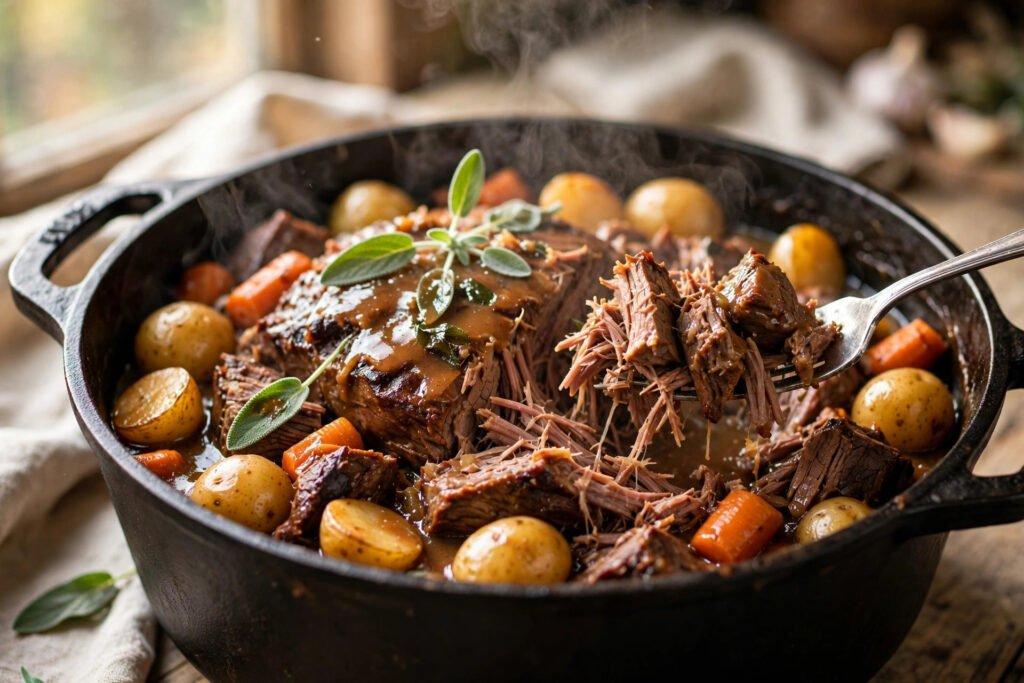

The Pot Roast That Tastes Like Autumn in a Pot
Every October, my family drags me to the same apple orchard about an hour from our house. The kids race to fill their baskets, my husband pretends to care about heirloom varieties, and I always come home with a jug of fresh-pressed cider that barely survives the week. Two years ago, on the drive home, it hit me: what if I braised my pot roast in that cider instead of just drinking it?
That Sunday, I browned a chuck roast, poured in the cider, and let the oven do its thing. When I pulled it out, the beef shredded at the touch of a fork, the carrots had soaked up all that sweet-tangy flavour, and my husband — mid-bite — told me to stop making every other pot roast.
Why You’ll Love This Recipe
- Fall-apart tender every time. Low and slow in cider until the beef surrenders into silky, shreddable strands. A fork is genuinely all you need.
- One-pot cosiness. Everything braises together in a Dutch oven, so dinner and gravy cook in one vessel with barely any washing up.
- Sweet meets savoury in the best way. The cider reduces into a glossy, tangy sauce that tastes like autumn distilled.
- A full meal in one pot. Carrots, onions, and baby potatoes cook right alongside the beef, soaking up flavour as they turn buttery and tender.
- Leftover gold. Even better the next day — and the cold leftovers make the best sandwiches you’ll eat all year.
Ingredients
Serves 6 — generous, Sunday-dinner portions
For the pot roast:
- 1.5kg (3 lb) boneless chuck roast
- Salt and freshly ground black pepper
- 3 tbsp plain flour
- 3 tbsp vegetable oil
- 2 large yellow onions (about 300g), cut into thick wedges
- 5 garlic cloves, smashed
- 500ml (2 cups) fresh apple cider (not vinegar)
- 250ml (1 cup) beef broth
- 2 tbsp apple cider vinegar
- 2 tbsp Dijon mustard
- 1 tbsp brown sugar
- 2 tbsp tomato paste
- 4 sprigs fresh thyme
- 2 bay leaves
- 4 large carrots (about 400g), cut into thick chunks
- 600g baby potatoes, halved
- 8 fresh sage leaves, for garnish
For the gravy:
- 2 tbsp butter
- 1 tbsp cornflour mixed with 2 tbsp cold water
Instructions
Step 1 — Season and sear. Pat the roast dry and season generously all over with salt and pepper. Dust lightly with the flour, patting it in. Heat the oil in a large Dutch oven over medium-high heat and sear the roast 4 to 5 minutes per side until deeply browned. Set aside on a plate.
Step 2 — Build the base. Lower the heat to medium and add the onion wedges to the pot. Cook 5 to 6 minutes, stirring occasionally, until softened and golden at the edges. Stir in the garlic and tomato paste and cook one minute more until fragrant.
Step 3 — Add the cider and seasonings. Pour in the cider, scraping up the browned bits from the bottom — that’s pure flavour. Stir in the broth, vinegar, mustard, brown sugar, thyme, and bay leaves, and bring to a gentle simmer.
Step 4 — Braise low and slow. Return the roast to the pot, spooning some liquid over the top. Cover with the lid and transfer to a 160°C (325°F) oven. Braise for 2 hours, turning the roast halfway through.
Step 5 — Add the vegetables. After 2 hours, nestle the carrots and potatoes around the beef, pushing them down into the liquid. Cover and braise 45 to 60 minutes more, until the vegetables are tender and the beef shreds easily with a fork.
Step 6 — Make the gravy. Transfer the beef and vegetables to a warm platter and tent with foil. Strain the braising liquid back into the pot over medium heat. Whisk in the butter and the cornflour slurry; simmer 2 to 3 minutes until thick and glossy. Taste and adjust the seasoning.
Step 7 — Serve it up. Shred the beef into big chunks and arrange over the carrots and potatoes. Spoon over plenty of gravy and scatter with fresh sage leaves. Watch it disappear.
Tips for the Best Apple Cider Pot Roast
Use real cider, not vinegar. You want fresh-pressed, unfiltered apple cider — the cloudy, sweet kind. Clear apple juice works in a pinch, but the flavour won’t be as deep.
Don’t skip the sear. A deep, dark crust is where the savoury flavour starts. Give it a full 4 to 5 minutes per side and resist the urge to move it.
Keep the lid on. Braising works through trapped steam and steady heat. Every peek costs you both — lift the lid once to add the vegetables, then leave it alone.
Let it rest before shredding. Ten minutes of rest lets the fibres relax and reabsorb juices. Shred too soon and the beef can taste dry despite hours in the pot.
Serving & Storage
Serve big, steaming portions in shallow bowls so the gravy pools underneath. Crusty bread is non-negotiable for mopping up every last bit. Something green and simple on the side — garlicky steamed greens or a sharp apple slaw — cuts the richness beautifully.
Leftovers keep in an airtight container in the fridge for up to 4 days, stored in the gravy so the beef stays moist. Reheat gently in a covered pot with a splash of broth. The shredded meat freezes well for up to 3 months; thaw overnight in the fridge.
Frequently Asked Questions
Can I make this in a slow cooker?
Absolutely. Sear the beef and sauté the aromatics as directed, then transfer everything to the slow cooker. Cook on low for 8 to 9 hours, adding the vegetables for the final 3 hours. Thicken the gravy on the hob afterwards.
My roast isn’t falling apart. What went wrong?
It needs more time. Chuck only tenderises once the connective tissue breaks down, which can’t be rushed. Give it another 45 minutes in the oven and check again — it will surrender.
Can I use bone-in short ribs instead?
Yes, and it’s glorious. Use about 2kg bone-in short ribs and braise the same way. The bones add incredible richness to the gravy; the meat pulls right off them.

