
We have all been there. You walk up to a beautiful backyard barbecue buffet table, your plate piled high with grilled burgers, smoky ribs, and crispy chips. You spot a massive bowl of seafood pasta salad glistening under the summer sun. It looks promising, so you scoop a generous portion onto your plate. But when you take that first bite, your excitement vanishes. The pasta is mushy and waterlogged. The shrimp are tough and rubbery, tasting vaguely like old freezer burn. The dressing is a heavy, greasy blanket of mayonnaise that completely drowns out any actual seafood flavor.
I experienced this exact disappointment a few years ago at a family reunion. It was a scorching July afternoon, and someone had brought a seafood pasta salad that looked like a gray, gloopy swamp. Out of politeness, I took a bite, and I immediately regretted it. The pasta had disintegrated, and the seafood tasted incredibly fishy. It was a culinary tragedy.
That disappointing bite sparked a personal mission. I knew that a cold, creamy seafood pasta salad could be an absolute showstopper if it was treated with a little respect and culinary care. I spent the next three summers testing, tweaking, and obsessing over every single element of this dish. I experimented with different pasta shapes, tested various combinations of seafood, tried dozens of dressing ratios, and learned a lot of lessons the hard way.
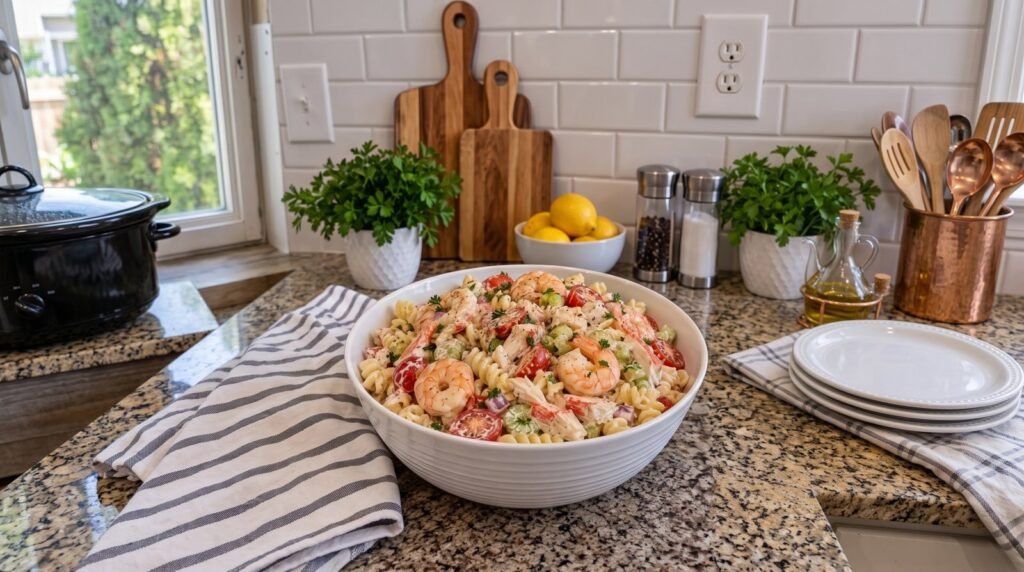
Today, I am sharing the ultimate recipe that resulted from all those kitchen trials. This is not your average, heavy, potluck afterthought. This is a bright, refreshing, beautifully textured, and deeply flavorful pasta salad that actually tastes like the ocean in the best possible way. It features tender rotini pasta, succulent poached shrimp, sweet imitation crab meat, crisp vegetables, and a creamy, zesty dressing that ties everything together without weighing it down.
Let us dive into the details of how to make this masterpiece in your own kitchen.
The Anatomy of a Perfect Seafood Pasta Salad
To make a truly spectacular pasta salad, we have to look at each component individually. When you understand how these ingredients interact, you can avoid the common pitfalls that plague most cold pasta dishes.
The Pasta: Rotini is the absolute king of pasta salads. The tight spirals and deep ridges act like tiny pockets, capturing the perfect amount of creamy dressing, fresh herbs, and small bits of celery or onion in every single forkful. Other shapes like farfalle (bow ties) or penne can work, but they do not hold onto the dressing nearly as well, often leaving you with dry pasta and a pool of sauce at the bottom of the bowl.
The Seafood Duo: For this recipe, we are using a combination of shrimp and imitation crab meat. This duo offers the perfect balance of texture, flavor, and budget-friendliness. The shrimp provide a firm, meaty bite, while the imitation crab (also known as surimi) offers a delicate, flaky sweetness that shreds beautifully and blends seamlessly with the pasta. If you want to splurge, you can absolutely use real lump crab meat, but imitation crab is highly traditional for this style of salad and holds up remarkably well to being tossed and chilled.
The Crunch Factor: Texture contrast is incredibly important in a creamy salad. Without it, every bite feels soft and monotonous. We get our crunch from finely diced celery and sharp red onion. Celery adds a clean, watery crispness, while red onion brings a bite of savory heat. We also add halved cherry tomatoes, which provide juicy, sweet bursts of acidity to cut through the rich dressing.
The Dressing Balance: A great pasta salad dressing must be creamy but not heavy. If you use one hundred percent mayonnaise, the salad will feel greasy and coat your mouth in an unpleasant way. My secret is a combination of high-quality mayonnaise and sour cream or plain Greek yogurt. The sour cream introduces a natural tanginess that lightens up the heavy profile of the mayo. We then brighten it up further with fresh lemon juice, a touch of Dijon mustard for depth, and a generous amount of Old Bay seasoning, which is the ultimate flavor partner for any seafood dish.
The Ingredients You Will Need
Before you head to the grocery store, let us take a look at the ingredients. I always recommend gathering and prepping everything beforehand, a practice chefs call mise en place. It makes the actual assembly process incredibly smooth and stress-free.
| Ingredient | Amount | Notes |
|---|---|---|
| Rotini pasta | 16 ounces | One standard box, cooked al dente |
| Raw shrimp | 1 pound | Medium size, peeled, deveined, tails removed |
| Imitation crab meat | 12 ounces | Flake or chunk style, roughly chopped |
| Celery | 1 cup | Finely diced for maximum crunch |
| Red onion | 1/2 cup | Finely diced and soaked in cold water |
| Cherry tomatoes | 1.5 cups | Halved lengthwise |
| Fresh flat-leaf parsley | 1/2 cup | Finely chopped for brightness |
| Mayonnaise | 1 cup | Use a high-quality brand |
| Sour cream | 1/2 cup | Full fat is best for texture |
| Fresh lemon juice | 3 tablespoons | About one large juicy lemon |
| Dijon mustard | 1 tablespoon | Helps emulsify the dressing |
| Old Bay seasoning | 1.5 tablespoons | Adjust to taste |
| Garlic powder | 1 teaspoon | For a subtle savory undertone |
| Salt and black pepper | To taste | Essential for seasoning the pasta and seafood |
Step-by-Step Instructions
Now that your ingredients are ready, let us walk through the process of building this salad. Follow these steps closely to ensure your pasta salad turns out light, fresh, and perfectly balanced.
Step 1: Cook the Pasta Like a Professional
The biggest mistake people make with pasta salad is overcooking the pasta. When pasta is warm, it is soft. When it cools down, it firms up slightly, but if it is already overcooked, it will become incredibly mushy and fall apart when tossed with the dressing.
Bring a large pot of water to a rolling boil. Do not be shy with the salt. Add at least two tablespoons of salt to the water; it should taste like the ocean. This is your only chance to season the inside of the pasta dough. If you skip this, your pasta salad will taste bland, no matter how much dressing you pile on later.
Drop the rotini into the boiling water and stir immediately to prevent the spirals from sticking to each other or the bottom of the pot. Check the package directions for the cooking time, and subtract exactly one and a half minutes from the minimum cooking time. We want the pasta to be distinctly al dente, with a slight bite left in the center.
As soon as the pasta reaches this stage, drain it into a colander. Immediately rinse the pasta under cold running water. I know some pasta purists say you should never rinse pasta because it washes away the starches. That is true for hot pasta dishes where you want the sauce to cling, but for a cold salad, rinsing is essential. It stops the cooking process instantly, cools the pasta down so it does not melt your dressing, and washes away excess starch that would otherwise make your salad sticky and clumpy. Let the rinsed pasta drain thoroughly in the colander for at least ten minutes. Any excess water left on the pasta will water down your dressing.
Step 2: Poach the Shrimp to Tender Perfection
Do not buy pre-cooked shrimp from the grocery store if you can avoid it. Those pre-cooked shrimp are almost always overcooked, rubbery, and completely devoid of flavor. Buying raw shrimp and cooking them yourself takes less than five minutes and makes a massive difference in the final quality of your dish.
Bring a medium pot of water to a boil. Add a teaspoon of salt and half a tablespoon of Old Bay seasoning to the water. Once boiling, drop in your peeled and deveined shrimp.
Turn off the heat immediately and let the shrimp poach in the hot water for about two to three minutes. Watch them closely. As soon as they turn pink and curl into a gentle C-shape, they are done. If they curl into a tight O-shape, they are overcooked.
Immediately transfer the cooked shrimp to a bowl of ice water to stop the cooking process. Once they are cold, drain them thoroughly and pat them dry with paper towels. If your shrimp are medium or large, chop them into bite-sized pieces so you can get a bit of shrimp in every forkful. If they are small salad shrimp, you can leave them whole.
Step 3: Prep the Vegetables and Herbs
While your pasta and shrimp are draining and cooling, you can prep your vegetables.
Finely dice the celery. Try to make the pieces relatively small, about the size of a pea. This ensures you get a pleasant, subtle crunch in every bite without having to jaw through a giant chunk of raw celery.
For the red onion, I have a crucial kitchen hack that will change your life. Raw red onion can be incredibly harsh and pungent, leaving an unpleasant aftertaste that lingers for hours. To fix this, dice your red onion and immediately submerge the pieces in a small bowl of ice-cold water. Let them soak for ten minutes, then drain them. This simple step washes away the sulfurous compounds responsible for that sharp, burning bite, leaving you with a mild, sweet, and perfectly crunchy onion flavor.
Halve your cherry tomatoes. Cutting them lengthwise makes them look beautiful and keeps their juices contained so they do not make the salad soggy. Finally, chop your fresh parsley. Do not use dried parsley here; it has no flavor. Fresh flat-leaf parsley adds a grassy, clean brightness that cuts through the rich dressing.
Step 4: Mix the Creamy Dressing
Never mix your dressing ingredients directly into the pasta bowl. If you do, you will not get an even distribution of spices, and you risk over-mixing and breaking your delicate pasta and seafood while trying to stir it all together.
In a medium mixing bowl, whisk together the mayonnaise, sour cream, fresh lemon juice, Dijon mustard, Old Bay seasoning, garlic powder, a pinch of salt, and a few generous cracks of freshly ground black pepper.
Taste the dressing. It should taste slightly over-seasoned and quite zesty. Remember that once this dressing is tossed with a pound of unseasoned pasta, a pound of seafood, and a mountain of vegetables, the flavor will be diluted. If the dressing tastes just right on its own, it will taste bland in the finished salad. If it needs more kick, add another splash of lemon juice or a pinch more Old Bay.
Step 5: Assembly and the Secret Rest Period
In your largest mixing bowl, combine the cooled and dried rotini pasta, the chopped poached shrimp, the chopped imitation crab, the diced celery, the drained red onion, the halved cherry tomatoes, and the chopped parsley.
Pour about three-quarters of the dressing over the ingredients. Using a large rubber spatula, gently fold everything together. Work from the bottom of the bowl and sweep upward, turning the ingredients over gently so you do not break up the delicate flakes of crab or crush the tomatoes.
Why only three-quarters of the dressing? Pasta is incredibly thirsty. As the salad sits in the refrigerator, the pasta will continue to absorb the liquid from the dressing. If you add all of the dressing now, you might find that your salad looks dry when you are ready to serve it. By reserving a quarter of the dressing, you can toss it in right before serving to restore that luscious, creamy coating.
Cover the bowl tightly with plastic wrap and place it in the refrigerator for at least two hours, though four hours is even better. This chilling time is absolutely mandatory. It allows the flavors of the Old Bay, lemon, garlic, and herbs to marry and penetrate into the pasta and seafood.
Mistakes I Made So You Do Not Have To
My journey to perfecting this recipe was paved with several flat-out failures. Here are the biggest mistakes I made along the way, and how you can easily avoid them.
Mixing Dressing with Hot Pasta
In my early cooking days, I was impatient. I drained the pasta, gave it a quick shake, and dumped it warm into the dressing. It was an absolute disaster. The heat from the pasta instantly melted the mayonnaise, causing the oil to separate from the solids. I was left with a greasy, broken mess at the bottom of the bowl and dry, unappealing pasta. Always ensure your pasta is ice-cold to the touch before it meets any dairy-based dressing.
Skipping the Pasta Water Salt
I once thought that since I was using a highly seasoned dressing with plenty of Old Bay, I could skip salting the pasta cooking water. I was wrong. The finished salad tasted like seasoned dressing sitting on top of cardboard. Pasta needs to be seasoned from the inside out while it cooks. Do not skip salting that water.
Not Drying the Ingredients
I used to rush the draining process. I would toss wet pasta, wet shrimp, and freshly washed vegetables straight into the bowl. Within an hour in the fridge, the excess water pooled at the bottom, thinning out the dressing and turning it into a watery, unappealing liquid. Take the extra five minutes to let your pasta drain thoroughly and pat your shrimp dry with paper towels. Your dressing will cling beautifully as a result.
Choosing the Wrong Crab Meat
I once tried to make this with shredded canned crab meat from the baking aisle. It was a terrible choice. The tiny, mushy fibers of canned crab completely disintegrated into the dressing, turning the entire salad into a gray, fishy paste. If you want to use real crab, spend the money on fresh lump crab meat from the seafood counter and fold it in very gently at the absolute end. Otherwise, stick to high-quality flake-style imitation crab, which holds its shape beautifully.
Variations to Keep Things Interesting
Once you master the base recipe, you can easily customize it to suit your personal taste or whatever ingredients you have on hand. Here are some of my favorite variations.
The Cajun Kick
If you love spicy food, you can easily turn this into a Cajun seafood pasta salad. Swap out the Old Bay seasoning for a high-quality Cajun spice blend. Add a finely diced green bell pepper in place of some of the celery, and stir in a few drops of your favorite hot sauce into the dressing. You can also add some sliced and seared andouille sausage alongside the shrimp for a fun land-and-sea twist.
The Herb Garden Deluxe
If you prefer a lighter, more herb-forward flavor profile, reduce the mayonnaise to half a cup and increase the sour cream to one cup. Stir in a generous handful of chopped fresh dill, chives, and tarragon along with the parsley. This version tastes incredibly elegant and pairs beautifully with a glass of crisp white wine on a warm evening.
The Mediterranean Spin
For a completely different flavor profile, swap the creamy dressing for a zesty lemon-herb vinaigrette made with olive oil, red wine vinegar, garlic, and dried oregano. Toss in some kalamata olives, crumbled feta cheese, and sliced cucumbers alongside the shrimp. It is incredibly refreshing and holds up exceptionally well for outdoor picnics.
The Luxury Lobster Upgrade
If you are hosting a special occasion dinner or want to impress your guests, swap out the imitation crab for freshly steamed lobster tail meat. Cut the lobster into thick, indulgent chunks and fold them into the salad along with the shrimp. Garnish the top with extra fresh chives and a light dusting of smoked paprika for an absolutely stunning presentation.
How to Store and Serve Your Pasta Salad
This seafood pasta salad is a fantastic make-ahead dish, making it perfect for busy weekdays, meal prep, or stress-free entertaining.
How to Store: Keep the salad in an airtight container in the coldest part of your refrigerator. It will keep beautifully for up to three to four days. Because it contains seafood and dairy, do not leave it sitting out at room temperature for more than two hours. If you are serving it at an outdoor barbecue, place the serving bowl inside a larger bowl filled with ice to keep it perfectly chilled and safe for your guests.
Reviving the Salad: When you pull the salad out of the fridge after a day or two, you might notice it looks a bit dry. This is completely normal as the pasta continues to absorb moisture. Simply stir in that reserved quarter of the dressing, or add a tiny splash of milk, heavy cream, or a squeeze of fresh lemon juice, and give it a gentle toss. It will instantly regain its creamy, luscious texture.
Can You Freeze It? Absolutely not. Please do not attempt to freeze this pasta salad. Mayonnaise and sour cream will separate and curdle when frozen and thawed, turning your beautiful dressing into a watery, clumpy mess. The pasta will also become incredibly mushy. This dish is strictly meant to be enjoyed fresh or refrigerated.
The Power of Homemade
There is a unique satisfaction that comes from bringing a dish to a gathering and watching people genuinely light up when they eat it. For years, pasta salads have had a reputation for being cheap, boring fillers at buffet tables. But when you use fresh shrimp, crisp vegetables, and a thoughtfully balanced, zesty dressing, you transform this humble side dish into the star of the show.
The next time you are asked to bring a dish to a potluck, or when you are simply craving a cool, satisfying lunch on a hot summer day, skip the deli counter tub and make this recipe instead. It is simple, incredibly delicious, and guaranteed to change how you think about seafood pasta salad forever. Gather your ingredients, boil your pasta to a perfect al dente, poach those shrimp with care, and enjoy the delicious fruits of your kitchen labor. Happy cooking!