
It was a freezing, miserably wet Tuesday evening in November when I realized I had hit my absolute limit with quick weeknight dinners. I was tired, my hands were cold, and the thought of eating another sad, rushed chicken breast made me want to order takeout for the fourth time that week. Instead, I stood in my kitchen, looked at the half-empty pantry, and decided to recreate the one dish that always made me feel safe as a kid: a massive, bubbling, golden-brown baked pasta casserole.
My first attempt years ago was, quite frankly, a watery disaster. I remember pulling the baking dish out of the oven only to find that the pasta had turned into mush, the cheese had separated into a rubbery orange sheet, and a sad puddle of grey water was pooling at the bottom of the pan. I was devastated. But that failure set me on a multi-year culinary mission to master the art of the perfect baked pasta.
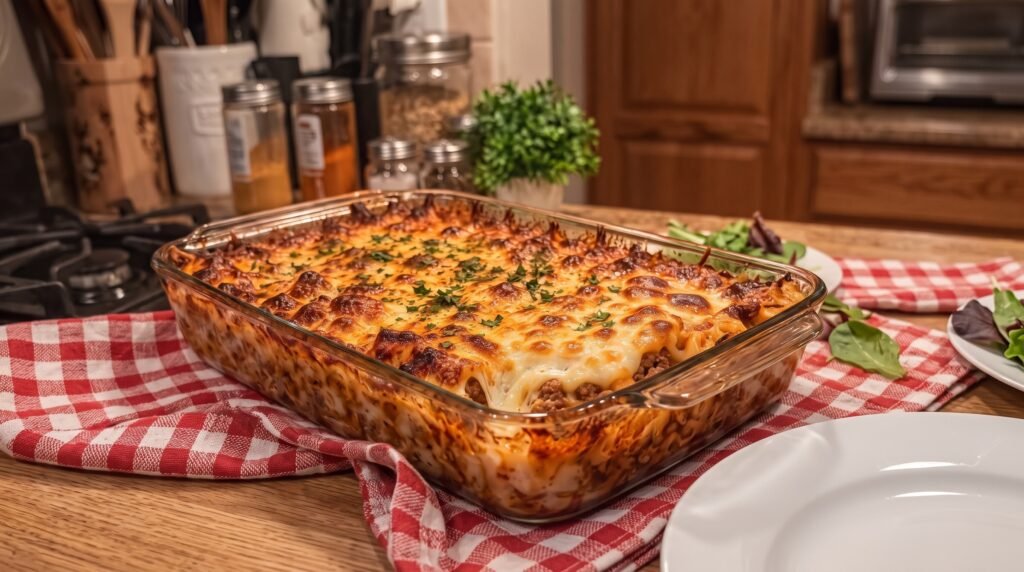
After dozens of tests, ruined pans, and messy countertops, I finally unlocked the secrets to getting that perfect, gooey, stretchable cheese top and the deeply flavorful meat sauce underneath. The photo you see of this bubbling masterpiece on my favorite red-and-white checkered kitchen towel is the result of those hard-learned lessons. Today, I am going to walk you through exactly how to recreate this comforting masterpiece in your own kitchen, explaining the science of why certain things work and how to avoid the common traps that ruin most home-cooked pasta bakes.
The Day I Learned the Hard Way
Let us talk about why most baked pastas fail. The biggest culprit is moisture control. Pasta is like a sponge; it wants to absorb liquid. When you bake pasta that is already fully cooked, it continues to drink up the tomato sauce in the oven. By the time you serve it, the pasta is bloated and mushy, and your beautiful sauce has completely vanished into the starch.
The second culprit is using the wrong cheese. I used to buy those convenient bags of pre-shredded mozzarella. It saved me five minutes of prep time, but it cost me the entire dish. Pre-shredded cheese is coated in potato starch and cellulose powder to prevent the shreds from sticking together in the bag. Unfortunately, those exact starches prevent the cheese from melting together smoothly. Instead of a glorious, stretchy blanket of cheese, you get a dry, patchy crust that slides off in one sad clump when you cut into it.
Once I realized that grating my own cheese and slightly undercooking my pasta were the twin keys to success, my cooking changed forever. This recipe is not just about throwing things in a dish and hoping for the best. It is about understanding how the ingredients interact under the broiler to create that perfect contrast of crispy edges and gooey pockets of cheese.
Understanding the Mechanics of a Perfect Pasta Bake
Before we jump into the ingredients, let us look at the structure of this dish. We want multiple textures in every single bite. You want the crispy, deeply caramelized cheese peaks on top. You want the creamy, melting pockets of cheese tucked inside the layers. You want the rich, savory depth of a meat sauce that has clung to every nook and cranny of the pasta. And finally, you want the pasta itself to have a distinct bite, what Italians call al dente, which keeps the dish from feeling heavy and monotonous.
Choosing the right pasta shape is critical. Many people reach for standard penne, but I highly recommend finding large rigatoni, paccheri, or a thick-cut ziti with prominent ridges. Those ridges act like tiny Velcro strips, grabbing onto the thick meat sauce and holding it in place. Smooth pasta shapes will let the sauce slip right off to the bottom of the dish, leaving your top layers dry and bland.
For the meat, a fifty-fifty blend of lean ground beef and sweet Italian sausage is my absolute secret weapon. The ground beef provides a clean, meaty foundation, while the sausage brings built-in seasoning, fat, and a rustic texture. The fat from the sausage renders down and emulsifies into the tomato sauce, creating a velvety glaze that coats the pasta beautifully.
The Ultimate Ingredient Breakdown
Let us look at the specific ingredients we will need to bring this comforting bake to life.
| Ingredient | Amount | Notes |
|---|---|---|
| Ridged Rigatoni or Ziti | 1 pound | Choose a high-quality bronze-die cut pasta if possible |
| Lean Ground Beef (80/20) | 1/2 pound | Gives rich flavor without excessive grease |
| Sweet Italian Sausage | 1/2 pound | Casings removed, crumbled into small pieces |
| Yellow Onion | 1 medium | Finely diced to melt into the sauce |
| Fresh Garlic Clones | 4 cloves | Minced or grated, do not use the jarred stuff |
| Tomato Paste | 2 tablespoons | Adds a deep, caramelized tomato flavor |
| Crushed Tomatoes | 28 ounces | Use a high-quality brand like San Marzano |
| Tomato Sauce | 15 ounces | For extra sauciness and moisture balance |
| Dried Oregano and Basil | 1 teaspoon each | Classic Italian herbs to build the aromatic base |
| Red Pepper Flakes | 1/2 teaspoon | Just enough for a subtle warmth, optional |
| Whole Milk Mozzarella | 12 ounces | Block form, grated by hand for the ultimate melt |
| Fresh Ricotta Cheese | 8 ounces | Whole milk variety for a creamy interior layer |
| Grated Parmesan Cheese | 1/2 cup | For a salty, umami-rich bite on top |
| Fresh Parsley | 2 tablespoons | Chopped finely for a bright finish after baking |
| Olive Oil | 1 tablespoon | For sautéing the aromatics |
| Salt and Black Pepper | To taste | Essential for building flavor at every step |
Step-by-Step Cooking Guide
Now that we have our ingredients prepped and ready, let us walk through the process of making this masterpiece. Take your time with each step; building layers of flavor is what elevates this from a standard weeknight meal to something truly memorable.
Step 1: Boiling the Pasta to Perfection
Set a large pot of water on the stove and bring it to a rolling boil. Do not skimp on the water; the pasta needs room to swim so it does not stick together. Once the water is boiling rapidly, add a generous handful of kosher salt. The water should taste like mild seawater. This is your only chance to season the inside of the pasta itself.
Drop your pasta into the boiling water and stir immediately to prevent the pieces from sticking to the bottom of the pot. Look at the package instructions for the cooking time. Whatever that number is, subtract three minutes. If the box says ten minutes for al dente, cook it for only seven minutes.
The pasta should still have a distinct, slightly white core when you bite into a piece. It will seem too firm, but trust me on this. It will spend another twenty-five minutes baking inside a hot, bubbly bath of tomato sauce, where it will finish cooking to absolute perfection. Drain the pasta, but do not rinse it. The natural starches on the surface of the pasta will help the meat sauce cling to it.
Step 2: Building the Deep Meat Sauce
While your pasta is boiling, grab a large, heavy-bottomed skillet or Dutch oven. Heat a tablespoon of olive oil over medium-high heat. Add your ground beef and crumbled Italian sausage to the hot pan. Use a wooden spoon to break the meat apart into tiny, uniform pieces as it browns.
Allow the meat to cook undisturbed for a few minutes at a time. We want to get some deep, dark brown crust on the bottom of the pan and on the meat itself. That browning is where the deep, savory flavor lies. Once the meat is fully browned, use a slotted spoon to transfer it to a plate, leaving the rendered fat behind in the pan.
Turn the heat down to medium. Add your finely diced yellow onion directly into the hot meat fat. The onion will pick up all those caramelized bits stuck to the bottom of the pan. Sauté the onion for about five minutes until it becomes soft, translucent, and sweet.
Next, toss in your minced garlic and the tomato paste. Stir constantly for about two minutes. You want the tomato paste to turn from a bright red color to a deep, brick-red color. This process caramelizes the natural sugars in the tomatoes, removing that metallic raw taste.
Now, pour in your crushed tomatoes and tomato sauce. Return the cooked meat and its juices back to the pan. Add your dried oregano, dried basil, red pepper flakes, salt, and a generous amount of freshly cracked black pepper. Stir everything together, bring it to a gentle simmer, and let it cook uncovered for about fifteen to twenty minutes. The sauce will thicken slightly and turn incredibly rich. Taste the sauce! If it feels too acidic, add a tiny pinch of granulated sugar to balance it out.
Step 3: Preparing the Creamy Cheese Center
While the sauce is simmering, we need to prepare our cheese elements. In a medium bowl, combine your whole milk ricotta cheese with half of your grated parmesan cheese. Season this mixture with a pinch of salt and black pepper.
Some people like to add an egg to their ricotta mixture to help bind it. I prefer to leave the egg out. I find that without the egg, the ricotta melts into a luxurious, creamy sauce that blends beautifully with the tomato sauce, rather than setting into a firm, grainier layer.
Grate your block of whole milk mozzarella cheese. Keep it divided into two equal piles: one for mixing throughout the pasta layers, and one for creating that thick, protective blanket on top of the casserole.
Step 4: Layering the Masterpiece
Preheat your oven to 375 degrees Fahrenheit. Grab a deep 9×13-inch glass or ceramic baking dish. The depth is important here because we do not want our cheese bubbling over the sides and burning onto the bottom of your oven.
Spread a thin layer of your warm meat sauce over the bottom of the baking dish. This acts as a non-stick barrier and ensures that the bottom layer of pasta does not dry out or stick to the glass.
In your large pasta pot, combine the drained, undercooked pasta with about two-thirds of your rich meat sauce. Toss gently until every single tube of pasta is coated inside and out with the sauce.
Pour half of this saucy pasta mixture into the prepared baking dish, smoothing it out into an even layer. Take your ricotta mixture and drop small spoonfuls of it all over the pasta. Use the back of a spoon to gently swirl it into the noodles. Sprinkle half of your grated mozzarella cheese over this layer.
Pour the remaining saucy pasta over the top, smoothing it out. Pour the rest of the meat sauce over the pasta, ensuring there are no dry noodle edges sticking out. Dry noodles will turn into rock-hard, tooth-breaking shards in the oven.
Finally, scatter the remaining grated mozzarella and parmesan cheese evenly over the top of the dish. Your pasta bake is now ready for the oven.
Step 5: Baking to Golden Perfection
Cover the baking dish loosely with aluminum foil. To prevent the melting cheese from sticking to the foil, you can spray the underside of the foil with a bit of non-stick cooking spray.
Place the dish in the preheated oven and bake for twenty minutes. This initial covered bake allows the middle of the casserole to heat through thoroughly, melting the interior pockets of ricotta and mozzarella without burning the top layer of cheese.
After twenty minutes, carefully remove the aluminum foil. Your kitchen should already smell incredible, filled with the aroma of toasted garlic and sweet tomatoes. Return the uncovered dish to the oven for another ten minutes. The cheese on top will melt completely and begin to bubble.
For the grand finale, turn your oven broiler to high. Stand right in front of the oven and watch it closely. Under the intense heat of the broiler, the white mozzarella will rapidly transform. You will see bubbles rise and pop, turning into gorgeous, deeply caramelized brown spots. This should only take about two to three minutes. Do not walk away to check your phone; the line between perfectly browned cheese and a charred, black ruin is incredibly thin.
Remove the baking dish from the oven and place it on a heat-safe surface, like the red-and-white checkered towel shown in my photo.
Now comes the hardest part of the entire process: you must let the pasta bake sit undisturbed for at least fifteen minutes. I know the temptation to dig in immediately is overwhelming. The bubbling cheese is singing your name, and your mouth is watering. But if you cut into it right away, the hot cheese and sauce will run everywhere, and your neat layers will collapse into a sloppy, liquid pile on your plate. Resting allows the starches in the pasta to settle and the cheeses to firm up slightly, ensuring that every slice holds its shape beautifully.
Just before serving, sprinkle the top of the hot cheese with your finely chopped fresh parsley. The heat from the dish will release the herbal oils in the parsley, cutting through the rich, heavy cheese with a beautiful burst of fresh flavor.
The Golden Rules of Cheese Melting
Let us pause for a moment to talk about the physics of cheese melting. Why does some cheese pull like a dream while other cheese turns into a greasy, separated mess?
To get that legendary cheese pull, you need high-fat, high-moisture cheese. Low-moisture, whole-milk mozzarella is the gold standard for baked pasta. Avoid fresh mozzarella packed in water (like Margherita style) for the top of your bake. Fresh water-packed mozzarella contains too much liquid. As it melts, it releases that water directly onto your casserole, leaving you with a soggy, bland top layer. Save the fresh mozzarella for your cold summer salads and stick to the low-moisture block for baking.
Another critical factor is temperature. When cheese is heated too quickly or too intensely, the proteins in the cheese clump together, squeezing out the fat. This is what causes that oily layer to pool on top of your pasta. By starting the bake covered at a moderate temperature, we allow the cheese proteins to relax and melt slowly before we apply the high heat of the broiler to brown them.
Common Pitfalls and How to Avoid Them
Even with the best instructions, things can sometimes go sideways in the kitchen. Here are the most common mistakes I see people make with their pasta bakes and how to easily avoid them.
The watery casserole. If you find a pool of liquid at the bottom of your dish, it is usually caused by three things: overcooked pasta releasing excess water, wet fresh mozzarella, or using watery, cheap canned tomatoes. To fix this, always choose high-quality canned tomatoes and let your meat sauce simmer until it is thick and rich before combining it with the pasta.
The dry pasta bake. On the opposite end of the spectrum, if your dish turns out dry and chalky, you did not use enough sauce. Remember, the pasta will continue to absorb liquid as it bakes. Your mixture should look slightly too saucy before it goes into the oven. If in doubt, add an extra half-cup of tomato sauce to your mix.
The burnt top and cold center. This happens when you bake the dish uncovered at a temperature that is too high. The top cheese layer browns and burns before the heat can penetrate through the dense layers of pasta and meat to warm the cold ricotta in the center. Always start covered and finish uncovered under the broiler.
Storage, Freezing, and Reheating Instructions
One of the absolute best things about this cheesy meat pasta bake is that it tastes even better the next day. As the dish sits in the refrigerator overnight, the flavors of the garlic, herbs, meat, and cheese meld together, creating a much deeper, more cohesive flavor profile.
To store leftovers, let the dish cool completely to room temperature. Cover the baking dish tightly with plastic wrap or transfer the individual portions to airtight containers. Store in the refrigerator for up to four days.
When it comes to reheating, avoid the microwave if you can. The microwave tends to heat unevenly, turning the pasta mushy and causing the cheese to release its oil. Instead, place a portion of the pasta bake in an oven-safe dish, splash a tablespoon of water or extra marinara sauce over the top to restore moisture, cover tightly with foil, and bake at 350 degrees Fahrenheit for about fifteen minutes until hot and bubbly.
If you want to prepare this dish ahead of time for a busy weeknight or a dinner party, you can assemble the entire casserole, cover it tightly with plastic wrap, and store it in the refrigerator for up to twenty-four hours before baking. When you are ready to cook, let the dish sit on the counter for thirty minutes to take the chill off before placing it in the preheated oven. You may need to add an extra five to ten minutes to the covered baking time to ensure the cold center is heated through.
You can also freeze this dish beautifully. I like to assemble the pasta bake in a disposable aluminum pan. Wrap the unbaked casserole tightly in a double layer of plastic wrap, followed by a layer of heavy-duty aluminum foil. Freeze for up to three months. When you are ready to eat, transfer the frozen dish to the refrigerator to thaw overnight, then bake as directed.
Creative Variations for Every Palate
While this classic beef and sausage blend is my absolute favorite, the beauty of a pasta bake is its incredible versatility. You can easily adapt this recipe to suit whatever ingredients you have in your fridge or to accommodate different dietary preferences.
If you prefer a lighter option, you can swap the ground beef and pork sausage for ground turkey or chicken sausage. If you go this route, add an extra tablespoon of olive oil when cooking the meat, as poultry is much leaner than beef and pork and needs a little extra fat to keep it from drying out.
For a vegetarian version, omit the meat entirely. Instead, sauté a mixture of sliced cremini mushrooms, zucchini, and baby spinach along with the onions and garlic. The mushrooms will provide that deep, earthy, savory flavor that mimics the richness of the meat. Just make sure to cook the vegetables until all their natural moisture has evaporated before adding the tomatoes, otherwise your vegetarian bake will turn out watery.
If you want to add a touch of luxury, you can stir a half-cup of heavy cream into your meat sauce just before combining it with the pasta. This creates a pink, velvety rosa sauce that elevates the entire dish, making it feel like something you would order at a high-end Italian restaurant.
Setting the Scene for a Perfect Meal
When you finally serve this dish, do not just pile it onto a plate and eat it standing up. Food this comforting deserves a little bit of ceremony.
Lay down a simple table setting. Light a couple of candles. Serve this bubbling, golden casserole right out of the baking dish so your guests can witness that incredible first cheese pull. Pair it with a crisp, simple green salad tossed in a sharp red wine vinaigrette to cut through the richness of the cheese and meat. Add a loaf of warm, crusty garlic bread to swipe up every last drop of that rich meat sauce left on your plate.
And finally, open a bottle of medium-bodied Italian red wine, like a Chianti or a Barbera. The bright acidity and red fruit notes of these wines are the perfect match for the rich, tomato-heavy sauce and melted cheese.
Gather your family, your friends, or just yourself, take a deep breath, and enjoy a slow, comforting meal. You have earned it.