
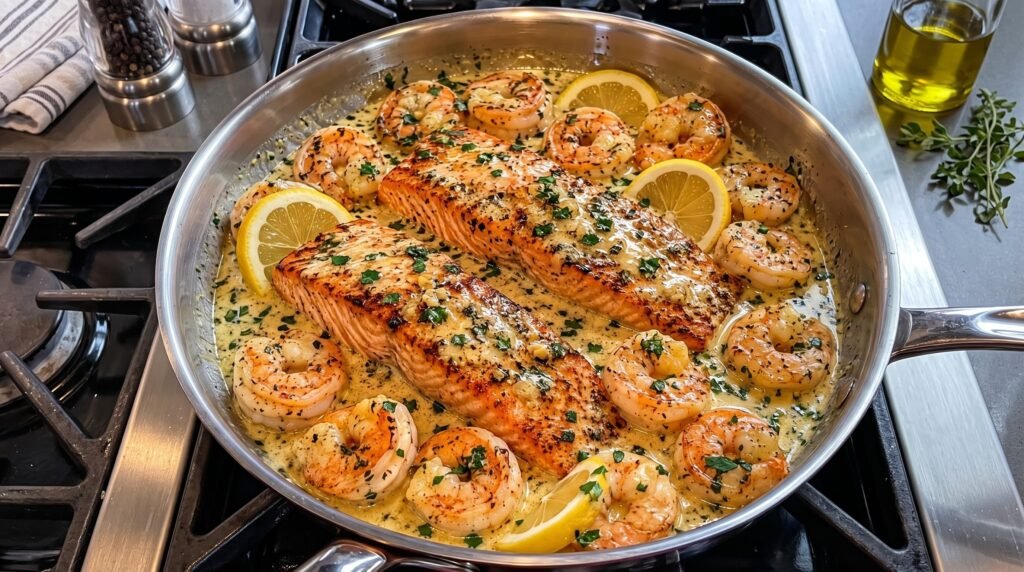

There is a specific kind of panic that sets in around five o'clock on a Tuesday evening. You want something that feels like a reward after a long day of work, but you also do not want to spend two hours hovering over a hot stove, nor do you want to face a mountain of crusty pots and pans in the sink afterward. For years, my default solution to this problem was ordering takeout. But after too many soggy deliveries and disappointing meals, I set out to create a dish that felt like an absolute luxury but could be made in a single skillet in less than thirty minutes.
That is how this creamy garlic butter salmon and shrimp recipe came to life in my kitchen. The first time I tried combining these two seafood favorites in one pan, it was a complete disaster. I threw everything into the pan at the exact same time. By the time the thick salmon fillets were cooked through to the center, the shrimp had shriveled up into tiny, rubbery, overcooked rings that chewed like eraser heads. It was a costly mistake, but it taught me a valuable lesson that changed the way I approach seafood forever: timing and technique are everything.
Since that fateful night, I have made this recipe dozens of times, tweaking the ingredients, adjusting the cooking times, and perfecting the balance of rich heavy cream and bright lemon juice. Today, it is my absolute favorite trick to pull out of my sleeve when I want to impress guests or simply treat myself to a restaurant-quality meal at home. Let us break down exactly how to make this dish perfectly on your very first try, without any of the common pitfalls that trip up home cooks.
Why This Seafood Duo Works So Beautifully
Salmon and shrimp are a match made in culinary heaven, but they have completely different personalities in the pan. Salmon is rich, fatty, and deeply savory. It has a robust flavor that can stand up to bold ingredients like garlic, butter, and cream. Because of its healthy fat content, it stays relatively moist even if you overcook it by a minute or two.
Shrimp, on the other hand, is incredibly lean, sweet, and delicate. It cooks in a flash and offers a wonderful, snappy textural contrast to the flaky, melt-in-your-mouth salmon. When you combine them in a single pan, the sweet juices from the shrimp mingle with the rich fats of the salmon, creating a deep seafood base that elevates a standard cream sauce into something truly extraordinary.
The magic of this recipe lies in the pan sauce. A simple splash of heavy cream is brightened up with fresh lemon juice and a generous handful of fresh herbs. The acidity of the lemon cuts through the richness of the fish and cream, while the garlic brings a warm, savory undertone that ties all the elements together. It is rich without feeling heavy, and bright without tasting sour.
The Ingredients You Will Need
Before you turn on the stove, it is essential to gather your ingredients and understand the role each one plays in the final dish. Cooking seafood is a fast-paced game, and you do not want to be mincing garlic or squeezing lemons while your fish is overcooking in the pan.
| Ingredient | Amount | Notes |
|---|---|---|
| Salmon fillets | 4 portions (about 6 ounces each) | Skin-on or skinless, brought to room temperature |
| Raw shrimp | 1/2 pound (16/20 size) | Peeled, deveined, and patted completely dry |
| Olive oil | 1 tablespoon | High-temperature oil for searing the fish |
| Unsalted butter | 3 tablespoons | Divided into separate tablespoons for different stages |
| Fresh garlic | 6 cloves | Finely minced or grated, do not use the jarred kind |
| Heavy whipping cream | 3/4 cup | Full-fat is necessary to prevent curdling |
| Chicken or vegetable stock | 1/2 cup | Or use a dry white wine like Pinot Grigio |
| Fresh lemon juice | 2 tablespoons | Squeezed from a fresh lemon, avoid bottle juice |
| Fresh flat-leaf parsley | 1/4 cup | Finely chopped for freshness and color |
| Lemon slices | 1 whole lemon | Cut into thin rounds for pan presentation |
| Kosher salt | To taste | Essential for drawing out the natural flavors |
| Black pepper | To taste | Freshly cracked provides the best aroma |
Selecting Your Seafood with Confidence
When you walk up to the seafood counter at your local grocery store, the options can be overwhelming. Let us talk about how to choose the best salmon and shrimp for this recipe, as high-quality starting ingredients will make a massive difference in your final results.
For the salmon, you will generally find two main options: wild-caught and farm-raised. Wild-caught salmon, such as Sockeye or King salmon, has a deep red color, a stronger, more pronounced fish flavor, and less fat. It is delicious but can dry out quickly if you are not careful. Farm-raised salmon, often sold as Atlantic salmon, is lighter pink, has prominent white lines of fat running through the flesh, and has a much milder flavor. Because of its higher fat content, farm-raised salmon is incredibly forgiving to cook and has a buttery texture that works beautifully with cream sauces. I personally prefer skin-on Atlantic salmon for this dish, as the skin acts as a protective barrier during cooking, keeping the flesh moist and tender.
When it comes to shrimp, look for raw, frozen shrimp that have already been peeled and deveined. This saves you a tremendous amount of prep time. Look for the numbers on the bag, such as 16/20 or 21/25. These numbers indicate how many shrimp make up a pound. I highly recommend using larger shrimp, like 16/20 size. They take slightly longer to cook than tiny salad shrimp, which gives you a wider margin of error to get a beautiful golden sear on the outside without overcooking the inside. Always thaw your shrimp completely before cooking. You can do this quickly by placing them in a bowl of cold water for about fifteen minutes.
The Secret to Searing Seafood
The most common mistake people make when cooking seafood is failing to get their pan hot enough. If your pan is only moderately warm when the fish goes in, the seafood will release its moisture, pool in the bottom of the pan, and essentially boil in its own juices. You will end up with gray, soggy fish that lacks flavor.
To get that beautiful, caramelized crust on your salmon, you need heat. Use a heavy-bottomed skillet, such as a cast-iron pan or a high-quality stainless steel pan. These materials hold heat exceptionally well, meaning the temperature of the pan will not drop dramatically when you add the cold fish.
Before the seafood even touches the pan, you must dry it. I cannot emphasize this enough. Moisture is the enemy of a good sear. Take a paper towel and firmly pat the salmon fillets and the shrimp until they are completely dry on all sides. This simple step ensures that the hot oil immediately begins caramelizing the proteins on the surface of the fish rather than evaporating surface water.
Step-by-Step Instructions
Now that your ingredients are prepped and dry, let us get cooking. Keep your focus on the pan, as things will move quickly once the heat is turned on.
First, season your seafood generously. Sprinkle both sides of the salmon fillets and the shrimp with kosher salt and freshly cracked black pepper. Do not do this too far in advance, as salt draws out moisture. Season them right before they go into the pan.
Heat your skillet over medium-high heat. Add the tablespoon of olive oil and one tablespoon of the unsalted butter. Using a combination of oil and butter is a great trick; the oil raises the smoke point so the butter does not burn, while the butter adds that classic, rich flavor we want. Once the butter is melted and foaming, it is time to add the salmon.
Carefully lay the salmon fillets in the pan, skin-side down (or the side that used to have skin). You should hear a loud, satisfying sizzle. If you do not hear that sound, your pan is not hot enough. Once the salmon is in the pan, leave it alone. Do not poke it, slide it around, or lift it up to peek. Letting it sit undisturbed allows that gorgeous golden crust to form. Cook the salmon for about four to five minutes. You will see the cooked color slowly creeping up the sides of the fillets from the bottom.
Slide a thin spatula under the salmon. If it sticks, let it cook for another thirty seconds; it will naturally release from the pan once the crust is fully formed. Flip the fillets over and cook for another two to three minutes on the second side. The salmon should still be slightly pink and underdone in the very center, as it will finish cooking in the sauce later. Transfer the salmon to a warm plate and set it aside.
Now, turn your attention to the shrimp. If the pan looks dry, add another tablespoon of butter. Toss the dry, seasoned shrimp into the hot skillet. Spread them out in a single layer so they all have direct contact with the pan. Cook them for about one minute on the first side until they start to turn pink, then flip them over and cook for another minute on the other side. They should look loosely curved like the letter C. If they curl up tightly into a closed circle, they are overcooked. Remove the shrimp from the pan immediately and place them on the plate with the salmon.
Lower the heat to medium. There should be some lovely browned bits stuck to the bottom of the pan. This is called fond, and it is packed with concentrated seafood flavor. Add your final tablespoon of butter to the pan along with the minced garlic. Stir the garlic constantly for about thirty seconds. You want it to become fragrant and soft, but be careful not to let it turn brown or black, as burned garlic becomes incredibly bitter and will ruin your entire sauce.
Pour in your chicken stock or dry white wine to deglaze the pan. Use a wooden spoon to scrape up all those delicious browned bits from the bottom of the skillet. Let the liquid bubble and reduce by about half, which should take around three minutes. This concentrates the flavors and removes the harsh alcohol bite if you used wine.
Turn the heat down to low and pour in the heavy cream. Stir gently to combine the cream with the garlic and reduced pan juices. Let the sauce simmer gently for about three minutes until it begins to thicken slightly and coat the back of your spoon.
Now, stir in the fresh lemon juice and half of your chopped parsley. Taste the sauce. This is your chance to adjust the seasoning. If it needs more salt, add a pinch. If it feels too rich, add another splash of lemon juice.
Gently slide the salmon fillets and the shrimp back into the creamy skillet, along with any juices that accumulated on the plate. Spoon the warm cream sauce over the top of the seafood. Nestled the lemon slices in between the fish. Let everything simmer gently together on low heat for about two minutes. This allows the seafood to warm through and soak up the flavors of the sauce without overcooking. Scatter the remaining fresh parsley over the top and serve immediately.
Common Mistakes to Avoid in Your Kitchen
Even with the best instructions, things can go sideways if you lose focus. Here are a few common mistakes I have made over the years, and how you can easily avoid them.
Using low-fat milk or half-and-half is a major trap. It can be tempting to try to cut calories by substituting heavy cream with whole milk or half-and-half. Do not do this. Milk contains far more water and less fat than heavy cream. When you add high-acid ingredients like lemon juice to a hot, low-fat dairy liquid, it will curdle instantly, leaving you with a watery sauce filled with unsightly white clumps. Heavy cream has a high enough fat content to easily withstand the acid of the lemon juice, resulting in a perfectly smooth, emulsified sauce.
Another common pitfall is crowding the pan. If you try to cook four large salmon fillets and half a pound of shrimp in a small ten-inch skillet all at once, you will crowd the ingredients. This traps steam under the seafood, preventing a good crust from forming and lowering the temperature of the pan. If you do not have a large twelve-inch skillet, cook your seafood in batches. Sear the salmon first, remove it, then sear the shrimp, and finally build your sauce.
Do not use pre-minced garlic from a jar. It is incredibly convenient, but jarred garlic is preserved in citric acid, which gives it a sour, harsh, and metallic taste. Since garlic is one of the starring flavors in this dish, taking the extra two minutes to peel and mince fresh garlic cloves is absolutely worth the effort.
Finally, keep a close eye on your cooking temperature. Cream sauces should never be boiled rapidly. Once you add the cream to the pan, keep the heat on a gentle simmer. Boiling cream too hard can cause the fat to separate, leaving you with a greasy, broken sauce.
Kitchen Tools That Make a Difference
While you do not need a kitchen filled with expensive gadgets to make this recipe, having a few specific tools will make the process much smoother and more enjoyable.
First and foremost is a good 12-inch skillet. A large stainless steel or cast-iron skillet is ideal. Stainless steel is fantastic for pan sauces because it allows you to easily see the color of the browned bits on the bottom of the pan, helping you prevent the garlic from burning. Cast iron is wonderful for getting an incredibly crispy crust on the salmon.
A flexible metal fish spatula is another invaluable tool. Unlike thick plastic spatulas, a fish spatula is incredibly thin and flexible, allowing it to slide effortlessly beneath delicate fish fillets without tearing the skin or breaking the flesh apart. It also has slots that allow excess oil to drain back into the pan.
An instant-read digital meat thermometer is the ultimate safety net for cooking salmon. Salmon is perfectly cooked when it reaches an internal temperature of 135 degrees Fahrenheit. Because the fish will continue to cook slightly from residual heat once you remove it from the stove, I like to pull my salmon out of the pan when it hits 125 to 130 degrees. This ensures that by the time you eat it, it is incredibly juicy and tender, never dry or chalky.
Variations and Dietary Adaptations
One of the reasons I love this recipe is how adaptable it is. Depending on who you are cooking for, you can easily tweak the ingredients to suit different dietary needs or taste preferences.
If you are following a dairy-free or Paleo diet, you can still enjoy this meal. Replace the butter with ghee or avocado oil, and use a high-quality, unsweetened canned coconut cream in place of the heavy whipping cream. The coconut cream will add a subtle, tropical undertone that pairs beautifully with the lime juice (which you can use instead of lemon) and garlic.
For a Mediterranean twist, you can stir in a handful of halved cherry tomatoes, marinated artichoke hearts, and baby spinach right before you add the cream to the pan. Let the spinach wilt into the sauce, and you will have a vibrant, colorful dish packed with extra vegetables.
If you like a bit of heat, add a generous pinch of red pepper flakes to the pan along with the garlic. The subtle spice cuts through the rich cream and adds a wonderful warmth to every bite. You can also experiment with different herbs; dill and tarragon both pair phenomenally well with salmon and lemon cream.
Perfect Side Dishes to Serve Alongside
Because this dish comes with a generous amount of rich, flavorful garlic-lemon cream sauce, you will want to serve it with sides that can soak up every last drop.
If you are in the mood for comfort food, serve this seafood over a bed of warm angel hair pasta, linguine, or fettuccine. Before plating, toss the cooked pasta directly into the skillet with the sauce so every strand of noodle is coated in that garlic-butter goodness.
For a lighter option, serve the salmon and shrimp over fluffy white jasmine rice or a wild rice pilaf. The rice acts like a sponge, absorbing the sauce beautifully. I also love serving this with a side of roasted asparagus, broccolini, or green beans. The crisp, green vegetables provide a refreshing, clean contrast to the rich seafood.
If you are keeping things low-carb, serve this dish over cauliflower rice or zoodles (zucchini noodles). The zucchini noodles can be tossed directly into the warm sauce for just a minute to soften them up. And of course, no matter what you choose, a piece of warm, crusty rustic bread is highly recommended for wiping your plate clean at the end of the meal.
Storing and Reheating Leftover Seafood
People are often hesitant to save leftover seafood, fearing that reheating it will turn it dry, rubbery, and incredibly fishy. While it is true that seafood is best enjoyed fresh, you can absolutely save and reheat your leftovers if you do it gently.
Store any leftover salmon, shrimp, and sauce in an airtight container in the refrigerator for up to two days. Do not keep it any longer than that, as seafood spoils quickly.
When it comes to reheating, step away from the microwave. The intense, uneven heat of a microwave will instantly overcook the shrimp, dry out the salmon, and cause the cream sauce to split into a greasy mess. Instead, place your leftovers in a small skillet over low heat on the stove. Add a tablespoon of water, milk, or broth to help loosen up the cold, thickened cream sauce. Cover the skillet with a lid and let it warm through gently for about five to eight minutes, stirring the sauce occasionally. This gentle, indirect heat will keep the seafood tender and bring your sauce back to its original, velvety consistency.
If you find yourself with only a small amount of leftovers, you can flake the cold salmon, chop the shrimp, and toss them with hot pasta and a little extra olive oil for a quick, luxurious lunch the next day.
The Joy of Simple Home Cooking
There is something deeply satisfying about creating a meal that looks and tastes like it came out of a professional kitchen, using nothing more than a single pan and a handful of fresh ingredients. This creamy garlic butter salmon and shrimp skillet has become a staple in my home, not just because it is delicious, but because it brings people together around the table.
The next time you find yourself staring at your refrigerator on a busy evening, resisting the urge to order takeout, I hope you will give this recipe a try. Take your time, focus on the sizzle of the pan, enjoy the incredible aroma of garlic and butter filling your kitchen, and savor every single bite of this restaurant-quality masterpiece. Happy cooking!