

I used to be absolutely terrified of cooking salmon at home. It felt like every time I spent my hard-earned money on a beautiful piece of fish at the market, I would inevitably turn it into a dry, chalky block of disappointment. My partner would politely choke down a few bites, secretly drown the rest in whatever bottled sauce we had in the fridge, and we would end up ordering a late-night pizza. It was frustrating, expensive, and a little embarrassing for someone who loves to cook as much as I do.
The turning point came on a cold Tuesday evening when I decided to stop treating salmon like a delicate flower that would ruin if I looked at it wrong. I realized two fundamental things. First, salmon cooks incredibly fast. Second, it desperately needs a protective barrier to shield its delicate proteins from the harsh, dry heat of an oven. That is when I experimented with cooking fish directly in a rich, creamy sauce.
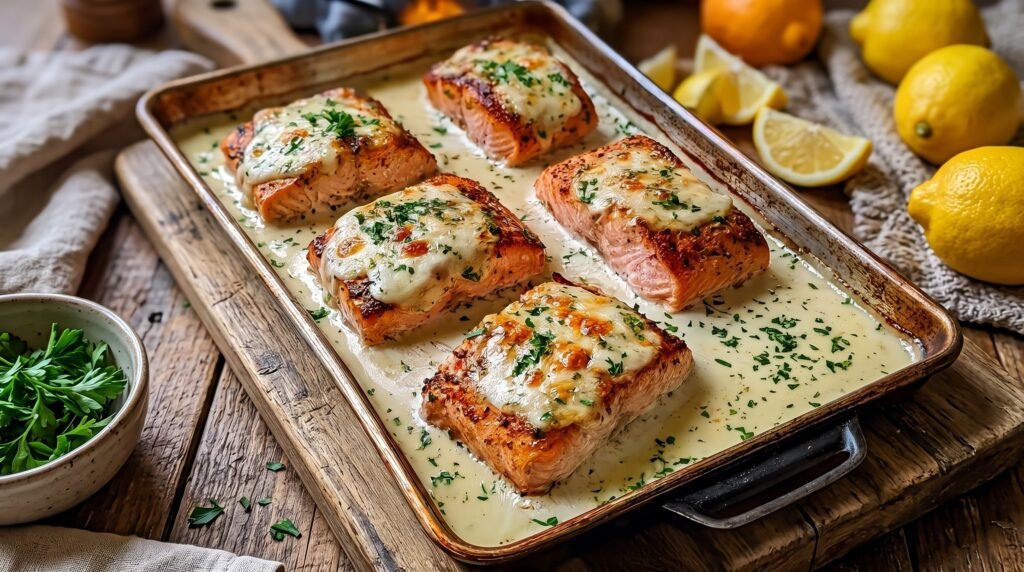
This creamy garlic parmesan baked salmon is the ultimate result of years of trial, error, and plenty of burnt garlic. It is a dish that feels like it belongs in a high-end bistro, but it is actually one of the easiest recipes you can make on a busy weeknight. The luscious cream sauce bubbles around the fish, keeping it spectacularly juicy and tender, while a generous topping of cheese melts into a golden, bubbling crust. If you have ever struggled with dry, boring fish, this is the recipe that will change your kitchen game forever.
Why Cooking Salmon in Cream Sauce is a Game Changer
To understand why this recipe is so forgiving, we have to look at the science of cooking fish. Salmon is packed with healthy fats and proteins, but those proteins tighten up and squeeze out moisture when exposed to dry heat. You have probably seen that white, gooey stuff ooze out of your salmon while it bakes. That is called albumin, a harmless protein that gets pushed to the surface when the muscle fibers in the fish contract too quickly from overcooking.
When you submerge the salmon partially in a heavy cream and cheese base, you are creating a thermal buffer. The sauce distributes the heat gently and evenly around the fish, acting like a warm blanket. This slows down the cooking process just enough to prevent the albumin from rushing to the surface. The result is an incredibly moist, flaky texture that is practically impossible to ruin, even if you accidentally leave it in the oven for five minutes too long.
Additionally, the fats in the heavy cream and parmesan cheese pair beautifully with the natural oils in the salmon. Instead of tasting heavy or greasy, the richness of the sauce cuts through the distinct flavor of the fish, balancing it out with notes of roasted garlic, salty parmesan, and fresh herbs. It is a flavor profile that even self-proclaimed seafood haters end up loving.
Choosing the Best Salmon for Baking
Walking up to the seafood counter at the grocery store can be incredibly intimidating. There are so many options, names, and price points. Let us break down exactly what you should look for when buying salmon for this specific recipe.
First, let us talk about wild-caught versus farm-raised salmon. Wild-caught salmon, like sockeye or king salmon, has a more intense, robust flavor and a leaner texture because these fish swim freely in cold ocean waters. Farm-raised salmon, often sold as Atlantic salmon, tends to have higher fat content and a milder, more buttery taste. For this particular recipe, either option works beautifully. If you prefer a milder, melt-in-your-mouth texture, farm-raised is actually fantastic here because the high fat content blends seamlessly with the cream sauce. If you prefer a deep, rich fish flavor, go wild-caught.
Second, you want to pay attention to the cut of the fish. Try to buy center-cut fillets that are uniform in thickness. If you get a piece that starts very thick on one side and tapers down to a thin tail on the other, the thin tail will overcook and turn dry before the center of the fish is even warm. If you do end up with uneven pieces, you can fold the thin tail under itself during baking to create an even thickness.
I highly recommend buying skin-on salmon. Even though we are baking the fish in a sauce and won't get a crispy skin like we would in a pan-sear, the skin acts as an additional barrier between the hot baking dish and the delicate flesh of the fish. It keeps the fillet intact and traps moisture. Once the salmon is baked, the meat will slide right off the skin effortlessly anyway.
Finally, do not be afraid of frozen salmon. Most fish sold at the counter was actually shipped frozen and thawed before being put on display. Buying high-quality flash-frozen salmon portions is often fresher than the fish that has been sitting in the display case for a couple of days. Just make sure to thaw it completely in the refrigerator overnight before you start cooking.
The Magic of Freshly Grated Cheese
One of the biggest mistakes I made early on when developing this recipe was using pre-shredded cheese from a plastic bag. It was convenient, sure, but the sauce turned out grainy, clumpy, and greasy.
Pre-shredded cheeses are coated with anti-caking agents, usually potato starch or powdered cellulose, to prevent the shreds from sticking together in the bag. While these starches are great for shelf life, they ruin your sauce. They prevent the cheese from melting smoothly into the heavy cream, leaving you with a gritty texture instead of a silky, cohesive sauce.
Buy a block of high-quality Parmigiano-Reggiano or Pecorino Romano and grate it yourself. It takes less than two minutes with a microplane or a box grater, but the difference in flavor and texture is night and day. Freshly grated cheese melts effortlessly into the cream, creating a rich, velvety sauce that clings to the salmon. For the topping, a mixture of fresh parmesan and a low-moisture mozzarella or provolone provides both a sharp flavor and that satisfying, gooey, golden-brown stretch.
Ingredients for the Ultimate Creamy Baked Salmon
Here is everything you will need to bring this restaurant-quality dish to life in your own kitchen.
| Ingredient | Quantity | Notes |
|---|---|---|
| Salmon fillets | 4 portions (approx. 6 oz each) | Center-cut, uniform thickness, skin-on preferred |
| Olive oil | 1 tablespoon | For brushing the baking dish |
| Unsalted butter | 2 tablespoons | Melted, for rich flavor base |
| Heavy whipping cream | 1 cup | Do not substitute with milk or half-and-half |
| Garlic cloves | 5 to 6 cloves | Finely minced or grated |
| Parmesan cheese | 1/2 cup | Freshly grated from a block |
| Mozzarella cheese | 1/2 cup | Shredded, for the melted top layer |
| Lemon juice | 1 tablespoon | Freshly squeezed to cut through the richness |
| Italian seasoning | 1 teaspoon | Dried oregano, basil, and thyme blend |
| Paprika | 1/2 teaspoon | For a warm color and subtle smoky flavor |
| Salt and black pepper | To taste | Kosher salt and freshly cracked black pepper |
| Fresh parsley | 2 tablespoons | Finely chopped for serving |
Step-by-Step Instructions
Now that we have gathered our ingredients, let us walk through the process step by step. I will explain the reasoning behind each step so you can cook with confidence.
Step 1: Prep the Salmon and the Oven
Start by preheating your oven to 375 degrees Fahrenheit (190 degrees Celsius). While the oven is heating up, take your salmon fillets out of the refrigerator.
This is a crucial step that many home cooks skip. If you drop ice-cold fish into a hot baking dish, the outside of the fish will cook instantly while the center remains cold. This leads to uneven cooking and dry edges. Let the salmon sit on the counter for about 10 to 15 minutes to take the chill off.
While the salmon is resting, take a clean piece of paper towel and thoroughly pat each fillet dry. Removing excess moisture from the surface of the fish allows the seasonings to stick better and prevents the salmon from steaming instead of baking.
Step 2: Season the Fish Directly
Place your dried salmon fillets on a clean plate or cutting board. Drizzle them with a tiny bit of olive oil or melted butter, then season both sides generously with salt, freshly cracked black pepper, and paprika.
Seasoning the fish directly, rather than just relying on the sauce for flavor, ensures that every single bite of salmon is perfectly seasoned from the crust to the skin. The paprika gives the salmon a gorgeous golden hue that will look spectacular under the melted cheese later.
Step 3: Build the Creamy Garlic Base
In a medium bowl or a glass measuring cup, we are going to mix our sauce. Combine the heavy whipping cream, melted unsalted butter, minced garlic, freshly squeezed lemon juice, Italian seasoning, and freshly grated parmesan cheese. Whisk everything together until the parmesan is evenly distributed throughout the cream.
You might notice that the lemon juice thickens the cream slightly as you whisk. This is completely normal and actually helps the sauce cling to the fish during baking. Do not worry about the cream curdling; the high fat content in heavy whipping cream prevents it from breaking when exposed to acid and heat. This is why we do not use low-fat milk or half-and-half, which will split into a watery mess in the oven.
Step 4: Assemble the Dish
Lightly grease a 9×13-inch baking dish with a splash of olive oil or cooking spray. Arrange your seasoned salmon fillets in the dish, skin-side down, leaving about an inch of space between each piece.
Slowly pour the cream and garlic mixture into the baking dish around the salmon. I like to spoon a little bit of the sauce directly over the top of each fillet to ensure they stay moist, but let the majority of the sauce pool around the bottom and sides of the fish.
Once the sauce is in the dish, sprinkle the shredded mozzarella cheese generously over the top of each salmon fillet. This cheese layer will act as a shield, trapping the moisture inside the fish while creating a beautiful, bubbly, golden-brown crust.
Step 5: Bake to Perfection
Slide the baking dish into the preheated oven on the center rack. Bake for 12 to 15 minutes, depending on the thickness of your fillets.
You will know the salmon is close to being done when the cream sauce is bubbling vigorously around the edges of the dish and the cheese on top has melted completely.
If you like a deeply browned, caramelized cheese topping like I do, turn your oven to the broil setting for the last 2 minutes of cooking. Keep a very close eye on it during this step. Broilers can go from perfect golden brown to burnt and smoky in a matter of seconds. Once the cheese is bubbling with beautiful golden-brown spots, carefully remove the dish from the oven.
Step 6: Rest and Garnish
As tempting as it is to dig in immediately, let the dish rest on the counter for about 5 minutes. As the salmon rests, it will reabsorb its natural juices, making it incredibly tender. The cream sauce will also cool slightly and thicken up into a rich, velvety glaze.
Right before serving, sprinkle the finely chopped fresh parsley over the top. The bright green color pops beautifully against the golden cheese and pink salmon, and the fresh, herbaceous flavor cuts through the rich sauce, bringing the whole dish together.
Common Mistakes to Avoid
Even with a recipe as forgiving as this one, there are a few common pitfalls that can trip you up. Here are the lessons I learned the hard way so you do not have to.
Using cold cream from the fridge is a mistake. When you mix cold heavy cream with warm melted butter, the butter will immediately solidify into tiny waxy chunks. While this will eventually melt back down in the oven, it can cause your sauce to heat unevenly. Try to let your heavy cream sit on the counter for a few minutes to take the chill off, or microwave it for 10 seconds before mixing.
Adding too much lemon juice can ruin the dish. A little bit of fresh lemon juice is essential to brighten up the heavy cream and cut through the fat, but too much acid will overwhelm the delicate flavor of the salmon. Stick to the recipe measurements. If you want more lemon flavor, serve the dish with fresh lemon wedges on the side so people can squeeze extra juice over their individual portions.
Do not overcook the fish. Even though the cream sauce protects the salmon, it can still dry out if left in the oven for too long. The best way to check for doneness is to gently press the center of a fillet with a fork or your finger. If it feels firm and begins to flake easily along the natural lines of the muscle, it is done. If you have an instant-read kitchen thermometer, aim for an internal temperature of 125 to 130 degrees Fahrenheit (52 to 54 degrees Celsius) for a perfect medium, or 145 degrees Fahrenheit (63 degrees Celsius) if you prefer your fish fully well-done. Remember that the salmon will continue to cook for a few minutes after you take it out of the oven due to carryover heat.
Using dried garlic is another shortcut to avoid. While garlic powder has its place in the kitchen, this recipe relies heavily on the sweet, aromatic flavor of fresh garlic. Dried garlic powder can turn bitter when baked in cream and will not give you that rich, roasted garlic aroma that defines this dish. Take the time to peel and mince fresh garlic cloves. Your taste buds will thank you.
What to Serve with Creamy Baked Salmon
Because this dish comes with its own built-in, decadent sauce, you want to serve it with sides that can soak up every last drop of that creamy garlic goodness.
A bed of fluffy white rice, jasmine rice, or garlic herb quinoa is the perfect canvas for this dish. Spoon a generous amount of the warm cream sauce from the baking dish directly over the rice and salmon before serving.
If you want to keep things a bit lighter, cauliflower rice or a simple green salad dressed with a sharp lemon vinaigrette balances out the richness of the main course perfectly.
For vegetables, roasted asparagus, steamed broccoli florets, or garlic herb green beans are fantastic choices. You can dip the green veggies directly into the garlic parmesan sauce.
Finally, never underestimate the power of a warm, crusty baguette or sourdough bread. Slicing up a fresh loaf of bread to swipe through the leftover sauce at the bottom of your plate is arguably the best part of the entire meal.
Storing and Reheating Leftovers Gently
If you end up with leftovers, you are in luck. This salmon actually makes a phenomenal lunch the next day, provided you reheat it gently.
Store any leftover salmon and sauce together in an airtight container in the refrigerator for up to two days. I do not recommend freezing this dish, as heavy cream sauces tend to separate and turn grainy when frozen and thawed.
When it comes to reheating, avoid the microwave at all costs. Microwaving fish ruins its delicate texture, making it rubbery and dry, and it will fill your entire kitchen with a very strong, unpleasant fish aroma.
Instead, reheat the salmon in the oven or on the stovetop. To reheat in the oven, place the salmon and its sauce in a small baking dish, splash a tablespoon of water or milk over the top to loosen the sauce, cover the dish tightly with aluminum foil, and warm it at 300 degrees Fahrenheit (150 degrees Celsius) for about 10 to 12 minutes until warmed through. This gentle, indirect heat preserves the moisture of the fish and prevents the cream sauce from breaking.
If you are in a rush, you can reheat it in a small skillet over low heat on the stovetop. Cover the skillet with a lid to trap the steam and heat for 5 to 7 minutes, stirring the sauce occasionally around the fish.
Final Thoughts
Cooking delicious seafood at home does not require professional training or complicated techniques. It is all about understanding your ingredients and using cooking methods that set you up for success. This creamy garlic parmesan baked salmon is the ultimate example of a low-stress, high-reward recipe. It looks beautiful on the table, tastes like a luxury meal, and comes together in less than half an hour.
The next time you are standing at the seafood counter wondering what to do with a piece of salmon, skip the basic pan-searing and give this baking method a try. It is a warm, comforting, garlic-infused journey that will completely redefine how you think about cooking fish at home. Happy cooking!