
It was a rainy Tuesday night, the kind of evening where the wind rattles the kitchen windowpane and the thought of going to the grocery store feels like a personal insult. I opened my fridge to find a depressing sight: half a head of slightly bruised green cabbage, a single package of ground pork, and a few stray scallions looking a bit worse for wear. My first instinct was to order takeout, but my wallet begged me to reconsider. I wanted something comforting, savory, and incredibly crispy, like pan-fried gyoza or a hot plate of okonomiyaki, but I did not have the energy to roll dough, pleat wrappers, or deal with a complicated batter.
So, I decided to experiment. I shredded the cabbage, tossed it with the pork, threw in some basic pantry seasonings, and shaped them into thick patties. I fried them in a hot skillet, hoping for the best.
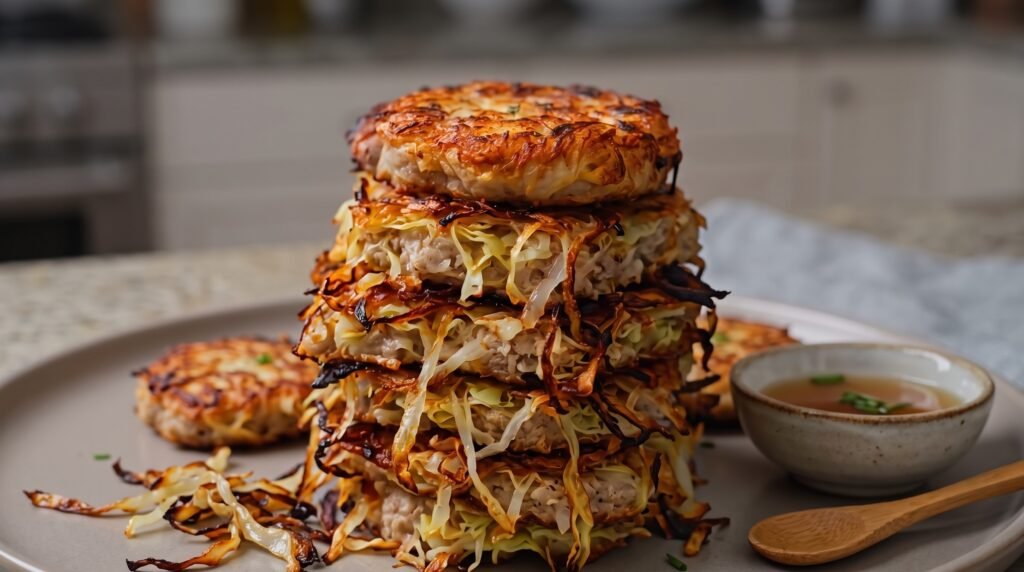
What came out of that pan changed my weeknight dinner game forever. The edges of the cabbage caramelized into sweet, lacy, golden-brown ribbons of pure crunch. The ground pork stayed unbelievably juicy and tender on the inside, seasoned with ginger, garlic, and toasted sesame oil. When I stacked them up on a plate, they looked exactly like the towering stack of crispy patties you see in my kitchen today. They were rustic, deeply savory, and possessed a crunch that could be heard from the next room.
Since that chaotic rainy night, I have made these patties dozens of times, tweaking the ratios, testing different cooking techniques, and perfecting the crisp-to-juice ratio. Along the way, I made plenty of soggy, falling-apart mistakes so you do not have to. Let us dive deep into how to make the ultimate crispy pan-fried cabbage and pork patties, step by step.
The Hidden Magic of Cabbage
We need to talk about cabbage. For a long time, I viewed cabbage as a background player. It was the filler in coleslaw or the limp vegetable swimming in a vegetable soup. But when you expose cabbage to direct, dry heat, something miraculous happens. The natural sugars in the cabbage caramelize, turning those pale green leaves into sweet, nutty, deeply brown bits of heaven.
When you shred cabbage and mix it with meat, it performs a double duty. First, it acts as a structural element, creating tiny air pockets within the patty that keep the meat from packing down too densely. This is why these patties are so light and tender, rather than dense like a hamburger. Second, cabbage releases moisture as it cooks, steaming the meat from the inside while the outer surface fries to a crisp.
However, that moisture is also your greatest enemy if you do not manage it correctly. If you simply mix raw, wet cabbage with meat, your patties will weep in the pan. Instead of frying, they will boil in their own juices, resulting in a pale, soggy mess that breaks apart the second you try to flip it. Managing this moisture is the single most important step of this recipe.
The Golden Rule of Squeezing Cabbage
I learned this lesson the hard way during my second attempt at making these patties. I was in a rush, so I skipped the salting step. I tossed the freshly washed, shredded cabbage straight into the ground pork, shaped the patties, and laid them in a hot cast-iron skillet. Within two minutes, the pan was flooded with water. The patties lost their shape, sliding around the pan like sad, grey islands in a lukewarm lake. They never browned, and they tasted watery.
To avoid this tragedy, you must salt your cabbage. Salting draws out the excess water through osmosis, breaking down the rigid cell walls of the cabbage just enough to make it pliable while concentrating its natural sweetness.
Here is exactly how I do it now:
First, shred your green cabbage as thinly as possible. You can use a sharp chef knife, a mandoline, or even the slicing disk of a food processor. I prefer a knife because I like a mix of ultra-thin shreds and slightly thicker pieces for varied texture.
Place the shredded cabbage in a large colander set over a bowl or in the sink. Sprinkle it generously with kosher salt. For half a head of cabbage, I use about a teaspoon of salt. Use your hands to massage the salt into the cabbage shreds for about thirty seconds. You will feel the cabbage immediately start to soften and lose its stiffness.
Let the cabbage sit for at least fifteen to twenty minutes. You will notice a pool of liquid gathering at the bottom of the bowl.
Once the time is up, grab a handful of cabbage and squeeze. Squeeze like it owes you money. You will be amazed at how much water drains out of what looked like a dry vegetable. Transfer the squeezed, compacted cabbage to a clean bowl. Repeat this with the remaining cabbage. When you are done, your mountain of shredded cabbage will have shrunk to a fraction of its original size, but it is now concentrated, seasoned, and ready to crisp up beautifully in the pan.
The Ingredient Lineup
To get that perfect balance of crispy exterior and juicy, savory interior, we need a thoughtful selection of simple ingredients. Here is what I use in my kitchen.
| Ingredient | Amount | Purpose |
|---|---|---|
| Green cabbage | 1/2 medium head | The star of the show; provides sweetness and crunch |
| Ground pork | 1 pound | Juicy, fatty meat that pairs perfectly with cabbage |
| Garlic | 3 cloves, grated | Pungent, savory depth |
| Fresh ginger | 1 tablespoon, grated | Cuts through the richness of the pork |
| Scallions (green onions) | 3 stalks, finely sliced | Fresh, grassy bite |
| Soy sauce | 1 tablespoon | Deep umami and saltiness |
| Toasted sesame oil | 1 tablespoon | Nutty, aromatic base flavor |
| Ground black pepper | 1/2 teaspoon | Subtle heat |
| Egg | 1 large | The primary binder to hold the patty together |
| Potato starch or Cornstarch | 3 tablespoons | Creates a crispy, lacy crust and absorbs residual moisture |
| Neutral cooking oil | 2-3 tablespoons | For pan-frying (avocado, canola, or grapeseed oil work best) |
Why These Ingredients Matter
You might wonder if you can swap the ground pork for another meat. Yes, you can, but pork is truly the gold standard here. Ground pork has a natural fat content that keeps the patties incredibly moist. If you use ultra-lean ground turkey or chicken breast, your patties run the risk of drying out before the cabbage has time to caramelize on the outside. If you do use ground chicken or turkey, try to find ground dark meat (thigh meat) to maintain that essential juiciness.
Fresh ginger and garlic are non-negotiable. Please do not use garlic powder or ground ginger from a jar here. The fresh aromatics release their essential oils directly into the fat of the pork as it cooks, creating an aroma that will have your neighbors knocking on your door. Grating them on a microplane ensures they distribute evenly throughout the mixture without leaving harsh, raw chunks of garlic in your bite.
Let us talk about the starch. I prefer potato starch over cornstarch, though both work. Potato starch is a staple in Japanese and Korean frying (think karaage or crispy seafood pancakes) because it creates a lighter, crunchier, almost glassy crust that stays crispy much longer than wheat flour or cornstarch. It acts as a moisture sponge inside the patty while forming a beautiful, lacy lattice on the outside when it hits the hot oil.
Step-by-Step Guide to Patty Perfection
Now that your ingredients are prepped and your cabbage is thoroughly squeezed of its water, it is time to build our patties.
Step 1: Combine the Aromatics and Meat
In a large mixing bowl, combine your ground pork, grated garlic, grated ginger, sliced scallions, soy sauce, toasted sesame oil, and black pepper. Use a fork or your hands to mix this together until the seasonings are evenly distributed throughout the meat. I like to do this step first to ensure the meat is well-seasoned before we introduce the bulky cabbage.
Step 2: Add the Cabbage and Benders
Fluff up your squeezed cabbage shreds with your fingers to break up the compacted clumps, then add them to the bowl with the seasoned pork. Crack in your egg and sprinkle the potato starch evenly over the top.
Step 3: Mix with Intention
Now, use your hands to mix everything together. You want to work the mixture until it becomes slightly sticky and cohesive. The proteins in the meat, combined with the egg and starch, will form a paste that binds the cabbage shreds together. If you mix too lightly, your patties will crumble in the pan. If you overwork it like a tough meatloaf, they will lose their light texture. Mix just until the cabbage is evenly suspended in the meat paste and the mixture holds together when you squeeze a handful of it.
Step 4: Shaping the Patties
Divide the mixture into equal portions. I like to make them about the size of a tennis ball, which yields about four to five large, thick patties. Gently pat them into round, flat discs, about three-quarters of an inch thick.
Do not press them too thin, or the interior will dry out before the outside gets crispy. Keep the edges relatively neat, but do not worry if a few wild shreds of cabbage stick out—those wild shreds will turn into the absolute best crispy, charred bits in the pan.
Step 5: Heating the Skillet
Choose your pan wisely. A well-seasoned cast-iron skillet, a heavy carbon steel pan, or a high-quality non-stick pan are your best options. Cast iron is my personal favorite because it retains heat beautifully, ensuring an even, deep golden crust.
Place your skillet over medium heat and add two tablespoons of neutral cooking oil. You want enough oil to coat the bottom of the pan generously. We are pan-frying, not deep-frying, but we still need enough fat to conduct heat into all those uneven cabbage crevices. Let the oil heat up until it is shimmering. To test if it is ready, drop a tiny piece of cabbage into the pan. If it sizzles immediately and enthusiastically, you are ready to cook.
Step 6: The Fry and Steam Method
Carefully lay your patties into the hot pan. Leave plenty of space between them; do not crowd the pan. If you crowd them, the steam escaping from the patties will get trapped, lowering the pan temperature and ruining your chances of getting a crisp crust. Cook in batches if necessary.
Once the patties hit the pan, resist the urge to move them. Let them sear undisturbed for about four to five minutes.
Here is my secret trick: cover the pan with a lid for the first three minutes of cooking. Covering the skillet traps the steam rising from the cabbage and meat, cooking the thick patties all the way through to the center without burning the bottom.
Step 7: The Flip and Crisp
After three minutes, remove the lid. Let them fry uncovered for another minute or two to let any trapped moisture evaporate and to let the bottom crust really solidify. Use a thin, metal spatula to slide underneath a patty. Peek at the underside—it should be a glorious, deep golden-brown with dark, caramelized cabbage edges.
Flip the patties over. They should hold their shape beautifully now that the proteins have coagulated.
Cook the second side uncovered for another four to five minutes. Press down very gently with your spatula to ensure even contact with the pan, but do not press so hard that you squeeze out all the delicious meat juices.
Step 8: Drain and Rest
Once both sides are deeply browned and crispy, transfer the patties to a wire rack set over a baking sheet. Do not drain them on paper towels. Placing hot, crispy food directly onto paper towels traps steam underneath, which will quickly soften that gorgeous crust we worked so hard to create. Resting them on a wire rack allows air to circulate around the entire patty, keeping them perfectly crisp while the meat juices redistribute inside.
The Three Deadly Mistakes of Pan-Frying Patties
Even with a detailed recipe, it is easy to run into a few snags. Here are the three most common mistakes I made on my journey to patty perfection, and how you can avoid them.
Mistake 1: The Oil is Too Hot
If your oil is smoking hot when you put the patties in, the cabbage on the outside will burn to a bitter, black ash long before the ground pork in the center is cooked through. If you find your patties browning too quickly, immediately turn the heat down to medium-low. The interior of the pork needs to reach a safe temperature of 160 degrees Fahrenheit, which requires a steady, moderate heat.
Mistake 2: Flipping Too Early
Patience is a virtue, especially in pan-frying. If you try to flip the patties before the bottom crust has fully formed, the meat will stick to the pan and the patty will tear in half. The egg and starch need time to cook and bind the ingredients. If you feel resistance when you try to slide your spatula under the patty, let it cook for another minute. When it is ready to flip, it will release from the pan easily.
Mistake 3: Skipping the Resting Period
I know how tempting it is to eat these straight out of the pan. They smell incredible, and they are sizzling beautifully. But if you cut into them immediately, all those delicious, savory juices will run out onto your plate, leaving you with a dry patty. Give them just three to four minutes on the wire rack. This short rest allows the meat fibers to relax and reabsorb the juices, ensuring every bite is spectacularly moist.
Elevating the Experience with Sauces
While these cabbage and pork patties are delicious enough to eat entirely on their own, a great dipping sauce elevates them to restaurant-quality status. The rich, savory nature of the pork and caramelized cabbage cries out for something bright, acidic, and slightly spicy to cut through the fat.
Here are my three favorite quick sauces that I rotate through depending on my mood.
The Classic Soy-Sesame Dipping Sauce:
This is my go-to sauce. It is balanced, sharp, and takes thirty seconds to whip up.
In a small bowl, combine two tablespoons of soy sauce, one tablespoon of rice vinegar, half a teaspoon of toasted sesame oil, a pinch of sugar, and a generous spoonful of Chinese chili crisp. The acidity of the rice vinegar cuts through the richness of the pork, while the chili crisp adds a smoky, textured heat.
The Creamy Sriracha-Lime Mayo:
If you love a creamy, rich sauce with a kick, this is the one for you.
Mix three tablespoons of Japanese Kewpie mayonnaise (regular mayo works too, but Kewpie is richer and sweeter) with one tablespoon of sriracha, a squeeze of fresh lime juice, and a pinch of garlic powder. The creamy, zesty sauce pairs beautifully with the sweet caramelized cabbage.
The Lazy Tonkatsu Sauce:
For a sweet, tangy, Japanese-style pub experience, this sauce mimics the traditional sauce served over pork cutlets.
Mix two tablespoons of ketchup, one tablespoon of Worcestershire sauce, one teaspoon of soy sauce, and half a teaspoon of sugar. It is thick, savory, sweet, and highly addictive.
Creative Variations to Try
Once you master the basic cabbage and pork patty, you can start customizing the recipe to fit your pantry and your cravings. Here are a few variations that have been highly successful in my household.
The Cheese-Stuffed Surprise:
If you want to take these over the top, place a small cube of low-moisture mozzarella or a piece of white cheddar in the center of the patty while shaping them, ensuring the meat completely encloses the cheese. When you fry them, the cheese melts into a gooey, stretchy center that contrasts wonderfully with the crispy cabbage exterior.
The Seafood Twist:
Roughly chop half a cup of raw, peeled shrimp and mix it into the pork and cabbage batter. The sweet, bouncy texture of the shrimp adds a wonderful depth of flavor, reminiscent of classic Chinese dim sum dumplings.
The Vegetarian Tofu Version:
To make these vegetarian, swap the ground pork for a block of extra-firm tofu. You must press the tofu thoroughly to remove excess water, then crumble it into the bowl with your hands. Add a splash of vegetarian oyster sauce (made from mushrooms) to replace the savory depth of the pork. Since tofu has very little fat, you may need to add an extra tablespoon of potato starch and a splash of sesame oil to help the patties bind and stay moist.
The Spicy Kimchi Variation:
If you love bold, fermented flavors, chop up half a cup of well-fermented cabbage kimchi and squeeze out its juice. Toss the chopped kimchi in with the fresh cabbage and pork mixture. Reduce the added soy sauce slightly, as the kimchi brings plenty of salt and spice to the party. The result is a fiery, tangy patty with an incredible depth of flavor.
Meal Prep, Freezing, and Reheating
One of the reasons I love this recipe so much is that it is incredibly meal-prep friendly. You can easily double the batch on a Sunday and set yourself up for effortless, delicious lunches throughout the week.
To Store in the Fridge:
Allow the cooked patties to cool completely on your wire rack. Store them in an airtight container lined with a piece of paper towel to absorb any condensation. They will keep beautifully in the fridge for up to four days.
To Freeze:
Yes, you can freeze these! I recommend freezing them after they are cooked. Let the cooked patties cool completely, then arrange them in a single layer on a baking sheet lined with parchment paper. Place the sheet in the freezer for about two hours until the patties are frozen solid. Once frozen, transfer them to a heavy-duty freezer bag, squeezing out as much air as possible. They will keep well in the freezer for up to three months.
How to Reheat to Restore the Crunch:
Please, I beg of you, do not use the microwave to reheat these. The microwave will turn your glorious, crispy patties into a limp, soggy disappointment.
Instead, use one of these two methods to bring that crunch back to life:
The Air Fryer Method: This is by far the easiest and most effective way to reheat them. Preheat your air fryer to 375 degrees Fahrenheit. Place the patties in a single layer in the basket and heat for about five to six minutes (eight to ten minutes if heating straight from frozen) until they are sizzling hot and the crust is completely restored to its original, crispy glory.
The Skillet Method: Place a skillet over medium-low heat with just a tiny drizzle of oil. Add the patties, cover with a lid, and heat for about three minutes per side until warmed through. Remove the lid for the final minute to let the exterior crisp back up.
Bringing It All Together
There is a unique satisfaction that comes from transforming humble, inexpensive ingredients into a dish that feels celebratory and indulgent. Cabbage and ground pork are about as modest as ingredients get, but with a little care, a hot pan, and the right techniques, they become a towering stack of culinary joy.
The next time you find yourself staring blankly into your refrigerator on a busy weeknight, wondering what to make, I hope you remember this recipe. Shred that cabbage, salt it well, squeeze it dry, and fry up a batch of these crispy patties. Pour yourself a cold drink, mix up a quick bowl of spicy dipping sauce, and take a bite. Hear that crunch? That is the sound of a weeknight dinner victory. Happy cooking!