
The Cheesecake That Broke All the Rules (And Won)
The first time I saw a Basque burnt cheesecake, I thought someone had made a terrible mistake. It was at a tiny bar in San Sebastián, blackened on top like it had been forgotten in the oven, slumped in the middle, crustless and deeply unphotogenic. The barman cut me a slice anyway. It jiggled. I ate it standing at the bar, and I’ve thought about that slice weekly ever since.
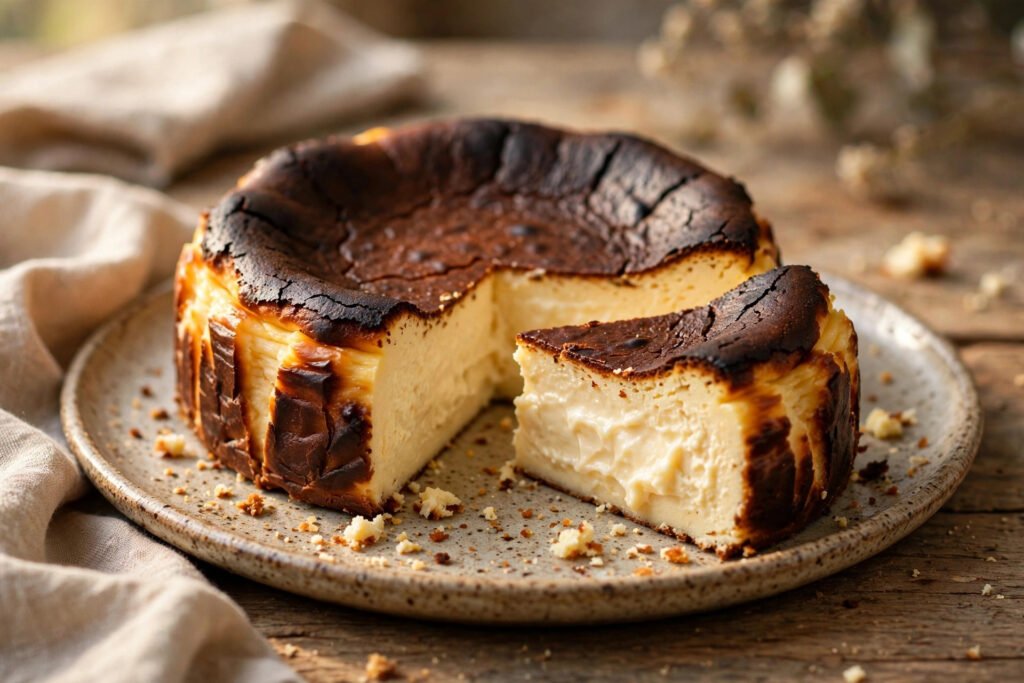
This is the cheesecake for people who’ve been let down by cheesecakes — the dry, the cracked, the ones demanding water baths and prayer. The Basque version throws out the rulebook: no crust, no water bath, no gentle baking. You blast it at ferocious heat until the top nearly burns, and that controlled char makes it taste like caramel and toasted sugar. The centre stays molten and custardy. It is — I’m not exaggerating — the best cheesecake I’ve ever eaten.
It took me five attempts to get the jiggle right. This is attempt number five, perfected.
Why You’ll Love This Recipe
- Deliberately burnt, impossibly delicious. The caramelised top tastes like crème brûlée met cheesecake, with bitter-sweet edges balancing the creamy centre.
- No water bath, no crust, no fuss. One bowl, one tin, no special equipment, no cracking anxiety.
- The jiggly centre is the whole point. Baked until just barely set, the middle stays molten and custardy. Underbaking here isn’t a mistake; it’s the recipe.
- Five minutes of work. The ingredients blitz together in minutes; the oven does the rest. The hardest part is waiting for it to cool.
- Rustic is the look. The craggy, blackened top and slumped middle are the signature — perfection would be wrong here.
Ingredients
Serves 10–12
For the cheesecake:
- 900g full-fat cream cheese, at room temperature
- 300g granulated sugar
- 6 large eggs, at room temperature
- 480ml double cream
- 1 tsp fine sea salt
- 2 tsp vanilla extract (or the seeds of 1 vanilla pod)
- 40g plain flour, sifted
You will also need:
- A 23cm springform tin
- Plenty of baking parchment (two large crisscrossed sheets)
Instructions
Step 1 — Heat the oven fiercely. Preheat to 220°C (200°C fan) — this cheesecake needs aggressive heat for the burnt top and custardy centre. Line the springform tin with two large parchment sheets in a cross, pressing into the corners with plenty of overhang. The rustic, pleated look is traditional.
Step 2 — Beat the cream cheese and sugar. Beat the room-temperature cream cheese with the sugar until completely smooth and slightly fluffy, 2 to 3 minutes with an electric mixer, scraping down twice. Any lumps now become lumps forever.
Step 3 — Add the eggs one at a time. Beat in the eggs one by one, mixing well and scraping the bowl between each. The batter should be smooth and pourable. Room-temperature eggs incorporate far more easily — this genuinely matters here.
Step 4 — Add cream, salt, and vanilla. Pour in the double cream, salt, and vanilla, and beat until just combined. The batter will be thin — thinner than you expect. That is correct. Do not panic.
Step 5 — Sift in the flour. Sift the flour over the batter and beat on low just until no streaks remain — just enough structure to hold it while the centre stays molten.
Step 6 — Bake until dramatically dark. Pour into the lined tin and bake 50 to 60 minutes. You want a deeply browned top — genuinely dark, almost black in patches — with a pronounced jiggle in the centre when you nudge the tin. The dark top is flavour, not a mistake.
Step 7 — Cool completely, then chill. Cool in the tin at room temperature for at least 2 hours — it will sink slightly, which is exactly right. Then refrigerate at least 4 hours, ideally overnight. The chill firms the edges while the centre stays creamy.
Step 8 — Serve at room temperature. Take out of the fridge 30 minutes before serving. Release the springform, peel back the parchment, and cut with a hot, dry knife, wiping between slices. The centre should ooze just slightly. Watch people’s faces.
Tips for the Best Basque Burnt Cheesecake
Room temperature ingredients are essential. Cold cream cheese makes lumpy batter, and lumps have nowhere to hide in a crustless cheesecake. Take everything out an hour before.
Embrace the burn. Pale golden still tastes nice, but it won’t taste Basque. The bitter-sweet caramel notes come from that dark, nearly-black top. When in doubt, five more minutes.
The jiggle is your doneness test. Forget timers. Gently shake the tin — the outer ring set, the centre (about palm-sized) wobbling freely. That wobble sets into custard as it cools.
Don’t overmix after the flour goes in. Beat just until it disappears — overworking develops gluten and makes the texture dense instead of silky.
Serving & Storage
Serve slices at cool room temperature, when the centre is at its creamiest. It needs nothing alongside — no fruit, no sauce. The burnt top is the garnish. A cup of strong coffee is the perfect partner.
Keeps covered in the fridge for up to 4 days — the texture actually improves on day two. It doesn’t freeze well; the custardy centre turns grainy when thawed. Leftover slices (rare in my house) are excellent for breakfast, and I will not be taking questions about that.
Frequently Asked Questions
Is the burnt top actually supposed to look like that?
Yes — genuinely. The deeply caramelised top is the defining feature, invented at La Viña bar in San Sebastián. The char gives a bitter-sweet flavour you can’t get any other way.
Why is my cheesecake cracked?
A few surface cracks are normal and rustic. Deep cracks mean overbaking — you want a pronounced jiggle in the centre when it comes out.
Can I make this in a smaller tin?
A 20cm tin works — add 10 to 15 minutes since the cheesecake is deeper. Tent with foil if the top darkens before the edges set. Don’t go smaller or the centre won’t cook through.