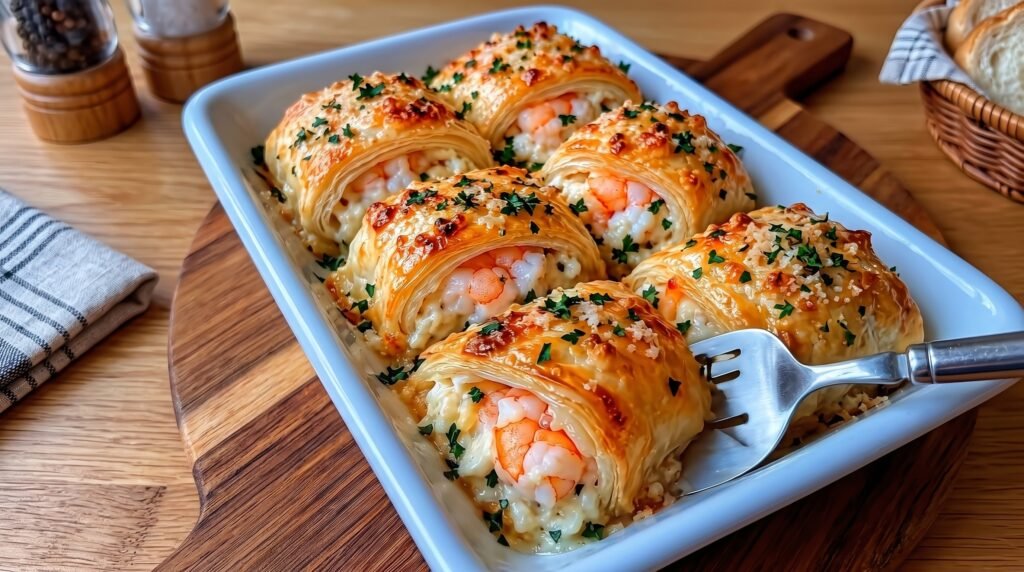

We have all been there. You want to host a dinner party or put together a weekend appetizer that looks incredibly fancy, but you do not want to spend six hours sweating over a hot stove. A few years ago, I found myself in this exact spot. I wanted to impress my in-laws, who appreciate good food but are notoriously hard to please. I had a bag of frozen shrimp, a sheet of puff pastry, and some cream cheese. I thought, how hard could it be to roll these together and bake them?
My first attempt was an absolute disaster. If you have ever tried to bake seafood inside a pastry without knowing the rules, you probably know what happened next. The shrimp released a massive pool of water inside the pastry. The top of my roll-ups looked beautiful, golden, and flaky, but the bottom was a soggy, gluey, raw dough puddle. The shrimp inside had turned to rubber because I kept baking the rolls in a desperate attempt to dry out the bottom pastry. It was a culinary tragedy, and we ended up ordering pizza.
But I am stubborn. I knew the flavor combination of garlic, cream cheese, parmesan, and plump shrimp wrapped in buttery, flaky puff pastry had the potential to be a showstopper. So, I spent the next few months experimenting, tweaking, and failing until I finally cracked the code.
Today, I am going to share everything I learned along the way so you can skip the soggy bottoms, the rubbery shrimp, and the kitchen tears. This guide will walk you through the science, the technique, and the exact step-by-step process to make perfect, bakery-quality creamy garlic shrimp puff pastry rolls every single time.
Why This Recipe Works and the Science of Puff Pastry
To understand how to make this dish successfully, we have to look at how puff pastry behaves. Puff pastry is a laminated dough. This means it consists of hundreds of microscopic layers of cold butter sandwiched between layers of flour dough. When the pastry enters a hot oven, the water in the butter rapidly heats up and turns into steam. This steam pushes the dough layers apart, creating that sky-high rise and flaky texture we all love.
The enemy of puff pastry is excess moisture from external sources. When you pack puff pastry with wet ingredients, like raw shrimp or a watery sauce, the steam cannot escape. Instead of rising, the dough absorbs the liquid, collapses, and remains raw.
To prevent this, we have to control the moisture of our filling. We do this by drying the shrimp meticulously, using a thick cheese base instead of a runny cream sauce, and incorporating a starch or a dry cheese like parmesan to help absorb any juices released during the baking process.
Selecting Your Ingredients
The beauty of this recipe lies in its simplicity, which means the quality of each ingredient will shine through. Let us break down what you need and why.
For the shrimp, I highly recommend using raw, peeled, and deveined shrimp. Medium to large sizes work best, specifically something around the 21/25 or 26/30 count per pound. If you use massive colossal shrimp, they will take too long to cook through, and you will end up with raw spots. If you use tiny salad shrimp, they will overcook into oblivion before the pastry even begins to brown.
Frozen shrimp are perfectly fine, and honestly, they are often fresher than the shrimp sitting on ice at the seafood counter, which are usually just thawed frozen shrimp anyway. Just make sure they are completely thawed before you start.
When it comes to puff pastry, look for a brand that uses real butter if you can find it. Many grocery store brands use vegetable shortening or oils. While these still puff up nicely, they lack that rich, melt-in-your-mouth buttery flavor. Keep your puff pastry in the freezer until the night before you plan to make this, then let it thaw slowly in the refrigerator.
For the cheese filling, we use a mixture of cream cheese, mozzarella, and parmesan. The cream cheese provides a smooth, tangy base that holds everything together. The mozzarella gives us those beautiful, gooey cheese pulls. The parmesan adds a sharp, salty depth of flavor and helps bind the moisture. Do not use pre-shredded parmesan from a green shaker can. Grate it fresh from a block; it melts better and tastes infinitely superior.
Ingredients List and Measurements
Here is the exact blueprint of what you will need to gather before you start cooking.
| Ingredient | Amount | Notes |
|---|---|---|
| Puff Pastry | 1 sheet | Thawed but kept cold in the fridge |
| Raw Shrimp | 12 ounces | Peeled, deveined, tail-off, dried thoroughly |
| Cream Cheese | 4 ounces | Softened to room temperature |
| Shredded Mozzarella | 1 cup | Low-moisture, part-skim works best |
| Grated Parmesan Cheese | 1/2 cup | Freshly grated from a block |
| Garlic | 4 cloves | Finely minced or pressed |
| Lemon Zest | 1 teaspoon | Freshly grated from one lemon |
| Fresh Parsley | 3 tablespoons | Finely chopped, divided |
| Green Onions | 2 stalks | Finely sliced |
| Salt and Black Pepper | To taste | About 1/2 teaspoon each |
| Egg | 1 large | Whisked with 1 tablespoon water for egg wash |
| Coarse Sea Salt | 1/2 teaspoon | For sprinkling on top |
Step-by-Step Instructions
Now that you have your ingredients ready, let us walk through the process of putting these rolls together. Grab a clean cutting board, a sharp knife, and a baking sheet lined with parchment paper. Do not skip the parchment paper; otherwise, the cheese that bubbles out will stick to your pan, and you will lose half of your delicious rolls.
Step 1: Prep the Shrimp
Start by rinsing your thawed shrimp under cold water. Once clean, dump them onto a clean kitchen towel or several layers of heavy-duty paper towels. Press down on them firmly with another paper towel. You want them as dry as humanly possible. If you think they are dry, dry them one more time.
Once dry, chop the shrimp into bite-sized pieces. If you leave them whole, they will slide out of the pastry when you try to slice the rolls, and it makes eating them very messy. Chop each shrimp into three or four pieces. Place the chopped shrimp in a bowl and set them aside.
Step 2: Make the Creamy Garlic Filling
In a medium mixing bowl, combine the softened cream cheese, minced garlic, lemon zest, shredded mozzarella, grated parmesan, half of the chopped parsley, and the sliced green onions. Season the mixture with salt and freshly cracked black pepper.
Using a sturdy spatula or a wooden spoon, mix everything together until it forms a thick, cohesive paste. It might seem too thick at first, but keep working it. A thick filling is your insurance policy against a soggy pastry bottom.
Once the cheese mixture is well combined, gently fold in your chopped, dry shrimp. Make sure the shrimp pieces are evenly distributed throughout the cheese mixture.
Step 3: Roll Out the Puff Pastry
Remove your puff pastry sheet from the refrigerator. Lightly dust your work surface and a rolling pin with flour. Unroll the puff pastry sheet onto the floured surface.
Gently roll the pastry out into a rectangle, roughly twelve by ten inches. You do not want to roll it too thin, or it will tear when you roll it up. You just want to smooth out the creases and create a uniform thickness.
If the pastry starts to feel warm or sticky at any point during this process, slide it onto a baking sheet and pop it into the freezer for five minutes. Cold dough is the secret to a high rise.
Step 4: Assemble and Roll
Spread your shrimp and cheese mixture evenly over the puff pastry sheet. Make sure to leave a one-inch border along the top edge of the pastry. This clean border will act as your seal.
Starting from the edge closest to you, carefully roll the pastry up into a tight log, just like you would when making cinnamon rolls. Try to roll it as tightly as possible without squeezing the filling out of the sides.
When you reach the clean top border, brush it lightly with a tiny bit of water or egg wash. This will act as glue. Press the seam firmly to seal the log.
Step 5: The Secret Chill Step
Do not skip this step. This is where many home cooks go wrong. If you try to slice this soft, warm log of pastry right now, the weight of the knife will squash it, the filling will squeeze out the ends, and you will end up with messy, misshapen blobs.
Wrap the rolled log tightly in plastic wrap or parchment paper. Place it on a tray and put it in the freezer for fifteen to twenty minutes. We are not trying to freeze it solid; we just want the butter in the pastry to firm up and the cheese filling to set. This makes slicing the rolls clean and easy, and it ensures the puff pastry rises beautifully in the oven.
Step 6: Slice and Prepare for Baking
While your pastry roll is chilling, preheat your oven to 400 degrees Fahrenheit (200 degrees Celsius). Line a large baking sheet with parchment paper.
Remove the chilled log from the freezer and unwrap it. Using a very sharp serrated knife or a chef's knife, slice the log into individual rounds. I like to cut mine about one and a half to two inches thick.
As you slice them, place each roll flat on your prepared baking sheet, leaving about two inches of space between them. They will expand significantly as they bake.
Step 7: The Final Flourish
In a small bowl, whisk your egg with a tablespoon of water to create an egg wash. Using a pastry brush, gently brush the egg wash over the exposed pastry sections of each roll. Be careful not to let the egg wash pool underneath the rolls, as this can glue them to the pan and prevent rising.
Sprinkle the tops of the rolls with a little bit of extra grated parmesan cheese, some coarse sea salt, and a crack of black pepper. This creates a beautiful, savory crust on top of each pastry.
Step 8: Bake to Perfection
Slide the baking sheet into the center rack of your preheated oven. Bake for twenty-five to thirty minutes.
Keep an eye on them around the twenty-minute mark. You are looking for a deep, rich golden-brown color on the pastry. The cheese should be bubbling and caramelized at the edges, and the shrimp should be pink and fully cooked.
If the pastry looks pale, keep baking them. Underbaked puff pastry is gummy and unpleasant. Do not be afraid of a deep golden color; that is where the flavor and texture live.
Once baked, remove them from the oven. Let them rest on the baking sheet for five to ten minutes before serving. The filling will be molten hot, and resting allows the cheese to set slightly so they are easier to handle. Transfer to a serving platter, garnish with the remaining fresh parsley, and enjoy.
Crucial Mistakes to Avoid
Through my many trials and errors, I have cataloged the most common mistakes that can ruin this dish. Here is what to watch out for.
Using warm puff pastry is the number one cause of flat, greasy rolls. If the butter in the pastry melts before it hits the hot oven, the layers will fuse together, and you will get a dense, heavy dough instead of light flakes. Keep your dough cold. If you take too long to roll it up, put it back in the fridge.
Do not skip drying your shrimp. I cannot stress this enough. Shrimp are naturally high in water content, and many frozen brands are treated with sodium tripolyphosphate, which causes them to hold onto even more water. Buy wild-caught shrimp if possible, as they usually contain less added water, and dry them until your paper towels come away dry.
Avoid over-wetting your filling. It is tempting to add a splash of heavy cream, white wine, or lemon juice to the cheese mixture, but resist the urge. Any added liquid will ruin the pastry. If you want white wine or lemon flavor, serve a lemon wedge on the side or reduce your white wine down to a thick syrup before adding a tiny drop to the cheese.
Using a dull knife to slice the rolls will seal the edges of the pastry sheets together, preventing them from opening and puffing up. Use a very sharp serrated knife and use a gentle sawing motion rather than pressing straight down.
Finally, baking at too low of a temperature will melt the butter out of the pastry before the steam has a chance to lift the dough. Always bake at 400 degrees Fahrenheit (200 degrees Celsius) or higher, and make sure your oven is fully preheated before your rolls go in.
Creative Variations to Try
Once you have mastered the basic recipe, you can start experimenting with different flavors to make this dish your own.
If you love a bit of heat, try adding a finely diced jalapeno or a teaspoon of red pepper flakes to the cheese mixture. You can also swap out the mozzarella for pepper jack cheese to give it a nice southwestern kick.
For an extra luxurious version, you can make a seafood medley roll. Replace half of the shrimp with lump crab meat or chopped lobster tail meat. This makes for an incredibly decadent holiday appetizer.
If you want to sneak some greens into the dish, spinach works beautifully with shrimp. Squeeze all the water out of some thawed frozen spinach (or sauté fresh spinach and squeeze it dry), then mix it into the cream cheese. This gives you a hot shrimp-and-spinach-dip vibe wrapped in pastry.
For a Mediterranean twist, swap the mozzarella for crumbled feta cheese, throw in some chopped kalamata olives, sun-dried tomatoes, and a sprinkle of dried oregano. The salty feta cuts through the rich pastry beautifully.
Prep-Ahead and Freezing Tips
This recipe is fantastic for entertaining because you can do almost all of the work in advance.
If you want to prep these the day before a party, you can roll the log, wrap it tightly in plastic wrap, and store it in the refrigerator overnight. When your guests arrive, simply slice them, brush with egg wash, and bake. You may need to add an extra two to three minutes to the baking time since the filling will be thoroughly chilled.
You can also freeze these rolls unbaked. Slice the chilled log into rounds and place them on a baking sheet lined with parchment paper. Place the entire baking sheet in the freezer for an hour until the rolls are frozen solid. Transfer the frozen rolls to a freezer-safe zip-top bag, separating layers with parchment paper. They will keep well for up to three months.
When you are ready to bake, do not thaw them. Baking them from frozen actually helps keep the pastry cold and results in an incredible rise. Simply place the frozen rolls on a parchment-lined baking sheet, brush with egg wash, and bake at 400 degrees Fahrenheit for thirty-five to forty minutes, or until golden brown and hot throughout.
How to Handle Leftovers and Reheat
If you miraculously have leftovers, store them in an airtight container in the refrigerator for up to two days.
Do not use the microwave to reheat them. The microwave will turn your beautiful, crispy pastry into a rubbery, soggy shoe sole and overcook the shrimp.
Instead, reheat them in the oven or an air fryer. To reheat in the oven, place them on a baking sheet and bake at 350 degrees Fahrenheit (175 degrees Celsius) for ten to twelve minutes until the pastry is crisp again and the center is warm.
If you have an air fryer, this is the absolute best way to reheat puff pastry. Pop them in the air fryer basket at 350 degrees Fahrenheit for five to six minutes. They will come out tasting just as crisp and fresh as the day you made them.
Final Thoughts
Making these creamy garlic shrimp puff pastry rolls is all about respecting your ingredients and understanding how they interact with heat. By keeping your pastry cold, drying your shrimp, and keeping your filling thick, you will create a dish that looks like it came from a high-end French bakery.
The combination of the crispy, buttery pastry, the gooey, garlic-infused cheese, and the sweet, tender shrimp is truly unmatched. Whether you are serving these at a holiday gathering, a game day party, or just a cozy night in, they are sure to be a massive hit. Grab your rolling pin, don't forget the parchment paper, and happy baking.