
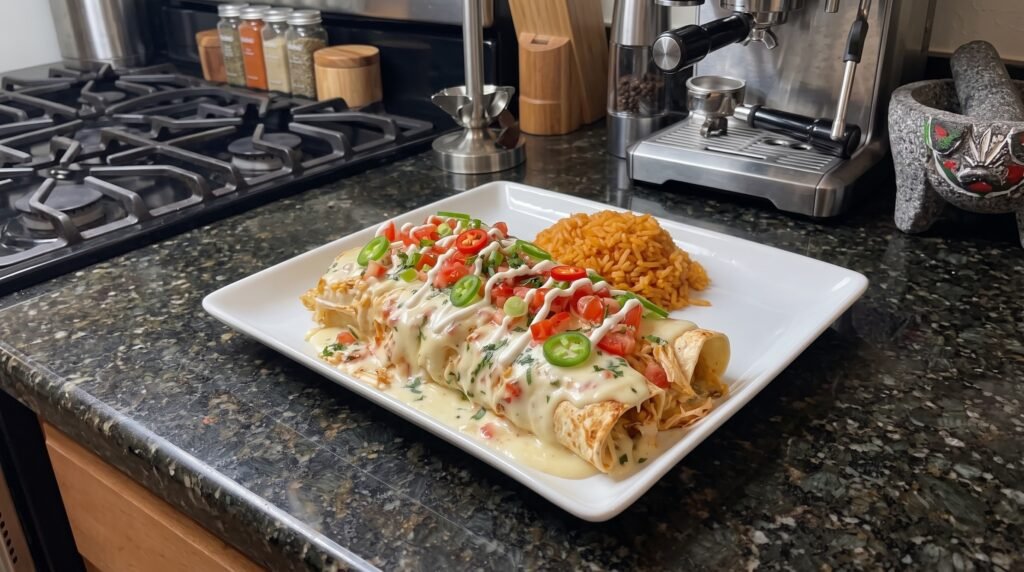

We have all been there. It is Friday night, the work week is finally over, and all you can think about is that local family-run Mexican restaurant down the street. You sit down, order a giant basket of chips with salsa, and wait for your favorite plate to arrive. When the server finally brings it out, the plate is so hot they have to warn you not to touch it. In front of you lies a glorious, bubbling mountain of tortillas stuffed with juicy chicken, completely drowned in a velvety, pure white cheese sauce, garnished with bright red tomatoes, fresh green cilantro, and spicy jalapeño slices. On the side sits a perfect mound of fluffy, orange-tinted Mexican rice.
For years, I tried to recreate this exact experience at home. My early attempts were, quite frankly, a complete disaster. One time, my cheese sauce split into a gritty, oily mess that looked more like curdled milk than queso. Another time, the tortillas absorbed so much moisture during baking that they disintegrated into a mushy, unrecognizable paste. I ended up eating chicken and flour paste with a spoon.
But I refused to give up. Through trial and error, dozens of ruined batches, and some helpful tips from a friend whose family ran a successful Tex-Mex cantina, I finally cracked the code. Today, I am sharing my ultimate recipe for smothered creamy queso chicken enchiladas, along with the secrets to making authentic restaurant-style Mexican rice that actually turns out fluffy every single time. Grab your skillet, put on your favorite music, and let us dive into the details.
The Great Tortilla Dilemma: Corn vs Flour
If you talk to a purist, they will tell you that true enchiladas must be made with corn tortillas. They are not wrong. Corn tortillas have a wonderful, earthy flavor that pairs beautifully with traditional red or green chili sauces. However, when we are dealing with a heavy, decadent, liquid-gold queso blanco sauce, flour tortillas are a game-changer.
Flour tortillas are incredibly sturdy. They act like a soft, pillowy cushion that can hold a generous amount of shredded chicken without tearing. When baked, the edges of flour tortillas get delightfully crispy while the center stays tender and chewy.
No matter which tortilla you choose, you cannot skip the prep step. Do not ever roll your tortillas straight out of the package. Cold tortillas are stiff and will crack open when you try to roll them. Even worse, cold flour tortillas will act like a sponge, soaking up all your cheese sauce and turning soggy.
To prevent this, you need to lightly fry each tortilla in a tiny bit of oil for about ten seconds per side. You do not want them to become crispy like a taco shell. You just want them pliable and sealed. The thin layer of oil creates a hydrophobic barrier, meaning the moisture from the sauce cannot penetrate the tortilla too quickly. This simple step is the ultimate secret to non-soggy homemade enchiladas.
The Science of the Perfect Queso Blanco Sauce
Let us talk about the cheese sauce, because this is where most home cooks go wrong. If you buy a bag of pre-shredded cheese from the grocery store, you are setting yourself up for failure. Pre-shredded cheese is coated in potato starch, powdered cellulose, and natamycin. These additives are designed to keep the shreds from clumping together in the bag. Unfortunately, they also prevent the cheese from melting smoothly. If you try to melt pre-shredded cheese into a sauce, you will end up with a clumpy, grainy texture.
For a silky-smooth queso blanco, you must buy blocks of cheese and grate them yourself. My personal favorite blend is Monterey Jack for its mild flavor and superior meltability, combined with white American cheese. Yes, white American cheese. I know some people look down on it, but it contains emulsifying salts that hold the fat and liquid together, ensuring your sauce never splits. You can ask for a block of white American cheese at your local grocery store deli counter and grate it at home.
To make the sauce, we start with a simple roux made of butter and flour. This provides a stable base. Then, we whisk in warm milk and chicken broth before stirring in our freshly grated cheeses over low heat. Keeping the heat low is crucial. If cheese gets too hot, its proteins tighten up and squeeze out the fat, leaving you with oil pools and rubbery clumps.
How to Make Juiceless Chicken Flavorful
Another common mistake is filling enchiladas with bland, dry chicken breast. If you just boil chicken breasts in plain water, shred them, and tuck them into tortillas, your enchiladas will taste like cardboard.
We want every single bite to be packed with flavor. The best way to achieve this is by poaching chicken breasts or thighs in a highly seasoned liquid. I like to simmer my chicken with garlic cloves, half an onion, ground cumin, chili powder, Mexican oregano, and a spoonful of chicken bouillon paste.
Once the chicken is tender enough to shred with two forks, do not throw away that poaching liquid! Strain it and save it. Toss your shredded chicken with a few splashes of this concentrated broth and a spoonful of sour cream or cream cheese. This keeps the chicken incredibly moist and flavorful while it bakes inside the tortillas.
Ingredients for the Ultimate Smothered Enchiladas and Rice
| Ingredient Group | Ingredient Name | Amount | Purpose |
|---|---|---|---|
| The Chicken Filling | Chicken breasts or thighs | 1.5 pounds | The main protein filling |
| The Chicken Filling | Yellow onion | 0.5 piece | Aromatics for poaching broth |
| The Chicken Filling | Garlic cloves | 4 cloves | Smashed for poaching broth |
| The Chicken Filling | Chicken bouillon paste | 1 tablespoon | Adds rich savory depth to chicken |
| The Chicken Filling | Ground cumin | 1 teaspoon | Warm, earthy spice for chicken |
| The Chicken Filling | Dried Mexican oregano | 1 teaspoon | Traditional herb for depth |
| The Chicken Filling | Cream cheese | 2 tablespoons | Keeps the filling moist and creamy |
| The Queso Sauce | Unsalted butter | 2 tablespoons | Base for the roux |
| The Queso Sauce | All-purpose flour | 2 tablespoons | Thickener for the sauce |
| The Queso Sauce | Whole milk | 1 cup | Liquid base for creaminess |
| The Queso Sauce | Chicken broth | 1 cup | Adds flavor and thins the sauce |
| The Queso Sauce | Monterey Jack cheese | 8 ounces | Grated from a block for melting |
| The Queso Sauce | White American cheese | 8 ounces | Grated from deli block for silkiness |
| The Queso Sauce | Diced green chiles | 4 ounces | Mild heat and acidity for sauce |
| The Assembly | Flour tortillas | 8 medium | Soft, sturdy wrappers |
| The Assembly | Vegetable oil | 2 tablespoons | For sealing the tortillas |
| The Toppings | Mexican crema | 0.25 cup | Drizzled over the finished dish |
| The Toppings | Roma tomatoes | 2 medium | Seeded and finely diced |
| The Toppings | Fresh cilantro | 0.25 cup | Chopped for brightness |
| The Toppings | Green onions | 3 stalks | Thinly sliced for a mild bite |
| The Toppings | Jalapeño peppers | 2 pieces | Sliced for heat (red and green) |
| The Mexican Rice | Long-grain white rice | 1.5 cups | The grain base for the side dish |
| The Mexican Rice | Vegetable oil | 3 tablespoons | For toasting the rice grains |
| The Mexican Rice | Tomato sauce | 8 ounces | Provides color and base flavor |
| The Mexican Rice | Chicken bouillon powder | 1.5 tablespoons | The secret restaurant seasoning |
| The Mexican Rice | Garlic powder | 1 teaspoon | Easy distribution of garlic flavor |
| The Mexican Rice | Onion powder | 1 teaspoon | Savory aromatic base |
| The Mexican Rice | Warm water | 2.5 cups | Liquid for cooking the rice |
Step-by-Step Guide to Smothered Chicken Enchiladas
First, let us get the chicken going. Place your chicken breasts or thighs in a medium pot and cover them with water by about an inch. Add your halved yellow onion, smashed garlic cloves, chicken bouillon paste, ground cumin, and Mexican oregano. Bring the water to a boil over medium-high heat, then immediately reduce the heat to low. Cover the pot and let the chicken simmer gently for about fifteen to twenty minutes, or until it reaches an internal temperature of one hundred and sixty-five degrees Fahrenheit.
Once cooked, transfer the chicken to a large bowl and let it cool slightly. Using two forks, shred the chicken into bite-sized pieces. Pour about a quarter cup of the warm cooking liquid over the shredded chicken, then fold in the cream cheese until it melts and coats the meat. This mixture should be incredibly juicy and flavorful. Set it aside.
Next, let us prep the tortillas. Heat two tablespoons of vegetable oil in a skillet over medium heat. Take a flour tortilla and place it in the hot oil for about five to ten seconds. Flip it over and cook for another five seconds. It should be soft and warm, not brown or crispy. Drain it on a paper towel. Repeat this process with all eight tortillas.
Preheat your oven to three hundred and seventy-five degrees Fahrenheit. Grease a large nine-by-thirteen-inch baking dish with cooking spray.
Now, let us build our velvety queso blanco sauce. In a saucepan over medium heat, melt your unsalted butter. Once bubbling, sprinkle in the flour. Whisk continuously for about two minutes to cook out the raw flour taste. The mixture should look slightly golden and foamy. Slowly pour in the warm milk and chicken broth while whisking vigorously to prevent any lumps from forming. Bring the liquid to a gentle simmer and let it cook for three to four minutes until it thickens enough to coat the back of a spoon.
Turn the heat down to the lowest setting. Add the grated white American cheese and Monterey Jack cheese in small handfuls, whisking constantly until completely melted before adding the next batch. Once all the cheese is incorporated and the sauce is perfectly smooth, stir in the diced green chiles. Remove the pot from the heat.
Spread a thin layer of the warm queso sauce (about a half cup) over the bottom of your prepared baking dish. This prevents the enchiladas from sticking and burning on the bottom.
To assemble the enchiladas, place a portion of the shredded chicken down the center of each prepared flour tortilla. Roll the tortilla tightly around the chicken and place it seam-side down in the baking dish. Repeat this for all eight tortillas, lining them up snugly next to each other.
Pour the remaining warm queso sauce evenly over the top of the rolled tortillas, making sure every single spot is covered. If any edges of the tortillas are left dry, they will get hard and dry in the oven.
Bake the enchiladas uncovered for fifteen to twenty minutes. You want the sauce to be bubbling hot at the edges and the tortillas to be heated all the way through. Do not bake them for too long, or the cheese sauce will start to dry out and lose its creamy texture.
The Secret to Fluffy, Restaurant-Style Mexican Rice
While your enchiladas are baking, it is time to make the side dish that ties everything together: authentic Mexican rice. If your homemade rice often turns out sticky, gummy, or mushy, you are likely missing one crucial step.
You must toast the dry rice grains in hot oil before adding any liquid. Toasting the rice does two important things. First, it coats each grain in oil, which prevents them from sticking together as they cook. Second, it browns the starches in the rice, creating a wonderful, nutty flavor base that is characteristic of real Mexican restaurant rice.
Heat three tablespoons of vegetable oil in a heavy-bottomed skillet or saucepan over medium heat. Add your dry, uncooked long-grain white rice. Stir constantly to make sure every grain is coated in oil. Cook the rice for about six to eight minutes. You will hear it make a clicking sound as it dries out, and then the grains will begin to turn a beautiful golden-brown color. Do not walk away during this step, as rice can go from perfectly toasted to burnt very quickly.
Once the rice is toasted, carefully pour in the tomato sauce. It will steam and sputter, so be cautious. Stir the tomato sauce into the hot rice for about one minute to caramelize the sugars in the tomato paste.
Next, pour in the warm water, chicken bouillon powder, garlic powder, and onion powder. Give everything one good stir to distribute the seasonings. Bring the liquid to a rolling boil.
Once boiling, turn the heat down to low, cover the pan with a tight-fitting lid, and let it simmer undisturbed for exactly twenty minutes. Do not open the lid! Peeking lets out the steam, which ruins the cooking process and results in unevenly cooked rice.
After twenty minutes, turn off the heat but leave the lid on for another ten minutes. This allows the remaining steam to gently finish cooking the rice. Finally, remove the lid and use a fork to gently fluff the rice. You will be greeted with perfectly separated, fluffy, orange grains of deliciousness.
Bringing It All Together: The Presentation
To serve this meal like a professional, timing is everything. Pull your bubbling hot enchiladas out of the oven and let them rest for about five minutes. This allows the queso sauce to set up slightly so it does not completely run off the tortillas when you plate them.
Using a spatula, lift two or three enchiladas onto a plate. Spoon some of the extra warm queso sauce from the bottom of the baking dish right over the top.
Now, we add our fresh toppings. The contrast between the hot, rich, cheesy enchiladas and the cold, crisp, bright toppings is what makes this dish so spectacular.
Fill a small plastic squeeze bottle with Mexican crema or sour cream thinned with a splash of milk. Drizzle it in a zigzag pattern across the length of the enchiladas.
Next, sprinkle a generous amount of finely diced Roma tomatoes, chopped fresh cilantro, and thinly sliced green onions over the top. For a gorgeous pop of color and a bit of spicy crunch, arrange fresh red and green jalapeño slices along the center of the dish.
Place a generous scoop of your fluffy Mexican rice right next to the smothered enchiladas. The rice acts as the perfect vessel to soak up any of that extra, delicious queso sauce that pools on the plate.
Common Mistakes to Avoid
Even with the best intentions, a few simple slip-ups can turn this glorious meal into a mediocre dinner. Here are the most common pitfalls to watch out for.
Using cold ingredients in your cheese sauce is a recipe for curdling. Make sure your milk and chicken broth are warm or at least room temperature before you add them to the hot butter and flour roux. Pouring cold liquid into a hot pan shocks the fat, which leads to lumps.
Never boil your cheese sauce after the cheese has been added. Once the cheese goes into the pan, the heat should be on its lowest setting, or the pan should be off the heat entirely. High heat destroys the delicate emulsion in the cheese, causing the fat to separate into an oily layer.
Do not overfill your tortillas. It is tempting to stuff as much chicken as possible into each wrap, but overfilled enchiladas are difficult to roll tightly and will burst open in the oven, making a messy presentation. Keep your filling to about a third of a cup per tortilla.
Avoid using thin, cheap flour tortillas. Look for standard, medium-sized flour tortillas that have some thickness to them. Thin tortillas will dissolve quickly under the weight of the rich queso sauce.
Do not peek at your rice. I cannot emphasize this enough. Every time you lift the lid off your cooking rice, you lose valuable steam and drop the temperature inside the pot, which leads to hard, undercooked grains in the center.
Variations to Customize Your Feast
While chicken is the classic filling for this dish, this recipe is incredibly versatile and can be easily adapted to suit whatever you have in your kitchen.
If you are a fan of beef, swap out the shredded chicken for seasoned ground beef or tender, slow-cooked shredded barbacoa. Just make sure to drain any excess grease from the beef before rolling it into the tortillas so your dish does not end up oily.
For a vegetarian version, replace the chicken with a mixture of black beans, sweet corn, sautéed diced bell peppers, and zucchini. Toss the vegetables with some cream cheese and spices before rolling them up.
If you love green chiles, you can make a hybrid enchilada suiza by mixing a half cup of salsa verde (tomatillo sauce) directly into the white queso sauce. This adds a beautiful, tangy brightness that cuts through the richness of the cheese.
If you want to add some smoky heat, dice up a chipotle pepper in adobo sauce and mix it into your shredded chicken filling. This pairs beautifully with the creamy, cooling white cheese sauce on top.
How to Meal Prep, Store, and Reheat Leftovers
If you have leftovers, you are in luck. These smothered enchiladas reheat beautifully if you follow a few simple guidelines.
To store leftovers, let the dish cool completely to room temperature. Transfer the enchiladas and sauce to an airtight container and store them in the refrigerator for up to three or four days. Keep the Mexican rice in a separate airtight container.
When you are ready to reheat the enchiladas, avoid the microwave if possible. The microwave heats food unevenly and can cause the cheese sauce to split into a greasy mess. Instead, place the leftovers in an oven-safe dish, cover it tightly with aluminum foil to lock in the moisture, and bake at three hundred and fifty degrees Fahrenheit for fifteen to twenty minutes until heated through.
If you must use the microwave, heat the enchiladas at fifty percent power in one-minute increments, checking often to make sure the cheese sauce does not overheat and separate.
To reheat the Mexican rice, place it in a bowl, sprinkle a teaspoon of water over the top, cover it with a damp paper towel, and microwave for one minute. The water will create steam under the paper towel, making the rice grains plump and soft again instead of dry and hard.
You can also freeze these enchiladas for an easy weeknight meal later on. Assemble the enchiladas in a disposable aluminum baking pan, pour the queso sauce over the top, but do not bake them. Cover the pan tightly with plastic wrap and then a layer of heavy-duty aluminum foil. Freeze for up to three months.
When you are ready to eat, thaw the pan in the refrigerator overnight, then bake as directed, adding about five to ten extra minutes to the baking time to ensure they are heated hot all the way through. Do not freeze the fresh toppings; add those fresh right before serving.
Frequently Asked Questions
Can I use corn tortillas instead of flour tortillas for this recipe?
Yes, you can certainly use corn tortillas if you prefer. However, you must be extra careful to lightly fry them in oil to soften them and create that moisture barrier. Corn tortillas are much more fragile than flour ones, so handle them gently when rolling.
What is white American cheese, and where can I find it?
White American cheese is a mild, highly meltable cheese. Do not confuse it with yellow Kraft singles. You want to go to the deli counter at your local supermarket and ask the clerk to slice a block of white American cheese (like Land O Lakes brand) into a thick chunk that you can grate at home on a box grater. It melts into a perfectly smooth texture without splitting.
Is there a substitute for white American cheese if I cannot find it?
If you cannot find white American cheese, you can substitute it with more Monterey Jack, mild white cheddar, or Fontina. However, to ensure your sauce melts smoothly without splitting, you may want to melt in two tablespoons of cream cheese or use a pinch of sodium citrate if you have it in your pantry.
How do I make my Mexican rice less spicy or spicier?
The recipe provided is very mild, as it uses only tomato sauce and spices. If you want to add some heat to your rice, you can sauté a finely diced jalapeño or serrano pepper in the oil with the rice before adding the tomato sauce and water.
Can I use a rotisserie chicken to save time?
Absolutely. Using a store-bought rotisserie chicken is a fantastic shortcut. Simply shred the meat from the bones, discard the skin, and toss the meat with some chicken broth, cumin, garlic powder, and cream cheese to make sure it stays juicy and flavorful inside the baked tortillas.
Why did my rice turn out mushy even though I toasted it?
If your rice turned out mushy, you likely used too much liquid or did not let the steam escape correctly at the end. Make sure to measure your water accurately. Also, be sure to use long-grain white rice, as short-grain or medium-grain varieties contain more starch and are naturally stickier.
Can I make this dish gluten-free?
To make this dish gluten-free, you will need to use certified gluten-free corn tortillas instead of flour tortillas. For the queso sauce, swap out the all-purpose flour in the roux for an equal amount of cornstarch mixed with a little cold water, stirring it into the warm milk and broth mixture to thicken it before adding the grated cheese.