
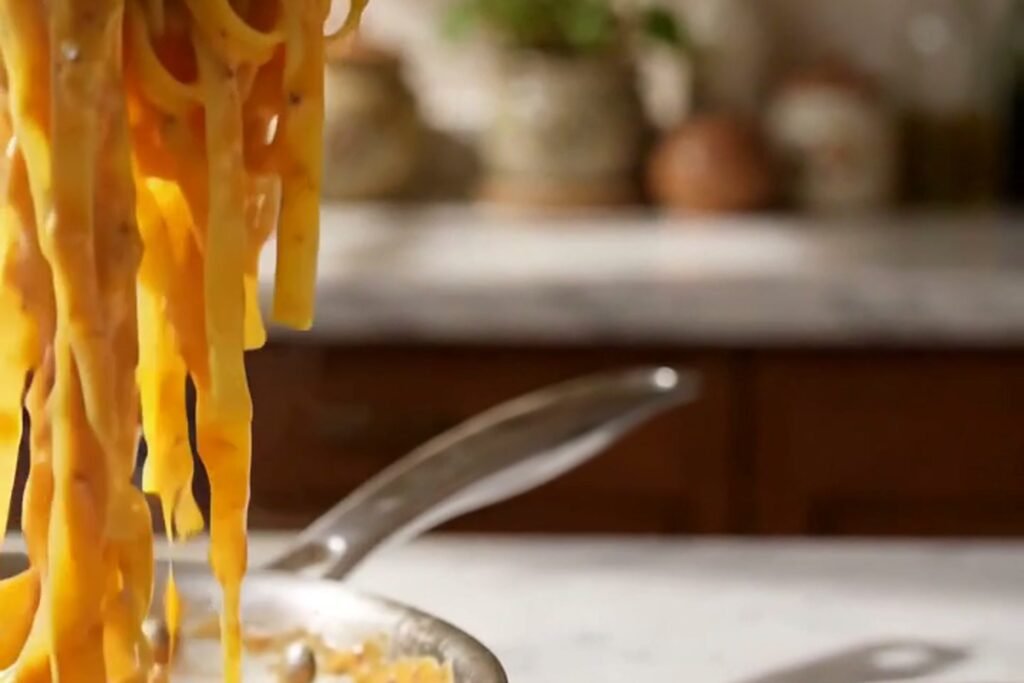

The Dinner That Saved a Grey October Evening
I can trace this recipe to one specific evening: a Wednesday in October, rain lashing the kitchen window, a butternut squash on my counter bought two weeks earlier with absolutely no plan. Tired, no shop trip in me, the cupboards offered the usual — pasta, butter, a bit of cream, some garlic. What started as a clean-out-the-kitchen dinner became the dish I now make on repeat every autumn.
The smell of butter browning with sage made the whole house feel cosy within minutes. The squash went silky in the oven and melted into cream and parmesan — the sauce tasted like it had taken hours. It hadn’t: thirty minutes, one tray, one pot. My partner had seconds before I’d even sat down, and that’s when I knew this one was a keeper.
Why You’ll Love This Recipe
- Ready in 30 minutes flat. Everything roasts while the pasta boils — one tray and one pot, no complicated timing.
- Tastes like a restaurant dish. Brown butter, crispy sage, and nutmeg make it taste far more luxurious than the effort suggests.
- Rich without heaviness. Roasted squash brings sweetness and body, so the sauce is creamy without cups of cream.
- Endlessly adaptable. Add pancetta, swap parmesan for pecorino, throw in kale — the base welcomes whatever’s in your fridge.
- Proper comfort food. The dinner you want when evenings turn dark early — warm, golden, deeply satisfying.
Ingredients
Serves 4
- 1 medium butternut squash (about 1.2 kg / 2 1/2 lb), peeled, seeded, cut into 2 cm cubes
- 350 g (12 oz) pasta — rigatoni, penne, or pappardelle all work beautifully
- 60 g (1/4 cup) unsalted butter
- 12–15 fresh sage leaves
- 4 garlic cloves, thinly sliced
- 75 g (3/4 cup) parmesan cheese, finely grated, plus extra to serve
- 180 ml (3/4 cup) heavy cream
- 1/2 tsp freshly grated nutmeg
- 2 tbsp olive oil
- Salt and freshly cracked black pepper
Instructions
Step 1 — Roast the squash. Heat the oven to 200°C (400°F). Toss the squash with the olive oil, salt, and pepper on a large tray. Roast 20–25 minutes, turning once, until the edges are caramelised and a fork slides through.
Step 2 — Start the pasta. Boil the pasta in well-salted water until just shy of al dente — a minute less than the packet says. Before draining, save a mug of the starchy pasta water — it’s liquid gold for the sauce.
Step 3 — Brown the butter and crisp the sage. Melt the butter in a large deep pan over medium heat. When it foams, add the sage leaves and sizzle 60–90 seconds until dark green and crackly, then lift them onto kitchen paper. Keep cooking the butter, swirling, until golden and nutty.
Step 4 — Build the sauce. Add the garlic to the brown butter and cook 30 seconds until fragrant. Pour in the cream, add the nutmeg, then tip in the squash. Mash about a third of it with a fork right in the pan for a silky base with lovely chunky bits.
Step 5 — Bring it together. Add the drained pasta with a splash of pasta water. Toss over low heat 1–2 minutes, adding water gradually, until the sauce clings to every piece. Stir through half the parmesan, then taste and adjust the seasoning.
Step 6 — Serve immediately. Divide between warm bowls, scatter over the crispy sage, and shower with the remaining parmesan and extra black pepper. Eat right away, while the sauce is glossy and the sage is still crackling.
Tips for the Best Butternut Squash Pasta
Salt the pasta water generously. It should taste like the sea — this is your only chance to season the pasta from the inside out, and you can’t fix it later.
Don’t walk away from the sage. It goes from crisp to burnt in ten seconds. When the leaves stop sizzling loudly and smell deeply savoury, get them out.
Use real parmesan. A wedge of Parmigiano-Reggiano grated fresh melts into the sauce with a nutty depth that pre-grated cheese can’t touch. In a dish this simple, it matters.
Save more pasta water than you think. The starch turns cream and cheese into a sauce that clings rather than pools. Start with half a cup and add gradually — glossy, not soupy.
Grate the nutmeg fresh. Pre-ground nutmeg is a shadow of the real thing — ten seconds with a microplane adds a warmth that makes the whole dish taste cosy and intentional.
Serving & Storage
This is a serve-it-now dish — pasta waits for no one. Big shallow bowls, extra parmesan, and a simple green salad to cut the richness. Feeding a crowd? Scale up with a bigger tray so the squash caramelises instead of steaming.
Leftovers keep airtight in the fridge for three days — reheat gently in a pan with a splash of milk or cream (the microwave can turn it gluey). I wouldn’t freeze this one — cream sauces split and the pasta suffers. Honestly, there are never leftovers in my house anyway.
Frequently Asked Questions
Can I use frozen butternut squash?
Yes, and it skips all the peeling and chopping. Use about 800 g (28 oz) of frozen cubes, roasted straight from frozen — add five minutes and don’t crowd the tray, since frozen squash releases more water.
What pasta shape works best?
Anything with ridges or tubes that catches sauce — rigatoni is my top pick, and penne, fusilli, orecchiette, and pappardelle are all excellent. Avoid very thin shapes like angel hair — they get lost in a sauce this hearty.
How can I make this dairy-free?
Swap the butter for olive oil, use a plant-based cream, and replace the parmesan with nutritional yeast or vegan hard cheese. You lose the nutty brown-butter note, but the sage still crisps beautifully and the squash carries the dish.
My sauce is too thick (or too thin). How do I fix it?
Too thick: loosen with splashes of reserved pasta water until glossy. Too thin: simmer another minute with the pasta and add extra parmesan.