
We have all been there. It is six o clock on a Tuesday evening, the kitchen sink is already harboring a couple of coffee mugs and a pan from breakfast, and the collective energy level of the household is hovering somewhere near absolute zero. The temptation to open a food delivery app and spend a small fortune on lukewarm takeout is incredibly strong. But then you remember that you want something comforting, warm, and actually nutritious. You want a home-cooked meal, but you absolutely do not want to wash five different pots and pans after you eat.
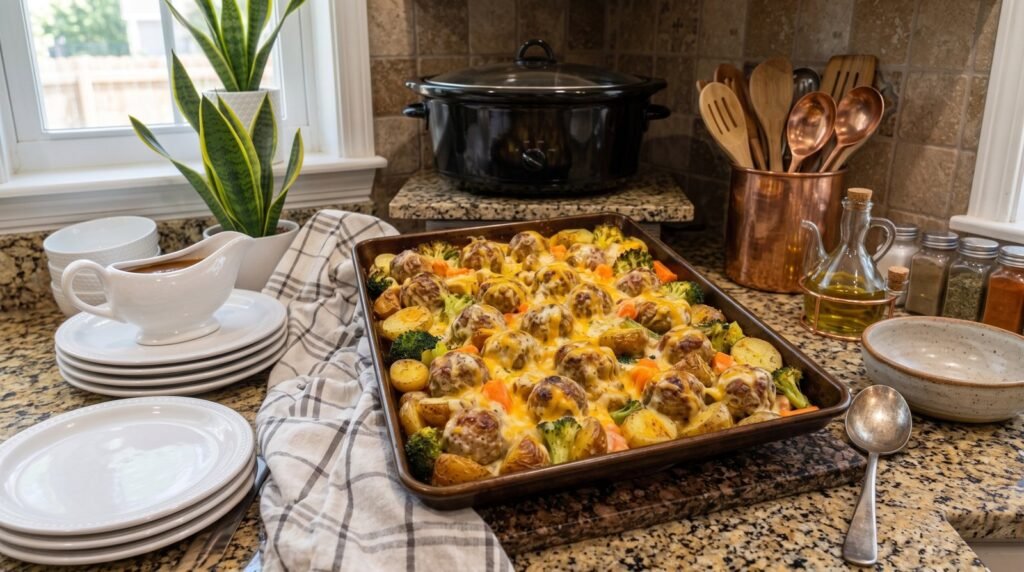
This was the exact scenario that led me to create my absolute favorite weeknight savior: the cheesy garlic meatball and potato sheet pan dinner. It is a complete meal in one single pan. You get juicy, savory meatballs, crispy edged baby potatoes, tender roasted broccoli, sweet carrots, and a blanket of bubbly, melted cheese holding it all together. It feels like a feast, but the clean up takes less than five minutes.
Over the years of developing recipes for my blog, I have learned that sheet pan meals are either an absolute triumph or a soggy, disappointing mess. There is very little middle ground. In this post, I am going to share all of the hard-learned lessons, mistakes, and tricks I have discovered so you can make the perfect sheet pan dinner on your very first try.
The Secret to Perfect Sheet Pan Timing
When I first started experimenting with sheet pan cooking, I made the classic rookie mistake. I chopped up my potatoes, threw in some raw broccoli, placed raw meatballs right next to them, and shoved the whole tray into a hot oven. I figured they would all just cook together in harmony.
They did not.
By the time the potatoes were soft enough to pierce with a fork, the broccoli had turned into black, bitter charcoal dust. The meatballs were dried out, and the carrots were still unpleasantly crunchy. It was a texture nightmare.
The golden rule of sheet pan cooking is simple: different ingredients cook at different rates. If you want everything to finish cooking at the exact same moment, you have to stagger when they go onto the pan.
Potatoes are dense and take the longest to cook. They need a head start in the oven to develop that beautiful, crispy exterior and fluffy interior. Meatballs need a medium amount of time to cook through without drying out. Broccoli and carrots need the least amount of time to become tender and caramelized without burning.
By roasting the potatoes first, then adding the meatballs, and finally tossing on the vegetables and cheese, you ensure that every single element of the dish is cooked to absolute perfection. It sounds like extra work, but it really just means opening the oven door a couple of times to add ingredients to the pan. Your effort remains minimal, but your results will improve tenfold.
Choosing the Right Ingredients
To make this dish truly spectacular, you need to select ingredients that play well together under high heat. Here is a breakdown of what I use and why it works so well.
The Potatoes:
I highly recommend using baby gold potatoes or Yukon Gold potatoes for this recipe. Yellow potatoes have a naturally buttery texture and a thin skin, which means you do not have to spend any time peeling them. Just wash them, cut them in half, and they are ready to go. When you roast yellow potatoes flat-side down on a hot sheet pan, they develop a gorgeous, deeply caramelized crust that contrasts beautifully with the soft, creamy interior. Red potatoes also work well, but they tend to be slightly more waxy and less fluffy than yellow potatoes. Avoid large Russet potatoes for this specific dish, as they dry out too easily when cut into small pieces.
The Meatballs:
You have a lot of flexibility here. If you have some extra time over the weekend, you can make a big batch of homemade beef and pork meatballs and freeze them raw. If you are in a rush, high-quality store-bought meatballs work absolutely beautifully. You can use beef, pork, turkey, or chicken meatballs. Just make sure they are roughly the size of a golf ball. If they are too large, they will take too long to cook through; if they are too small, they will dry out before the vegetables are done. If you are using frozen meatballs, make sure to thaw them in the refrigerator before adding them to the sheet pan so they cook evenly.
The Vegetables:
Broccoli and carrots are my absolute favorite combination for this meal. The broccoli florets catch the melted cheese in all their little nooks and crannies, while the carrots add a lovely sweetness and vibrant color. Cut the carrots into thick coins or diagonal slices so they do not cook too quickly. Cut the broccoli into medium-sized florets. If the florets are too tiny, they will burn before the carrots soften.
The Cheese:
Please, do yourself a massive favor and grate your own cheese from a block. I know those bags of pre-shredded cheese are incredibly tempting when you are tired, but they are coated in potato starch and cellulose to keep the shreds from sticking together in the bag. This coating prevents the cheese from melting into that luxurious, gooey blanket we want. A freshly grated blend of sharp cheddar and low-moisture mozzarella gives you the absolute best flavor and stretch.
The Oil and Seasonings:
A good quality olive oil is essential for helping the vegetables and potatoes roast rather than steam. For seasonings, I keep it simple but flavor-packed with garlic powder, onion powder, dried Italian seasoning, kosher salt, and freshly cracked black pepper. The garlic and herbs infuse into the roasting oil, creating an incredible aroma that will fill your entire house while it bakes.
| Ingredient | Quantity | Notes |
|---|---|---|
| Baby yellow potatoes | 1.5 pounds | Washed and cut in half |
| Meatballs | 1 pound | Uncooked, golf-ball sized (beef, turkey, or pork) |
| Broccoli florets | 1 large head | Cut into bite-sized pieces |
| Carrots | 3 medium | Peeled and sliced into half-inch rounds |
| Olive oil | 3 tablespoons | Divided use |
| Garlic powder | 1.5 teaspoons | Divided use |
| Italian seasoning | 1 teaspoon | Dried herb blend |
| Kosher salt | 1 teaspoon | Adjust to personal taste |
| Black pepper | 0.5 teaspoon | Freshly cracked is best |
| Cheddar cheese | 1 cup | Freshly grated from a block |
| Mozzarella cheese | 1 cup | Freshly grated from a block |
Step-by-Step Cooking Guide
Now, let us walk through the process of putting this glorious meal together. Grab a large, heavy-duty rimmed baking sheet. I highly recommend using a half-sheet pan made of aluminum. Thin, cheap baking sheets tend to warp in a hot oven, which causes your ingredients to slide to one side and cook unevenly.
Step 1: Prep and Preheat
Start by preheating your oven to 400 degrees Fahrenheit. While the oven is heating up, prep your potatoes. Wash them thoroughly to remove any dirt, pat them completely dry with a clean kitchen towel, and cut them in half. If you have some particularly large baby potatoes, cut them into quarters so all your potato pieces are roughly the same size.
Step 2: Start the Potatoes
Place the halved potatoes directly onto your sheet pan. Drizzle them with one and a half tablespoons of olive oil. Sprinkle on half of the salt, black pepper, garlic powder, and Italian seasoning. Use your hands to toss the potatoes directly on the pan until every single piece is well coated in the oil and seasonings. Arrange the potatoes so they are flat-side down on the pan. This maximizes contact with the hot metal, which is the secret to getting that coveted golden-brown crust. Place the pan in the preheated oven and bake for fifteen minutes.
Step 3: Prepare the Veggies and Meatballs
While the potatoes are getting their head start, prep your broccoli and carrots. Place the broccoli florets and sliced carrots into a medium mixing bowl. Drizzle with the remaining one and a half tablespoons of olive oil and season with the rest of the salt, pepper, garlic powder, and Italian seasoning. Toss well to coat. If you are making homemade meatballs, shape them into even balls now.
Step 4: Add the Meatballs
After the potatoes have baked for fifteen minutes, carefully remove the sheet pan from the oven using oven mitts. Use a spatula to flip the potatoes over. You should see a beautiful golden crust starting to form on the flat sides. Clear some spaces on the pan and nestle the meatballs evenly among the potatoes. Return the pan to the oven and bake for another ten minutes. This gives the meatballs a head start to begin browning and releasing their savory juices onto the pan.
Step 5: Add the Vegetables
Remove the sheet pan from the oven once more. Distribute the seasoned broccoli and carrots into the remaining open spaces on the pan. Give everything a gentle toss if the pan is looking crowded, but try to keep things in a relatively single layer. If you pile ingredients on top of each other, they will steam instead of roast, and you will lose out on those crispy edges. Pop the pan back into the oven for twelve to fifteen minutes, or until the vegetables are tender-crisp and the meatballs are fully cooked through to an internal temperature of 165 degrees Fahrenheit.
Step 6: The Cheese Blanket
Remove the pan from the oven. Combine your freshly grated cheddar and mozzarella cheeses in a bowl. Generously sprinkle the cheese mixture over the top of the meatballs, potatoes, and vegetables. Return the pan to the oven for a final three to five minutes, just until the cheese is completely melted, bubbly, and starting to turn golden brown in spots.
Step 7: Rest and Serve
Let the sheet pan sit on the counter for about five minutes before serving. This brief rest allows the juices from the meatballs to redistribute and the melted cheese to set slightly, making it much easier to scoop up clean portions. Serve straight from the pan and enjoy the lack of dirty dishes.
Common Mistakes to Avoid
Even with a straightforward recipe like this, a few small details can make or break your final dinner. Here are the most common pitfalls I see people run into, and how you can easily avoid them.
Crowding the Baking Sheet:
This is the number one enemy of sheet pan cooking. When vegetables and meat cook, they release moisture. If your ingredients are piled on top of each other, that moisture has nowhere to escape, creating a pocket of steam. Instead of roasting to a beautiful crispy texture, your potatoes will be mushy and your broccoli will be soggy. If your sheet pan is too small to hold everything in a single layer with a little bit of space around each ingredient, split the recipe across two separate baking sheets. You will get a much better roast, and it is well worth washing one extra pan.
Using Too Much Oil:
While we want enough oil to coat the ingredients and promote browning, too much oil will pool at the bottom of the pan and make the final dish incredibly greasy, especially once the meatballs start releasing their own natural fats. Stick to the measurements in the recipe. A light, even coating is all you need.
Skipping the Staggered Cooking Times:
I know it is tempting to try and save time by putting everything in at once, but please resist the urge. Taking the extra step to add ingredients in stages is what elevates this from a mediocre dinner to a restaurant-quality meal.
Forgetting to Dry the Potatoes:
If you wash your potatoes and immediately toss them in oil while they are still wet, the water will create steam in the oven. This prevents the oil from sticking to the skin and stops the potatoes from getting crispy. Always pat them completely dry with a towel before cutting and seasoning them.
Using Pre-Cooked, Frozen Meatballs Without Thawing:
If you throw rock-hard, frozen pre-cooked meatballs onto the pan, they will release a massive amount of water as they thaw in the oven, soggying up your roasted potatoes. They also will not brown properly. Take them out of the freezer the night before, or use the microwave defrost setting before adding them to the pan.
Creative Recipe Variations
Once you master the basic method for this sheet pan dinner, you can easily customize it based on what you have in your refrigerator or the flavor profile you are craving. Here are some of our favorite variations that we make on a regular basis.
The Italian Feast:
Swap the cheddar cheese for shredded provolone and a generous dusting of freshly grated parmesan cheese. Use Italian-style pork meatballs. Instead of carrots, use sliced bell peppers and sweet onions. Serve with a side of warm marinara sauce for dipping.
The Spicy Tex-Mex version:
Use chorizo meatballs or seasoned ground beef meatballs. Swap the Italian seasoning for a blend of chili powder, ground cumin, and dried oregano. Use pepper jack cheese instead of cheddar, and top the finished dish with fresh cilantro, sliced jalapenos, and a drizzle of sour cream.
The Autumn Harvest:
Swap the baby yellow potatoes for cubed sweet potatoes or butternut squash. Use turkey or chicken meatballs seasoned with sage and thyme. Instead of broccoli, use Brussels sprouts cut in half. Top with a mild white cheddar or gruyere cheese.
The Greek-Style Sheet Pan:
Use chicken meatballs seasoned with oregano, garlic, and lemon zest. Swap the carrots and broccoli for sliced red onions, zucchini, and cherry tomatoes. Skip the cheddar and mozzarella, and instead crumble fresh feta cheese over the top in the last few minutes of baking. Serve with a dollop of cool tzatziki sauce.
How to Meal Prep and Store Leftovers
This recipe is an absolute dream for meal prep. The flavors actually deepen and meld together even more after sitting in the refrigerator for a day or two.
To Store:
Allow any leftover portions to cool completely at room temperature. Transfer them to airtight glass meal prep containers. Store in the refrigerator for up to four days.
To Reheat:
While you can easily reheat this in the microwave for a minute or two, the potatoes and broccoli will lose their crispy edges. For the absolute best texture, reheat your leftovers in an air fryer at 350 degrees Fahrenheit for four to five minutes. Alternatively, you can place them back onto a baking sheet and heat them in a 370-degree oven for about eight to ten minutes until the cheese is bubbly again and the meatballs are hot throughout.
Freezing Instructions:
I do not recommend freezing the fully assembled, cooked dish with the cheese, as roasted potatoes and cooked broccoli do not freeze and thaw well. The potatoes become mealy and watery, and the broccoli turns to mush. However, you can easily freeze the meatballs separately. Make a double batch of the meatballs, freeze them raw on a baking sheet, and then transfer them to a freezer bag. When you are ready to make dinner, thaw the meatballs and proceed with the recipe as written.
Why This Meal Belongs in Your Rotation
In a busy world, finding dinner options that balance nutrition, flavor, comfort, and convenience can feel like an impossible task. This cheesy garlic meatball and potato sheet pan dinner checks every single box. It is packed with lean protein from the meatballs, complex carbohydrates from the potatoes, and essential vitamins and fiber from the broccoli and carrots.
But beyond the nutritional benefits, it is simply a joy to eat. There is something incredibly satisfying about the combination of savory garlic, roasted vegetables, and rich, melted cheese. It appeals to kids and adults alike, making it a stress-free option for family dinners.
The next time you find yourself staring blankly into the refrigerator after a long day, do not reach for your phone to order takeout. Pull out your trusty baking sheet, chop up a few potatoes, and let your oven do all the hard work. You will be sitting down to a hot, comforting, homemade meal in under an hour, with a clean kitchen to boot. Happy cooking!