
I’m going to be brutally honest with you: for years, meatloaf was on my personal kitchen blacklist.
Every time I tried making it in my early cooking days, I ended up with one of two frustrating outcomes. Either it came out so dry and tough that it felt like cutting through a hockey puck, or it collapsed into a greasy, wet mountain of ground beef floating at the bottom of a loaf pan. It was so disappointing that I almost stopped making it altogether.
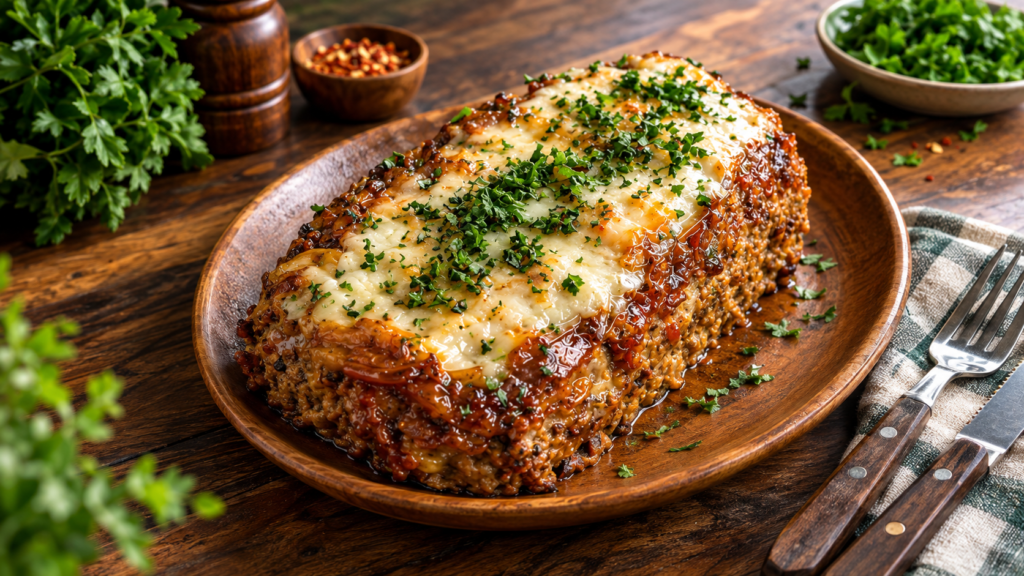
Then, a few winters ago, I decided to give meatloaf one last shot. I threw away the traditional “ketchup and breadcrumb brick” idea and decided to treat meatloaf like a giant, pan-baked Italian meatball. I loaded the meat blend with fresh aromatics, swapped plain milk for buttermilk, layered a sweet tomato glaze over the top, and smothered the whole thing in melted mozzarella and fresh chopped parsley.
The result was a total game-changer. It was insanely juicy, sliceable without crumbling, and packed with flavor in every single bite. If you’ve ever served a disappointing meatloaf to your family or felt intimidated by getting the moisture right, let me walk you through everything I learned—including my favorite tools, silly mistakes, and the exact step-by-step recipe that turned my meatloaf luck around.
The Secret Behind a Juicy Meatloaf (It’s All About the Pan and the Moisture)
Before we jump into the ingredients, let’s talk about why traditional meatloaf fails so often.
Most traditional recipes tell you to pack raw meat tightly into a standard 9×5-inch loaf pan and bake it. That’s actually a trap! When meat cooks inside a metal loaf pan, the rendered fat and moisture have nowhere to go, so the meat essentially boils in its own grease. To compensate, people over-bake it, which dries out the top and turns the middle tough.
Instead, I use a free-form loaf technique on a rimmed baking sheet. Shaping the loaf by hand onto a foil-lined baking tray allows heat to circulate evenly around all four sides. It creates those crispy, caramelized edges while letting excess grease drain away naturally.
The second secret is using a proper panade—a paste made of breadcrumbs and liquid—to lock moisture directly inside the meat fibers before it ever hits the oven.
Ingredients List
Here is what you’ll need to make this Italian-style cheesy meatloaf. I’ve refined these exact proportions over dozens of Sunday dinners.
For the Meatloaf Base:
2 lbs ground meat blend (I prefer a 50/50 mix of 80/20 lean ground beef and ground Italian pork sausage for maximum flavor)
1 cup panko breadcrumbs (or coarse homemade white breadcrumbs)
½ cup buttermilk (or whole milk mixed with 1 teaspoon lemon juice)
2 large eggs (beaten at room temperature)
1 medium yellow onion (finely grated or minced)
4 cloves garlic (minced)
½ cup grated Parmesan cheese (freshly grated from a block works best)
2 tablespoons fresh parsley (finely chopped)
1 tablespoon Italian seasoning (dried oregano, basil, and thyme)
1 ½ teaspoons coarse kosher salt
½ teaspoon freshly cracked black pepper
1 tablespoon Worcestershire sauce
For the Savory Tomato Glaze:
½ cup marinara sauce or high-quality tomato paste blend
2 tablespoons ketchup
1 tablespoon balsamic vinegar
1 tablespoon brown sugar
For the Cheesy Top Layer:
1 ½ cups shredded low-moisture mozzarella cheese (or a mix of mozzarella and provolone)
2 tablespoons fresh flat-leaf parsley (chopped, for garnish)
Optional: Pinch of crushed red pepper flakes for subtle heat
Step-by-Step Instructions: How to Make It
Step 1: Prep the Oven and Panade
Preheat your oven to 375°F (190°C). Line a large, rimmed baking sheet with heavy-duty aluminum foil and lightly spray it with non-stick cooking spray.
In a small mixing bowl, combine the panko breadcrumbs and buttermilk. Stir them together and let the mixture sit for 5 to 10 minutes. The breadcrumbs will absorb the liquid and turn into a paste (the panade). This is your insurance policy against dry meat!
Step 2: Sauté the Aromatics (Don’t Skip This!)
One big mistake I used to make was throwing raw, chopped onions straight into the meat mixture. They never cook through completely in the oven, leaving you with crunchy, raw onion bites inside your cooked meatloaf.
Heat a small skillet over medium heat with a splash of olive oil. Add the finely minced onion and cook for 4–5 minutes until soft and translucent. Stir in the minced garlic and cook for another 60 seconds until fragrant. Remove from heat and let it cool for a few minutes so it doesn’t cook the eggs when added to the meat.
Step 3: Combine the Meat Mixture
In a large mixing bowl, combine the ground beef, Italian sausage, soaked breadcrumb paste, sautéed onions and garlic, beaten eggs, grated Parmesan, parsley, Italian seasoning, salt, pepper, and Worcestershire sauce.
Pro-Tip: Use your hands to mix, but do not overwork the meat. Mix just until everything is evenly combined. Over-handling ground meat makes the final loaf dense and rubbery.
Step 4: Shape the Loaf
Transfer the meat mixture onto your prepared baking sheet. Using your hands, gently press and shape the meat into an oval or rectangular loaf roughly 9 inches long, 5 inches wide, and about 2 to 2.5 inches tall. Keep the thickness uniform so it cooks evenly from end to end.
Step 5: Mix and Apply the Glaze
In a small bowl, whisk together the marinara sauce, ketchup, balsamic vinegar, and brown sugar. Spread about two-thirds of this glaze evenly over the top and sides of the meatloaf using a spoon or pastry brush. Reserve the remaining glaze for later.
Step 6: Bake the Meatloaf
Place the baking sheet in the center rack of your oven and bake uncovered for 45 to 50 minutes.
If you want to be 100% sure your meat is safe and tender, pull out a reliable digital meat thermometer (I use a ThermoWorks ThermoPop or Instant Read Thermometer). The internal temperature at the thickest part of the loaf should reach around 155°F (68°C) at this stage.
Step 7: Add the Cheese Glaze Top
Carefully pull the baking sheet out of the oven. Brush the remaining glaze over the top, then cover the loaf with a thick, generous blanket of shredded mozzarella cheese.
Return the meatloaf to the oven for another 8 to 10 minutes, or until the mozzarella is completely melted, bubbly, and starting to show golden brown spots around the edges.
Step 8: Rest and Garnish
This step requires patience, but it is non-negotiable! Remove the meatloaf from the oven and sprinkle fresh chopped parsley and optional red pepper flakes over the melted cheese.
Let the meatloaf sit on the baking sheet at room temperature for at least 10 to 15 minutes before slicing. If you cut into it immediately, all the hot juices will run out onto the tray, leaving the slice dry. Resting lets the juices redistribute and sets the meat so your slices stay perfectly intact.
Real Lessons Learned: 4 Mistakes to Avoid
Using 93/7 Ultra-Lean Ground Beef: I tried using super lean beef once to make it healthier. It was terrible. Ground beef needs fat to stay tender. An 80/20 beef chuck combined with ground pork gives you the perfect balance of richness and structural integrity.
Skipping the Thermometer: Guesswork leads to dry meat. Relying strictly on a timer often causes people to leave meatloaf in the oven for an hour and twenty minutes “just to be safe,” which ruins the texture. Cook to temperature, not just time.
Using Shredded Cheese from a Bag: Pre-shredded cheese is coated with potato starch to prevent clumping in the bag, which keeps it from melting into that smooth, gooey blanket you see on pizzeria slices. Take two minutes to shred fresh mozzarella from a block.
Packing the Meat Too Tight: When shaping your loaf, handle it gently like you’re shaping a soft snowball, not packing down wet cement.
Great Side Dishes to Complete the Meal
Whenever I make this cheesy Italian-style meatloaf, I like to round out the plate with sides that complement the rich tomato and garlic flavors:
Garlic Whipped Potatoes: A classic pair. The rich marinara glaze pairs amazingly well with smooth, buttery mashed potatoes.
Roasted Broccoli or Green Beans: Tossed in olive oil, salt, and lemon juice to add a crisp, bright crunch alongside the savory meat.
A Simple Caesar Salad: Cold, crisp romaine lettuce with a tangy dressing cuts through the richness of the melted cheese.
Storing and Reheating Leftovers
If you happen to have leftovers, you’re in luck—meatloaf might actually taste better the next day once the flavors settle in the fridge.
Refrigeration: Store sliced meatloaf in an airtight glass container in the fridge for up to 3 to 4 days.
Reheating: Avoid the microwave if you can, as it can rubberize the cheese. Reheat slices in an oven or toaster oven at 325°F (160°C) wrapped loosely in foil for 12–15 minutes until warmed through.
The Ultimate Next-Day Sandwich: My absolute favorite way to use leftovers is slicing a piece cold, searing it on a skillet with a buttered brioche bun or ciabatta, and adding a little extra warm marinara sauce. It’s better than most meatball sub sandwiches you’ll buy at a deli!
Final Thoughts
Making a great meatloaf isn’t about complicated techniques or gourmet skills—it’s just about giving a humble dinner staple the small upgrades it deserves. By swapping out dry breadcrumbs for a milk panade, baking it free-form on a tray, and topping it with melted mozzarella and fresh herbs, you take something ordinary and turn it into a comforting meal everyone genuinely looks forward to eating.
Give this recipe a try the next time you’re craving comfort food. Drop a comment below to let me know how your loaf turned out or what twist you added to your blend!