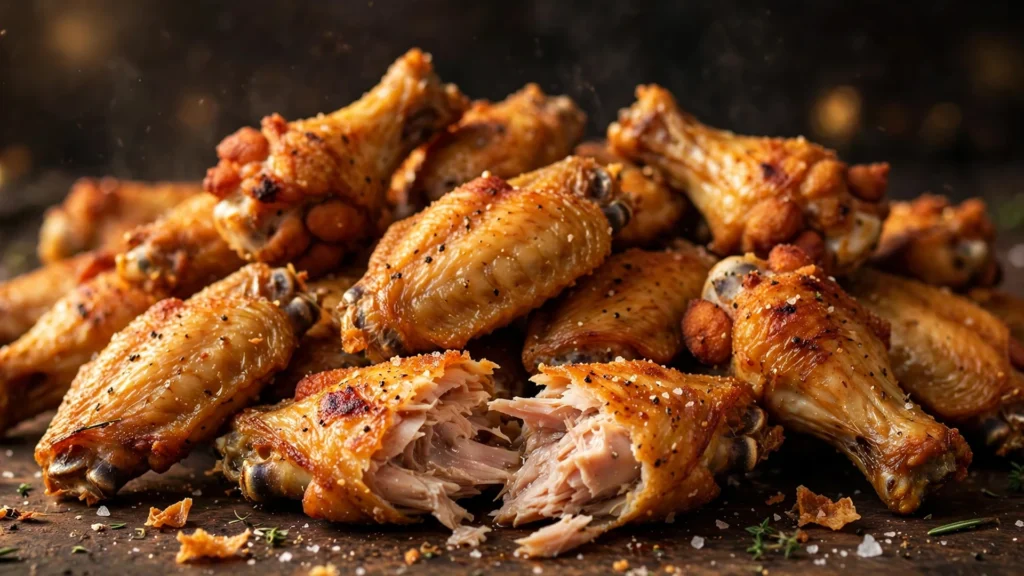

Shatteringly crisp skin, juicy meat, zero breading — these Crispy Carnivore Chicken Wings get their crunch from a hot oven and a simple baking-powder trick, not flour. They’re the ultimate game-day, party, or any-day carnivore win.
Why You’ll Love These Chicken Wings
- Deep golden, crackling-crisp skin with no breading
- Just a handful of simple ingredients
- Oven method — no deep fryer needed
- 36g protein per serving and zero carbs
Ingredients
Serves 4.
Advertisement
- 2 1/2 lb chicken wings, split into flats and drumettes (tips removed)
- 1 tbsp aluminum-free baking powder
- 2 tsp sea salt
- 1 tsp freshly cracked black pepper (optional)
- 2 tbsp melted butter or beef tallow, for tossing (optional)
Instructions
- Pat the wings completely dry with paper towels — this is the most important step for crispiness. Let them air-dry in the fridge uncovered for 1 hour if you have time.
- Preheat the oven to 450°F (230°C). Set a wire rack over a foil-lined baking sheet.
- Toss the wings with the baking powder, salt, and pepper until evenly coated.
- Arrange skin-side up on the rack without touching.
- Bake 45–55 minutes, flipping halfway, until deep golden, crisp, and the internal temperature reads 165°F (74°C).
- Toss with melted butter or tallow if you like, and serve hot.
Tips for the Crispiest Wings
- Dry wings = crispy wings; moisture is the enemy
- Don’t crowd the pan — air needs to circulate around each wing
- The wire rack is non-negotiable; it keeps the bottoms crisp too
- For extra crunch, broil the last 2–3 minutes watching closely
- Air fryer works too: 400°F for 20–25 minutes, shaking halfway
Storage
Refrigerate leftovers in an airtight container for up to 4 days. Reheat in a 425°F oven or air fryer for 8–10 minutes to re-crisp — never the microwave.
Nutrition
Estimated per serving: about 430 calories, 36g protein, 0g carbs, 30g fat. Chicken wings are safe at 165°F internal temperature (USDA).