

We have all been there. You open the vegetable crisper drawer, and tucked away in the back is a plastic bag of carrots. Maybe they are a little bendy, maybe they look uninspiring, or maybe you bought them with grand intentions of making a healthy soup that never materialized. For decades, the carrot has been treated as a background player in the culinary world. It is the vegetable you chop up to start a mirepoix, the filler in a beef stew, or the sad, watery rounds served alongside school cafeteria lunches.
Growing up, my exposure to carrots was limited to two preparation styles. First, there were the raw, baby carrots served with a tub of ranch dressing at suburban birthday parties. They were cold, wet, and tasted mostly like water and chlorine. Second, there were the boiled carrots. These were cooked until they lost all structural integrity, turning into a mushy, pale orange paste that required a mountain of brown sugar just to make them palatable. For a long time, I genuinely believed I hated carrots.
Then, during my early twenties, I had a culinary awakening in a tiny, cramped apartment kitchen. I was trying to impress a group of friends with a home-cooked dinner on a shoestring budget. I had a bag of whole carrots, some olive oil, salt, pepper, and a hot oven. Out of pure laziness, I decided to toss them on a sheet pan whole, crank the heat up to four hundred degrees, and let them ride.
What came out of that oven thirty minutes later changed my relationship with root vegetables forever. The carrots were charred on the edges, tender but still holding their shape, and incredibly sweet. The dry heat of the oven had evaporated the excess water, concentrating the natural sugars and caramelizing them into something deeply complex. Since that night, roasted carrots have been my ultimate secret weapon side dish. Over the years, I have refined the technique, experimented with countless glazes, and played with toppings until I landed on the absolute peak version of this dish.
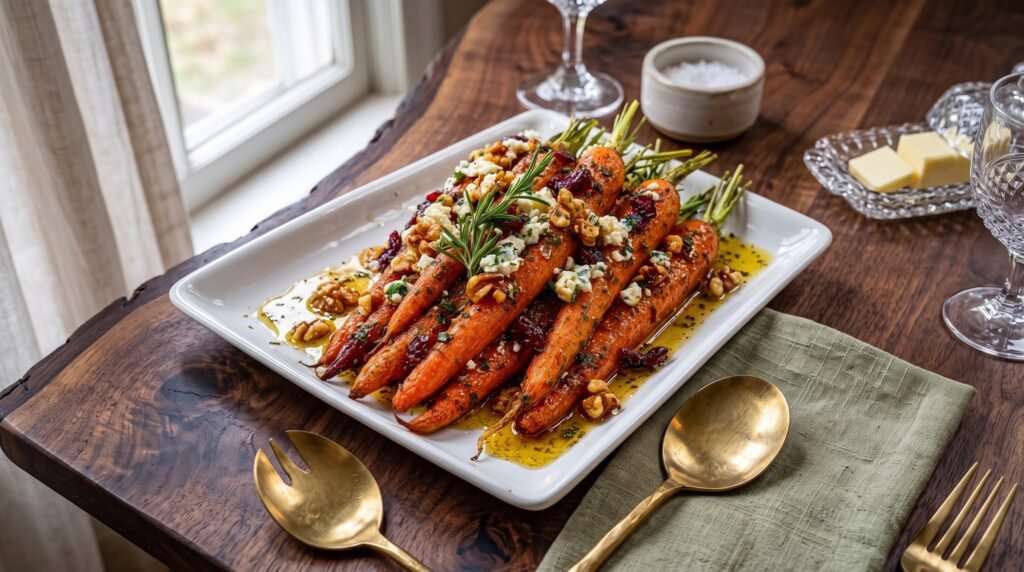
Today, I want to share that journey, the science behind why it works, and the exact recipe that will make your guests ignore the main course and reach for seconds of the vegetables. We are talking about honey-roasted whole carrots, topped with salty feta cheese, toasted walnuts, tart dried cranberries, and fresh rosemary. It is a dish that looks like it belongs on the cover of a food magazine but requires very little actual kitchen labor.
The Chemistry of Sweetness and Char
To truly master the roasted carrot, it helps to understand what is happening inside the vegetable when it meets high heat. Carrots are naturally packed with sugars. When you boil or steam them, those sugars dissolve into the cooking water, leaving behind a bland, watery fiber. When you roast them, the opposite happens.
The dry air of the oven draws moisture out of the outer layers of the carrot. As the water evaporates, the natural sugars become highly concentrated. Once the surface temperature of the carrot exceeds three hundred degrees, two magical chemical reactions occur: caramelization and the Maillard reaction.
Caramelization is the oxidation of sugar, which creates rich, nutty, and buttery flavor compounds. The Maillard reaction is the reaction between amino acids and reducing sugars, which gives roasted meats and baked bread their savory, complex depths. By roasting carrots at a high temperature, you get both reactions working in tandem. The result is a vegetable that tastes simultaneously sweet, savory, and deeply caramelized.
But sweetness alone can be flat. If you just roast carrots with honey, they can become cloyingly sweet, tasting more like a dessert than a side dish. To create a truly memorable plate of food, you need to apply the basic rules of flavor balancing: sweet, salty, sour, bitter, and umami.
In this recipe, we achieve that balance through carefully chosen toppings. The honey-coated carrots provide the sweet base. The feta cheese delivers a sharp, salty, and creamy contrast. The dried cranberries bring a bright, sour tanginess that cuts through the richness. The toasted walnuts add a pleasant, woody bitterness and a crucial textural crunch. Finally, the fresh rosemary adds an herbaceous, piney aroma that ties the whole dish back to its earthy roots.
Choosing Your Carrots
Before you even turn on your oven, you have to make some choices at the grocery store or farmers market. Not all carrots are created equal, and the type you choose will dictate your preparation method and final presentation.
Large, loose carrots from the bulk bin are often the most economical choice. They are thick, hardy, and hold up incredibly well to long roasting times. However, because they are older, they can sometimes have a woody core and a slightly bitter skin. If you use these, you will definitely want to peel them and perhaps slice them in half lengthwise so they cook through evenly.
Bunched carrots with the green tops still attached are the gold standard for this dish. They are typically younger, sweeter, and more tender than bulk carrots. Plus, leaving a small portion of the green stem attached makes for an incredibly rustic, elegant presentation on the platter. When you buy bunched carrots, look for bright, feathery greens that do not look wilted or yellow. This is a key indicator of freshness.
Rainbow carrots have exploded in popularity, and for good reason. They come in shades of purple, yellow, white, and deep orange. Using rainbow carrots adds a stunning visual element to your table. Just be aware that purple carrots contain anthocyanins, the same pigments found in blueberries. When cooked, they can sometimes bleed color onto the lighter carrots, and they tend to have a slightly earthier, less sweet flavor than their orange siblings.
What about baby carrots? Those perfectly shaped, rounded little nugs in the plastic bags are actually regular carrots that have been cut, peeled, and polished by machines. While they are convenient for school lunches, they are not ideal for a showstopping roast. Because they are pre-peeled and stored in water, they carry too much surface moisture, which prevents them from caramelizing properly in the oven. They tend to steam rather than roast, leaving you with a soggy final product. Save yourself the disappointment and go with whole, real carrots.
To Peel or Not to Peel
This is one of the most hotly debated topics in the culinary community. Some chefs insist on peeling every root vegetable that enters their kitchen, while others advocate for leaving the skin on for rustic charm and added nutrients.
Personally, my rule of thumb depends on the age and cleanlines of the carrot. If I am using young, tender bunched carrots, I rarely peel them. The skin is incredibly thin and tender, and once scrubbed clean under cold water, it cooks down beautifully. Leaving the skin on also helps the carrot hold its shape and prevents it from getting too mushy.
If I am using thick, late-season storage carrots, I will almost always peel them. The skin on older carrots can become tough, bitter, and dirty-tasting, even after a thorough washing. Peeling them reveals the bright, sweet flesh underneath and ensures a pleasant mouthfeel.
Whichever route you choose, make sure your carrots are completely, 100 percent dry before they go into the oven. If you wash your carrots and immediately toss them on a baking sheet while they are still wet, that surface water will instantly turn to steam in the hot oven. Instead of roasting, your carrots will steam, and you will miss out on that gorgeous, caramelized exterior. After washing, pat them down thoroughly with a clean kitchen towel or paper towels and let them air-dry for a few minutes before adding oil.
The Secret to the Perfect Glaze
Many recipes call for tossing the carrots in honey or maple syrup before they go into the oven. I used to do this, and I ended up with burnt pan bottom and bitter, black spots on my carrots.
Honey contains high amounts of fructose and glucose, which burn at around three hundred degrees. Since we want to roast our carrots at four hundred degrees or higher to get that beautiful internal tenderness and exterior char, putting honey on them at the very beginning of a thirty-minute cook time is a recipe for disaster. The sugars will burn long before the interior of the carrot is cooked through.
The secret is a two-step cooking process. First, we toss the carrots in high-quality olive oil, kosher salt, and black pepper. This allows the carrots to roast safely at a high temperature, developing their natural caramelized sugars without any risk of burning.
Then, during the last ten to fifteen minutes of roasting, we drizzle the honey glaze over the carrots. This gives the honey just enough time to melt, bubble, coat the carrots, and caramelize slightly without crossing the line into burnt bitterness. It results in a glossy, sticky, beautifully golden glaze that clings to the vegetable perfectly.
Selecting the Toppings
The toppings are what elevate this dish from a standard weekday side to a holiday-worthy masterpiece. Let us break down the components and how to choose the best options.
First, the cheese. Feta is my personal favorite for this application. Its salty, tangy, and briny profile is the perfect foil for the sweet honey glaze. When buying feta, try to avoid the pre-crumbled tubs. Pre-crumbled cheese is coated in anti-caking agents like cellulose, which prevents the cheese from sticking together but also makes it dry, chalky, and less flavorful. Instead, buy a block of feta packaged in brine. It stays incredibly moist, creamy, and flavorful. You can crumble it yourself with your fingers just before serving.
If you are not a fan of feta, goat cheese (chèvre) is a fantastic alternative. It offers a similar tanginess but with a much creamier, melt-in-your-mouth texture. If you use goat cheese, dollop small spoonfuls over the warm carrots just before serving so it gets slightly warm and soft.
Next, the nuts. Walnuts provide an earthy flavor and a fantastic, heavy crunch. However, you must toast them. Raw walnuts have a slightly bitter, papery skin and a soft texture. Toasting them in a dry skillet for a few minutes or in the oven alongside the carrots coaxes out their natural oils, making them crisp, buttery, and incredibly aromatic. Do not skip this step; it takes five minutes but makes a world of difference. You can also substitute pecans, pistachios, or sliced almonds if you prefer.
For the dried fruit, dried cranberries are a classic choice. They add a festive pop of red color and a sweet-tart chewiness. If you want to switch things up, dried sour cherries, chopped dried figs, or pomegranate arils are all spectacular options. Pomegranate arils, in particular, add a gorgeous jewel-like appearance and a fresh, juicy burst of acidity.
Finally, the herbs. Fresh rosemary is incredibly robust and pairs beautifully with roasted root vegetables. We will roast some of the rosemary alongside the carrots to infuse them with that woody, piney aroma, and then garnish with fresh, finely chopped rosemary at the end for a bright, clean finish. If rosemary is too strong for your palate, fresh thyme leaves are a gentler, highly elegant alternative.
Let us look at the ingredient quantities you will need to put this spectacular dish together.
| Ingredient | Amount | Notes |
|---|---|---|
| Whole carrots | 2 pounds | Medium-sized, bunched with green tops if possible |
| Extra virgin olive oil | 3 tablespoons | Divided use for roasting and finishing |
| Kosher salt | 1.5 teaspoons | To taste |
| Freshly cracked black pepper | 0.5 teaspoon | To taste |
| Honey | 3 tablespoons | Raw, wildflower, or clover honey work best |
| Fresh rosemary | 3 sprigs | Whole sprigs for roasting, plus 1 teaspoon chopped for garnish |
| Feta cheese | 0.5 cup | Crumbled from a block in brine |
| Walnuts | 0.5 cup | Chopped and toasted |
| Dried cranberries | 0.33 cup | Roughly chopped if they are very large |
Step-by-Step Guide to Roast Carrot Perfection
Now that we have our ingredients ready, let us walk through the process of bringing this dish to life. I will take you through my exact kitchen workflow to ensure everything comes out hot, fresh, and perfectly timed.
Step 1: Prep the Oven and the Pan
Before you touch a single vegetable, preheat your oven to 400 degrees Fahrenheit (about 200 degrees Celsius). A hot oven is non-negotiable. If your oven is not fully heated, the carrots will slowly warm up and soften before they can develop a good exterior roast, leaving them limp and sad.
Grab a heavy, rimmed baking sheet. I prefer half-sheet pans made of heavy-gauge aluminum. They distribute heat evenly and do not warp under high temperatures. Avoid using thin, cheap baking sheets that warp or pop in the oven, as this can cause your carrots to slide around or roast unevenly. Do not line the pan with parchment paper or foil unless you absolutely hate cleaning up. Roasting the carrots directly on the metal surface of the pan gives you the absolute best heat transfer and caramelization. If you are worried about clean-up, a little hot water and elbow grease later is worth the superior flavor you get from direct metal contact.
Step 2: Prepare the Carrots
Cut the green tops off the carrots, leaving about one inch of the green stem attached to the top of each carrot. This little green handle looks beautiful on the serving platter and lets your guests know these came from fresh, whole bunches. Save the rest of the carrot greens! They make a fantastic, earthy pesto or can be tossed into a vegetable stock bag in your freezer.
Wash the carrots thoroughly under cold running water, using a vegetable brush to scrub away any dirt or grit trapped near the stem joint. Once clean, dry them completely with a clean kitchen towel.
If your carrots are of varying thicknesses, you will want to calibrate them so they cook at the same rate. Leave the thin and medium carrots whole. For any very thick carrots (wider than an inch at the top), slice them in half lengthwise. This ensures that every piece of carrot on your pan reaches the perfect stage of tenderness at the exact same time.
Step 3: Season and Arrange
Place your dry, prepped carrots directly onto the baking sheet. Drizzle with two tablespoons of the extra virgin olive oil. Use your hands to massage the oil into the carrots, ensuring every single inch is lightly coated.
Sprinkle the kosher salt and freshly cracked black pepper evenly over the carrots. Roll them around a bit to distribute the seasoning.
Arrange the carrots in a single layer on the baking sheet. This is incredibly important: do not crowd the pan. Every carrot needs its own personal space. If they are piled on top of each other, they will trap steam between them, and you will end up with soggy carrots. If you are making a double batch, use two separate baking sheets rather than crowding one.
Tuck two of the whole rosemary sprigs in among the carrots. As they roast, the heat will release the volatile oils in the rosemary, gently perfuming the carrots and the oil on the pan.
Step 4: The First Roast
Slide the baking sheet onto the middle rack of your preheated oven. Set a timer for 20 minutes.
During this initial roast, the carrots will begin to soften, their water content will start to evaporate, and the bottom surfaces touching the pan will begin to turn a beautiful golden brown.
While the carrots are in the oven, take this time to toast your walnuts. Place the chopped walnuts in a small, dry skillet over medium-low heat. Do not walk away! Nuts can go from perfectly toasted to burnt and bitter in a matter of seconds. Toss them frequently, listening for a slight sizzling sound and waiting for that rich, warm, nutty aroma to fill your kitchen. This should take about 3 to 5 minutes. As soon as they are toasted, immediately transfer them out of the hot pan onto a plate to stop the cooking process.
Step 5: Glaze and Finish
Once your 20-minute timer goes off, carefully pull the baking sheet out of the oven. The carrots should look slightly shriveled, with some light browning on the bottoms.
Drizzle the three tablespoons of honey evenly over the carrots. Use a pair of tongs to roll the carrots around on the pan, coating them thoroughly in the honey and the rendered rosemary-infused olive oil that has accumulated on the sheet.
Pop the pan back into the oven for another 10 to 12 minutes. Keep an eye on them during these final minutes. The honey will begin to bubble, foam, and caramelize. You want to see the glaze turn a rich, amber brown, and the tips of the carrots should get a lovely, deep char.
To check for doneness, pierce the thickest part of a carrot with a paring knife or a fork. It should slide in easily with just a tiny bit of resistance in the very center. You want them tender, not mushy.
Step 6: Assemble and Serve
Remove the baking sheet from the oven. Discard the roasted, dried-out rosemary sprigs.
Use your tongs to transfer the hot, glazed carrots to your favorite serving platter, arranging them in a rustic, overlapping pile. Scraping any leftover honey-oil glaze from the baking sheet and drizzle it right over the top of the pile.
Now, while the carrots are still hot, begin adding your layers of flavor. Crumble the cold feta cheese generously over the warm carrots. The residual heat will soften the cheese slightly, making it wonderfully creamy.
Scatter the toasted walnuts and dried cranberries over the top. Finally, sprinkle with the remaining teaspoon of fresh, finely chopped rosemary. Drizzle with the remaining tablespoon of raw, high-quality extra virgin olive oil for a beautiful, glossy shine and a fresh, peppery finish. Serve immediately while warm.
Common Mistakes to Avoid
Even with a straightforward recipe like this, a few common pitfalls can stand between you and roasted carrot perfection. Here is what to watch out for.
Using low-heat settings is a major error. Some people get nervous about high temperatures and try to roast their carrots at 350 degrees for an hour. This slow cook time will dry the carrots out completely, leaving them leather-like and shriveled without any of the gorgeous caramelization or charred edges. Keep that oven hot.
Cutting the carrots too small is another pitfall. While sliced carrot rounds are fine for a quick stir-fry, they cook too fast in a high-heat oven, turning to mush before they can develop a deep glaze. Keeping the carrots whole or halved lengthwise maintains their structural integrity and makes for a much better presentation.
Over-glazing too early is a mistake we covered, but it bears repeating. Do not add the honey at the beginning of the cook time. If you do, the sugar will burn, turn black, and taste incredibly bitter. Save the sweet glaze for the final stretch of cooking.
Forgetting to adjust your salt levels can ruin the dish. Carrots are naturally sweet, and we are adding honey to them. Without a generous hand of kosher salt, the dish will taste unbalanced and flat. The salt is what makes the sweetness pop and grounds the dish in the savory world.
Using pre-shredded or poor-quality cheese is a missed opportunity. Feta is a major flavor component here. If you use a dry, chalky, pre-crumbled cheese, you lose that beautiful, creamy, tangy contrast that makes this dish so addictive. Invest in a good block of feta in brine; your taste buds will thank you.
Variations on the Theme
Once you have mastered the basic recipe, you can start playing with different flavor profiles to match your main courses. Here are a few of my favorite variations that I have developed over the years.
The Moroccan-Spiced Variation
If you want something with a bit more warmth and spice, try tossing the carrots in a spice blend before roasting. A mixture of ground cumin, ground coriander, cinnamon, and a pinch of cayenne pepper pairs beautifully with the sweet carrots and honey. Swap the walnuts for toasted pistachios, and replace the feta with a dollop of cool, garlic-infused Greek yogurt spread on the bottom of the platter before laying the carrots on top. Garnish with fresh mint and cilantro instead of rosemary.
The Maple-Pecan Holiday Classic
For a classic autumn or winter holiday vibe, swap the honey for pure maple syrup (grade A dark color is best for deep maple flavor). Replace the walnuts with toasted pecans, and use goat cheese instead of feta. A sprinkle of fresh thyme leaves and a touch of orange zest grated over the top just before serving adds an incredibly festive, bright aroma that screams Thanksgiving or Christmas.
The Balsamic-Glazed Vegan Option
If you are cooking for vegan guests, you can easily adapt this dish without sacrificing any of its depth. Swap the honey for maple syrup or agave nectar. To replace the salty kick of the feta, drizzle the finished carrots with a high-quality, thick, aged balsamic glaze. The balsamic provides that crucial acidic, tangy balance. Top with toasted pumpkin seeds (pepitas) and dried cherries for a completely plant-based, nut-free, and dairy-free showstopper.
What to Serve with These Carrots
One of the reasons I love this dish so much is its incredible versatility. It fits in just as easily at a casual Sunday roast as it does at a formal holiday dinner.
It pairs spectacularly with roasted meats. The sweetness of the carrots and the saltiness of the feta cut through the rich, savory fat of a roasted chicken, a prime rib, or a rack of lamb. If you are serving a holiday turkey, these carrots add a beautiful pop of color and flavor that stands out against the sea of beige stuffing, potatoes, and gravy.
For a vegetarian feast, you can serve these carrots as the centerpiece of a grain bowl. Lay them over a bed of warm quinoa, farro, or wild rice. Top with a spoonful of tahini dressing or a drizzle of lemon-herb vinaigrette, and you have a deeply satisfying, hearty, and nutritionally balanced meal that looks and tastes incredibly gourmet.
When it comes to wine pairings, look for something that can handle both the sweetness of the glaze and the tanginess of the cheese. A crisp, high-acid white wine like a Sauvignon Blanc or a dry Riesling is a fantastic choice; the acidity cuts through the honey and cheese, cleansing your palate between bites. If you prefer red wine, go with a lighter, fruit-forward red like a Pinot Noir or a Beaujolais. Their bright red fruit notes will complement the dried cranberries beautifully.
Make-Ahead, Storage, and Reheating Secrets
We have all felt the stress of trying to coordinate multiple hot dishes for a big dinner party. The good news is that these roasted carrots are incredibly forgiving and can be easily prepped ahead of time.
If you want to do the prep work in advance, you can wash, trim, and dry your carrots up to twenty-four hours ahead of time. Store them in a zip-top bag in the refrigerator with a dry paper towel to absorb any excess moisture. You can also toast your walnuts and chop your rosemary a day in advance, storing them in small, airtight containers at room temperature.
You can even roast the carrots ahead of time. Roast them through the glazing step, then let them cool to room temperature on the baking sheet. Transfer them to a container and keep them in the fridge for up to three days.
When you are ready to serve, do not use the microwave! Microwaving will turn your beautifully roasted carrots into a soggy, limp mess. Instead, spread the cold carrots back out onto a baking sheet and pop them into a 400-degree oven for about 8 to 10 minutes, just until they are heated through and the glaze begins to sizzle again. Transfer them to your serving platter and then add your fresh toppings: the cold feta, the toasted walnuts, the cranberries, and the fresh rosemary. Adding the toppings to reheated carrots ensures you still get that incredible contrast of hot, sweet carrots and cool, creamy cheese.
If you happen to have any leftover fully assembled carrots, do not throw them away. Store them in an airtight container in the fridge. The next day, you can chop them up and toss them into a cold grain salad, use them as a topping for a green salad, or blend them into a creamy, roasted carrot soup with a bit of vegetable stock and ginger.
Bringing It Back to the Table
Food is about more than just fuel; it is about connection, comfort, and the joy of sharing something beautiful with the people you care about. When you place a vibrant, steaming platter of these honey-roasted carrots on your dinner table, you are serving a conversation starter.
It is always a quiet thrill for me to watch my guests take their first bite. Almost inevitably, someone who claimed they hated carrots will look up in surprise, realize what they have been missing, and ask for the recipe.
So, the next time you find a forgotten bag of carrots in your crisper drawer, do not write them off. Give them the love, the heat, and the toppings they deserve. Turn on your oven, grab some honey and feta, and prepare to be amazed by what this humble root vegetable can do. Happy cooking!