
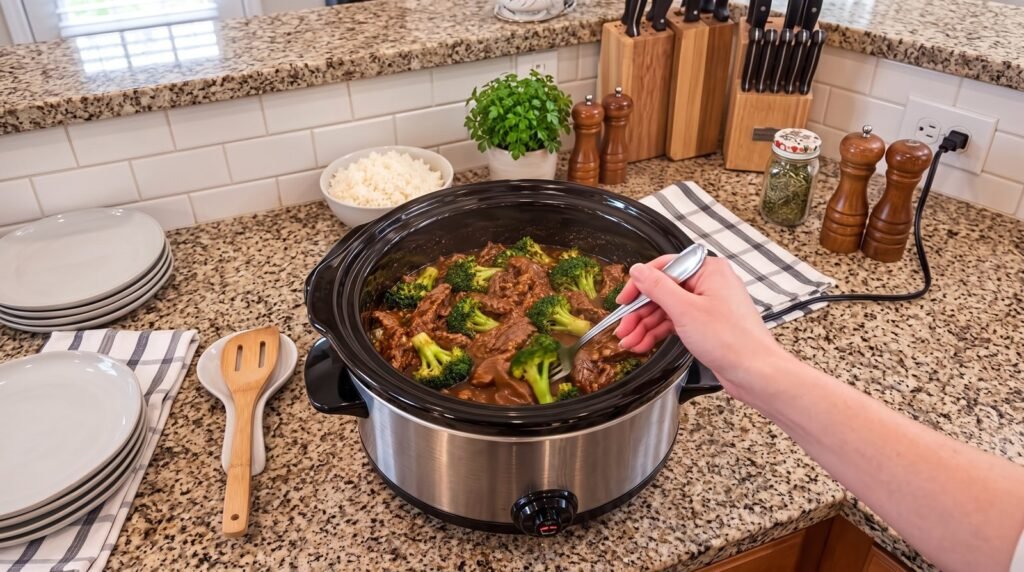

We have all been there. It is Friday night, you are absolutely exhausted from a long week of work, and the thought of standing over a hot stove for an hour makes you want to crawl directly into bed. Your hand instinctively reaches for your phone, and before you know it, you are staring at a food delivery app. You add your favorite beef and broccoli to the cart, look at the final price with service fees, delivery charges, and tips, and wince. Thirty dollars for a single container of lukewarm, slightly soggy takeout that will leave you thirsty for the next twelve hours from all the sodium.
A few years ago, I decided I was done with the takeout trap. I wanted that rich, savory, slightly sweet sauce and tender beef, but I wanted to make it at home without the high price tag or the post-meal salt bloat. My first few attempts at making beef and broccoli in a slow cooker were, quite frankly, complete disasters. I made the classic rookie mistake of throwing everything, including the broccoli, into the pot at nine in the morning. By dinner time, the broccoli had disintegrated into a sad, swampy, olive-drab mush, and the beef was so dry and rubbery it tasted like shoe leather.
But I am stubborn. I knew there had to be a way to get restaurant-quality beef and broccoli out of a Crockpot. After dozens of test batches, tweaks to the sauce ratios, and experiments with different cuts of meat, I finally cracked the code. This recipe is the result of those trials. It delivers melt-in-your-mouth tender beef, a rich, glossy glaze that clings to every single bite, and bright, crisp-tender broccoli that actually looks and tastes fresh.
If you have a slow cooker gathering dust in your cupboard, it is time to pull it out. Let me walk you through how to make the ultimate slow cooker beef and broccoli, sharing all the hard-won lessons I learned along the way so you can get it perfect on your very first try.
The Core Philosophy of Slow Cooker Beef and Broccoli
Before we look at the ingredients, we need to understand how a slow cooker behaves differently than a traditional stir-fry wok. In a restaurant, beef and broccoli is cooked in minutes over screaming hot heat. The beef is thinly sliced and seared instantly, while the broccoli is flash-blanched to keep its bite.
A slow cooker does the exact opposite. It traps moisture and cooks things slowly at a gentle simmer. If you try to treat a slow cooker like a wok, you will end up with watery sauce and mushy vegetables.
To succeed, we have to adapt. We use the low-and-slow heat to our advantage to break down tough, budget-friendly cuts of beef until they are incredibly tender. We also have to be strategic about timing. The beef and the sauce get to hang out in the pot for hours, building deep flavor. The broccoli, on the other hand, only gets invited to the party at the very end. This simple shift in timing is the secret to elevating this dish from home-cook average to restaurant-quality spectacular.
The Meat: How to Choose and Prep the Perfect Cut
When you go to the grocery store, you might be tempted to grab a pack of expensive pre-cut stir-fry beef or a couple of sirloin steaks. Do not do it. Those lean, tender cuts are designed for quick cooking. If you leave sirloin in a slow cooker for six hours, all the moisture will squeeze out of the muscle fibers, leaving you with dry, stringy meat.
Instead, look for cuts that love a long, slow braise. My absolute favorite cut for this recipe is boneless chuck roast. Chuck roast is marbled with fat and connective tissue. As it cooks slowly, that connective tissue melts down into gelatin. This not only makes the meat so tender you can cut it with a spoon, but it also naturally enriches the sauce, giving it a luxurious, mouth-coating body.
Another great option is flank steak or flat iron steak. If you use flank steak, just keep an eye on the clock, as it cooks a bit faster than chuck roast.
No matter which cut you choose, how you slice the meat is just as important as the cut itself. You must slice the beef against the grain. Look closely at the meat, and you will see long fibers running in one direction. You want to cut perpendicular to those lines. If you cut parallel to them, you will have long, chewy muscle fibers that are tough to eat. Slice the beef thin, about a quarter of an inch thick.
Here is a pro-tip that changed my kitchen life: put your block of beef in the freezer for thirty to forty minutes before you slice it. It will not freeze solid, but it will firm up enough that your knife will glide through it, allowing you to get those perfect, paper-thin restaurant slices with ease.
The Secret Sauce: Demystifying the Takeout Flavor
The soul of this dish is the sauce. It needs to be dark, savory, slightly sweet, and packed with umami. To get that authentic flavor, we need a balance of a few key ingredients.
First is soy sauce. Always, always use low-sodium soy sauce. Because the liquid concentrates as it cooks in the slow cooker, using regular soy sauce will result in an incredibly salty dish that overpowers all the other flavors. If you need a gluten-free option, tamari or coconut aminos work beautifully here.
Next is the sweetener. I prefer light brown sugar. It adds a deep, molasses-like sweetness that balances the salt of the soy sauce. If you prefer, you can use honey, but brown sugar gives it that classic takeout taste.
Then we have garlic and ginger. Please do not use the powdered versions here if you can avoid it. Fresh, minced garlic and finely grated ginger make a massive difference. They cut through the richness of the beef and add a bright, aromatic punch. If you are in a rush, those little jars of pre-minced garlic and tubes of ginger paste are acceptable substitutes, but fresh is always king.
The real secret weapon in this sauce is oyster sauce. If you have never cooked with it, do not let the name scare you. It does not taste fishy at all. Instead, it is a thick, savory syrup made from oyster extracts, sugar, and soy sauce. It adds an incredible depth of savory flavor, often referred to as umami, and helps give the sauce that beautiful, dark mahogany color. You can find it in the Asian aisle of almost any grocery store, and it is absolutely worth the purchase.
To finish the flavor profile, we add a touch of toasted sesame oil. A little goes a long way with sesame oil, so stick to the recipe measurements. It adds a rich, nutty aroma that ties the whole dish together.
The Broccoli Dilemma: Achieving Crisp-Tender Perfection
Let us talk about the broccoli. I cannot stress this enough: do not put your broccoli in the slow cooker at the beginning of the cook cycle. If you do, it will turn into a gray-green puree by the time your beef is tender, and your kitchen will smell like boiled cabbage.
Instead, we prep our broccoli florets and keep them in the fridge while the beef cooks. When the beef is tender, we stir in a cornstarch slurry to thicken the sauce. Once the sauce starts to thicken up and bubble, we gently fold the raw broccoli florets right on top of the beef.
You then put the lid back on and let it steam on the high setting for about twenty to thirty minutes. This is just enough time for the broccoli to cook through, absorbing the rich flavors of the sauce, while still maintaining its bright green color and a pleasant, slight crispness. It makes a world of difference in both the presentation and the texture of the dish.
Ingredients for Slow Cooker Beef and Broccoli
Here is everything you will need to put this incredible meal together.
| Ingredient | Amount | Notes |
|---|---|---|
| Boneless chuck roast | 2 pounds | Sliced thin against the grain |
| Low-sodium soy sauce | 1/2 cup | Do not use regular soy sauce |
| Beef broth | 1/2 cup | Low-sodium preferred |
| Light brown sugar | 1/3 cup | Packed |
| Oyster sauce | 2 tablespoons | The secret ingredient for umami |
| Toasted sesame oil | 1 tablespoon | Adds a rich, nutty aroma |
| Fresh garlic | 4 cloves | Minced |
| Fresh ginger | 1 tablespoon | Finely grated |
| Cornstarch | 3 tablespoons | For thickening the sauce |
| Cold water | 3 tablespoons | To mix with the cornstarch |
| Fresh broccoli florets | 4 cups | Cut into bite-sized pieces |
| Sesame seeds | 1 tablespoon | Optional, for garnish |
| Green onions | 2 stalks | Sliced, optional for garnish |
Step-by-Step Guide: Let's Cook Together
Now that we have our ingredients ready, let us walk through the cooking process together. It is incredibly simple, but following these steps in order will guarantee success.
First, let us prep the beef. Take your chuck roast out of the fridge. If you had the foresight to put it in the freezer for thirty minutes, excellent. Lay it on a sturdy cutting board and look for the direction of the muscle fibers. Using a sharp chef's knife, cut the roast into thin, bite-sized strips, roughly two inches long and a quarter-inch thick. If you see any exceptionally large pieces of hard white fat, trim those away, but leave the smaller webs of marbling, as they will melt down and keep the beef tender. Once sliced, place the beef directly into the ceramic pot of your slow cooker.
In a medium mixing bowl, we are going to build our sauce. Whisk together the low-sodium soy sauce, beef broth, light brown sugar, oyster sauce, toasted sesame oil, minced garlic, and grated ginger. Whisk it well until the sugar has mostly dissolved.
Pour this beautiful, fragrant sauce directly over the sliced beef in your slow cooker. Give everything a good stir to ensure that every single strip of beef is coated in the liquid. Try to press the beef down slightly so that it is mostly submerged in the sauce.
Now, pop the lid on. Cook on the low setting for six to seven hours, or on the high setting for three to four hours. Personally, I highly recommend the low setting if you have the time. The slow, gentle heat does a much better job of melting the connective tissues in the chuck roast, resulting in that incredibly tender texture we are aiming for.
While the beef is cooking, you can prep your broccoli. Cut the head of broccoli into small, bite-sized florets. Try to make them relatively uniform in size so they cook evenly. Store them in a container or zip-top bag in the refrigerator until you are ready for them.
When your cook time is up, lift the lid and check the beef. Take a piece out with a fork; it should be incredibly tender and practically break apart with gentle pressure.
At this stage, you will notice that the sauce is quite thin and watery. This is normal, as the beef releases its natural juices during the cooking process. We need to thicken it up into a rich, glossy glaze.
In a small cup, combine your three tablespoons of cornstarch with three tablespoons of cold water. Stir them together with a fork or a mini whisk until it forms a smooth, milky white liquid with no lumps. This is your cornstarch slurry.
Turn your slow cooker to the high setting if it was on low. Pour the slurry directly into the bubbling sauce and gently stir it into the beef. Let it cook uncovered for about five to ten minutes. You will watch the magic happen right before your eyes as the liquid transforms from a thin broth into a thick, glossy, restaurant-style gravy.
Once the sauce has thickened, grab your prepped broccoli florets from the fridge. Dump them right into the slow cooker on top of the beef. Gently fold them into the sauce so they are lightly coated.
Put the lid back on. Let it cook on the high setting for another twenty to twenty-five minutes. Keep an eye on it around the twenty-minute mark. You want the broccoli to be tender when pierced with a fork, but still hold its vibrant, bright green color.
Once the broccoli is cooked to your liking, turn the slow cooker to the warm setting. Your house will smell absolutely incredible at this point. Serve it up hot, garnished with a sprinkle of sesame seeds and some sliced green onions if you want to make it look extra professional.
The Magic of the Cornstarch Slurry
Let us pause for a second and talk about the science of the cornstarch slurry, because this is where a lot of home cooks get tripped up.
I have seen people try to just dump raw cornstarch directly into their slow cooker to thicken a sauce. Please, never do this. Cornstarch is hydrophobic, meaning it does not like water. If you throw dry powder into a hot liquid, the outer starch molecules will instantly hydrate and form a protective gel barrier around the dry powder inside. This leaves you with nasty, powdery, gelatinous lumps floating in your sauce that are nearly impossible to whisk out.
By mixing the cornstarch with cold water first, you separate the starch granules, allowing them to suspend evenly in the cold liquid. When you pour this milky mixture into your hot slow cooker sauce, the starch molecules can absorb the hot liquid evenly, swelling and swelling until they burst, creating a smooth, thick, and perfectly uniform glaze.
Also, remember that cornstarch needs heat to activate. It must reach a gentle simmer to achieve its full thickening power. That is why we turn the slow cooker to the high setting when we add the slurry.
Crucial Mistakes to Avoid at All Costs
Even with a simple recipe like this, there are a few common pitfalls that can ruin your dinner. Here are the mistakes I made along the way so you can avoid them:
Do not use pre-packaged broccoli florets that are yellowing or dry. Fresh, crisp broccoli is key to this dish. If the broccoli is already on its way out, the slow cooker will only highlight its bitterness and tough texture.
Do not skip the browning sugar. I know some people prefer to cook completely sugar-free, but that touch of sweetness is essential to balance the heavy umami of the soy and oyster sauces. If you leave it out entirely, the dish will taste flat, harsh, and overly salty. If you want a natural alternative, try using raw honey or pure maple syrup, but do not omit the sweet element entirely.
Do not overcook the beef to the point of disintegration. While we want tender beef, we do not want shredded beef. If you leave a chuck roast in a slow cooker for ten or twelve hours, it will break down so much that it turns into a shredded meat sauce. We want distinct, tender strips of beef that hold their shape when picked up with chopsticks or a fork. Stick to the recommended cook times.
Do not use too much sesame oil. Toasted sesame oil has an incredibly strong flavor. If you accidentally pour in a splash too much, your entire dish will taste like sesame oil, hiding the delicate garlic, ginger, and beef flavors. Measure it carefully.
What to Serve with Your Masterpiece
Once your slow cooker beef and broccoli is finished, you need the perfect base to soak up all that incredible, thick glaze.
Classic white jasmine rice is my go-to choice. The light, floral aroma of jasmine rice complements the savory richness of the beef perfectly. It acts like a clean canvas, letting the flavors of the sauce shine. Brown rice is also fantastic if you want a nuttier flavor and a bit more fiber.
If you are trying to keep things low-carb or grain-free, cauliflower rice is an excellent alternative. Because the sauce in this recipe is so flavorful, it easily masks the slightly earthy taste of cauliflower. Just sauté the cauliflower rice in a pan with a tiny bit of garlic and sesame oil before serving.
For a fun twist, you can boil up some ramen noodles or udon noodles, toss them directly into the slow cooker at the very end with the cooked beef and broccoli, and give it a good mix. This creates a spectacular, quick noodle stir-fry that kids absolutely love.
To complete the meal, I love serving this with a side of simple cucumber salad dressed with rice vinegar and sesame seeds, or some quick air-fryer egg rolls.
How to Prep This Ahead and Freeze It
If you are a fan of meal prepping, this recipe is a dream come true. You can easily prep this entire meal ahead of time and store it in your freezer for those incredibly hectic weeks.
To turn this into a freezer dump meal, grab a gallon-sized freezer bag. Write the cooking instructions on the bag with a permanent marker so you do not forget.
Add your sliced, raw beef directly to the bag. In a separate bowl, mix your soy sauce, beef broth, brown sugar, oyster sauce, sesame oil, garlic, and ginger. Pour the sauce over the beef in the bag. Seal the bag, squeezing out as much air as possible, and massage it gently to distribute the sauce. Lay it flat in your freezer. It will keep beautifully for up to three months.
When you are ready to cook, let the bag thaw in your refrigerator overnight. In the morning, dump the contents of the bag into your slow cooker and cook as directed.
Note: Do not freeze the raw broccoli or the cornstarch slurry in the bag with the meat. The freezing process ruins the texture of raw broccoli, turning it mushy once cooked. Keep your fresh broccoli in the vegetable crisper, and make your fresh cornstarch slurry on the day you cook the meal.
Storing, Reheating, and Giving New Life to Leftovers
If you have leftovers, count yourself lucky. Like many slow-cooked dishes, beef and broccoli often tastes even better the next day as the flavors have more time to meld and mature in the fridge.
Store your leftovers in an airtight container in the refrigerator for up to three to four days.
When it comes to reheating, you want to be gentle. If you blast this dish in the microwave on high power for three minutes, you will overcook the broccoli, turning it soft and rubbery, and the beef can dry out.
Instead, I prefer to reheat leftovers on the stovetop. Place your beef, broccoli, and sauce into a small skillet or saucepan over medium-low heat. Add a splash of water or beef broth (about a tablespoon or two) to help loosen up the sauce, as it will have thickened significantly in the fridge. Cover the pan with a lid and let it heat through gently for about five to seven minutes, stirring occasionally. This keeps the beef tender and prevents the broccoli from turning to mush.
If you do use the microwave, heat it at medium power (about fifty percent) in one-minute increments, stirring in between, until it is hot throughout.
If you find yourself with just a small amount of leftover beef and sauce but no broccoli, you can easily repurpose it. Sauté some fresh bell peppers and onions in a hot skillet, toss in the leftover beef and sauce, and serve it over crispy noodles for a completely different meal.
Frequently Asked Questions
Can I make this in an Instant Pot instead of a slow cooker?
Yes, absolutely. If you want to use a pressure cooker, place the sliced beef and the sauce into the inner pot. Secure the lid and set it to manual high pressure for ten minutes. Once the timer goes off, let the pressure release naturally for ten minutes, then do a quick release for any remaining steam. Turn the Instant Pot to the sauté setting, stir in your cornstarch slurry to thicken the sauce, and then add your broccoli. Put a glass lid on top and let the broccoli steam in the residual heat for about five to ten minutes until tender.
Can I use frozen broccoli instead of fresh?
You can, but with a warning. Frozen broccoli has already been blanched and frozen, meaning its cell walls have broken down. It is much softer than fresh broccoli to begin with. If you use frozen broccoli, only add it in the last ten minutes of cooking, just long enough to heat it through. Also, be aware that frozen broccoli releases a lot of extra water as it thaws, which can dilute your beautifully thickened sauce. You may need to add a bit more cornstarch slurry to compensate.
Is there a replacement for the oyster sauce if I have a shellfish allergy?
Yes. If you cannot eat shellfish, look for vegetarian oyster sauce, which is typically made from mushrooms. It has an incredibly similar flavor profile, rich in umami, and works as a perfect one-to-one substitute. Alternatively, you can use hoisin sauce, though hoisin is slightly sweeter, so you may want to reduce the brown sugar in the recipe by a tablespoon.
Can I add other vegetables to this dish?
Of course. This recipe is highly customizable. I often love adding sliced carrots, snap peas, or water chestnuts along with the broccoli. Just slice the carrots thin so they cook in the same twenty-minute window as the broccoli.
Final Thoughts: Bringing It All Together
Cooking great food at home does not have to mean spending hours sweating over a stove or cleaning up a mountain of dirty pots and pans. This slow cooker beef and broccoli is proof that with a little bit of planning, a few smart ingredient choices, and the right techniques, you can create a meal that is healthier, cheaper, and infinitely more satisfying than anything that comes in a cardboard takeout box.
The magic of this recipe lies in its simplicity. It respects the ingredients, letting the slow cooker do the hard work of tenderizing the meat while keeping the vegetables fresh and vibrant.
The next time you find yourself reaching for your phone on a Friday night, put it down. Spend fifteen minutes prepping this dish in the morning, and let your kitchen fill with the warm, savory aroma of garlic, ginger, and sesame all day long. When dinner time rolls around, you will be rewarded with a spectacular meal that feels like a triumph, and your wallet will thank you too. Happy cooking.


