
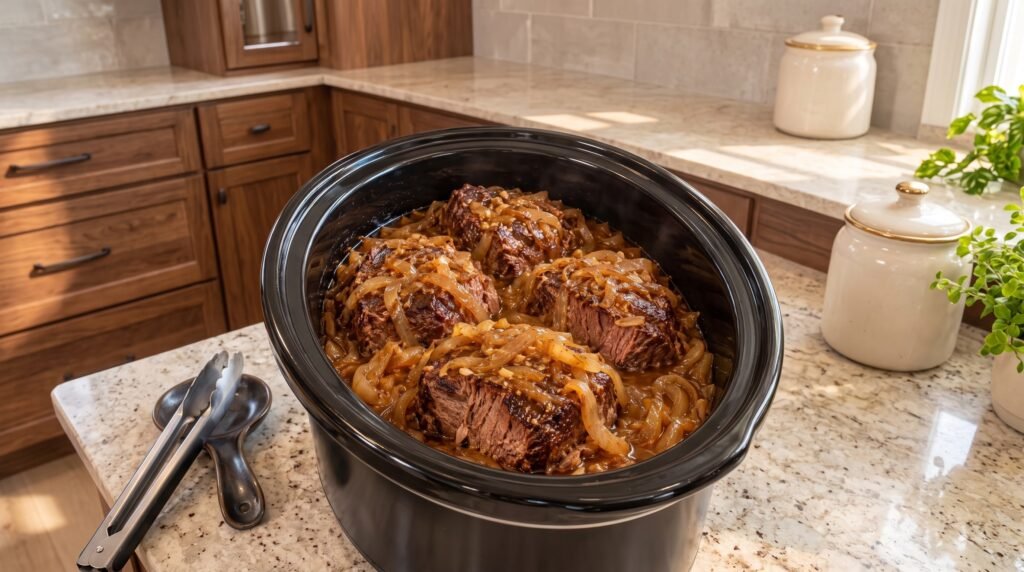

There is a specific kind of magic that happens in a kitchen on a rainy Sunday afternoon. It is the kind of day where the air is cool, the clouds are low, and the only acceptable activity is curling up on the couch with a good book while something rich and savory bubbles away on the counter. For years, my ultimate comfort food was a standard pot roast. I would throw some carrots, potatoes, and a chunk of beef into the slow cooker, dump a packet of onion soup mix on top, pour in some water, and call it a day. It was fine. It was filling. But let us be completely honest, it was also a little boring, and the meat often ended up on the dry, stringy side.
Then came the Sunday that changed everything. I had a bag of sweet yellow onions sitting on my counter that were dangerously close to going soft. I also had a beautiful three-pound chuck roast in the fridge. Instead of my usual routine, I decided to take inspiration from classic French onion soup. I wondered if I could combine the deep, caramelized sweetness of slow-cooked onions with the rich, savory depth of a beef roast.
I spent twenty minutes caramelizing those onions in a skillet with some butter and a splash of balsamic vinegar before putting them in the slow cooker. I seared the beef until it had a dark, gorgeous crust. I deglazed the pan with some beef broth, poured it all over the meat, and let the slow cooker do its thing for eight hours.
When I lifted the lid that evening, the aroma that filled my kitchen was absolutely intoxicating. The onions had melted into a jammy, dark brown gravy. The beef was so tender that it practically fell apart when I touched it with a fork. It was, without a doubt, the best pot roast I had ever made in my life. Since that day, this French Onion Pot Roast has become a staple in my household.
If you are tired of dry, bland pot roast and want to elevate your slow cooker game to a level that feels like a fancy restaurant meal, you are in the right place. Let me walk you through exactly how to make this masterpiece, including the mistakes I made along the way so you can avoid them entirely.
Why This Recipe Works So Well
To understand why this roast is so incredibly delicious, we have to look at the science of cooking tough cuts of meat. Chuck roast comes from the shoulder of the cow. This muscle gets a lot of work during the animal's life, which means it is packed with connective tissue and collagen. If you cook a chuck roast quickly, like a steak, it will be as tough as a leather boot.
However, when you cook chuck roast low and slow, that tough collagen slowly breaks down and melts into gelatin. This gelatin coats the muscle fibers, giving the meat a rich, moist, and luscious texture.
The onions play a dual role here. Onions are naturally full of sugars. When you cook them slowly, those sugars break down and caramelize, turning sweet, complex, and deeply savory. As the roast cooks on top of these onions, the meat absorbs that sweetness, while the savory beef juices drip down into the onions, creating an incredible flavor feedback loop. The result is a gravy that is naturally sweet, deeply savory, and packed with umami.
Choosing the Right Cut of Beef
Before we even turn on the stove, we need to talk about the meat. If you walk into the grocery store, you will see a lot of different cuts labeled as pot roast. You might see chuck roast, rump roast, round roast, or sirloin tip roast.
For this recipe, you must use chuck roast. Do not buy rump roast or round roast for this. Rump and round roasts are much leaner cuts of meat. Because they lack the internal marbling and connective tissue of a chuck roast, they will dry out in the slow cooker, leaving you with stringy, dry meat that is hard to chew.
Look for a chuck roast that has good marbling. Marbling refers to those little white flecks of fat dispersed throughout the red meat. You want to see plenty of those flecks, as well as some thicker ribbons of fat running through the roast. Do not worry about this fat making the dish greasy; most of it will render down during the long cook time, contributing to the ultimate tenderness of the beef. We can always skim any excess fat off the top of the gravy before serving.
The Secret to Deep Flavor: The Maillard Reaction
One of the biggest mistakes people make when using a slow cooker is the dump-and-go method. It is incredibly tempting to just throw raw meat, raw onions, and liquid into the pot, turn it on, and walk away. While this will technically cook the food, you are leaving an enormous amount of flavor on the table.
To get that rich, deep, restaurant-quality flavor, you must sear your meat first. When you sear beef in a hot pan, you trigger the Maillard reaction. This is a chemical reaction between amino acids and reducing sugars that gives browned food its desirable flavor. It creates hundreds of new flavor compounds that you simply cannot get from boiling or steaming meat in a slow cooker.
The same rule applies to the onions. Raw onions cooked in a slow cooker will taste sweet, but they will not have that deep, caramelized, jammy flavor that makes French onion soup so iconic. Taking the time to sauté the onions in butter until they are golden brown is the key step that elevates this dish from ordinary to extraordinary.
| Ingredient | Amount | Notes |
|---|---|---|
| Beef Chuck Roast | 3 to 4 pounds | Well-marbled, excess fat trimmed slightly |
| Yellow or Sweet Onions | 3 large | Sliced into thick half-moons |
| Unsalted Butter | 3 tablespoons | For sautéing the onions |
| Olive Oil | 2 tablespoons | High smoke point for searing the beef |
| Kosher Salt | 2 teaspoons | For seasoning the meat and onions |
| Coarse Black Pepper | 1 teaspoon | Freshly cracked is best |
| Garlic | 4 cloves | Minced or finely grated |
| Balsamic Vinegar | 2 tablespoons | To deglaze the onion pan and add acidity |
| Beef Bone Broth | 1.5 cups | High-quality, low-sodium broth |
| Worcestershire Sauce | 2 tablespoons | For a deep, savory umami kick |
| Fresh Thyme sprigs | 4 to 5 sprigs | Classic herb pairing |
| Bay Leaf | 1 large | Dried or fresh |
| Cornstarch | 2 tablespoons | To thicken the gravy at the end |
| Cold Water | 2 tablespoons | To mix with the cornstarch |
| Gruyere or Swiss Cheese | 1 cup | Optional, for melting on top before serving |
Step-by-Step Instructions
Now that we have our ingredients gathered, let us walk through the process step-by-step. Put on some music, pour yourself a glass of wine or some tea, and let us enjoy the process of building these incredible layers of flavor.
Step 1: Prep the Meat
Take your chuck roast out of the refrigerator about thirty minutes before you plan to cook it. If you put a ice-cold piece of meat into a hot skillet, it will drop the temperature of the pan instantly, causing the meat to steam in its own juices rather than sear. Getting the chill off the meat helps ensure a beautiful, dark crust.
Once the roast has sat out for a bit, take some paper towels and pat it completely dry on all sides. Moisture is the ultimate enemy of a good sear. If there is water on the surface of the meat, that water has to evaporate before browning can begin, which means you will overcook the outer edges of the beef before you get a good crust.
After patting it dry, season the roast generously with kosher salt and freshly cracked black pepper. Do not be shy here. This is a thick piece of meat, and it needs a good amount of salt to penetrate into the center. I like to press the salt and pepper into the meat with my hands to make sure it sticks.
Step 2: Searing the Beef
Place a large, heavy skillet (cast iron is my absolute favorite for this) over medium-high heat. Add the olive oil and let it heat up until it is shimmering and just starting to show a tiny wisps of smoke.
Carefully lower the seasoned chuck roast into the hot pan. You should hear a loud, satisfying sizzle. If you do not hear that sizzle, your pan is not hot enough. Take the meat out and let the pan heat up a bit more.
Let the roast sear without moving it for about four to five minutes. Resist the temptation to peek or slide it around. It needs undisturbed contact with the hot metal to form that beautiful crust. Use a pair of sturdy tongs to turn the roast over and sear the other side for another four to five minutes.
Do not forget the edges. Use your tongs to hold the roast upright and sear the sides of the meat for a minute or two each. Once the entire roast is beautifully browned, transfer it to a plate and set it aside. Do not clean out the skillet yet. All of those brown bits stuck to the bottom of the pan are flavor gold.
Step 3: Caramelizing the Onions
Turn the heat down to medium and add the unsalted butter to the same skillet. Once the butter has melted, toss in your sliced onions. Sprinkle them with a pinch of salt. The salt will help draw out the moisture from the onions, which helps them cook down faster.
Sauté the onions, stirring frequently, for about fifteen to twenty minutes. At first, they will just soften and turn translucent. Keep going. Slowly, they will begin to turn a light golden color, and eventually, a deep, rich brown.
If you find that the onions are burning or sticking to the pan too quickly, turn the heat down to low. True caramelization takes time, and we do not want to rush it and end up with bitter, burnt onions.
During the last minute of cooking the onions, stir in the minced garlic. Cook it just until you can smell it, which should take about thirty seconds. If you cook garlic too long at this stage, it will burn and turn bitter.
Step 4: Deglazing the Pan
Now, pour in the balsamic vinegar and use a wooden spoon to scrape up all those delicious brown bits stuck to the bottom of the pan. The acid in the vinegar will help loosen those bits and balance the sweetness of the caramelized onions.
Once the bottom of the pan is clean and the vinegar has mostly evaporated, pour in the beef bone broth and Worcestershire sauce. Bring the mixture to a gentle simmer, then turn off the heat.
Step 5: Filling the Slow Cooker
Now it is time to assemble our masterpiece. Spoon about half of the caramelized onions into the bottom of your slow cooker ceramic insert. This creates a soft, flavorful bed for the beef to rest on, preventing the bottom of the meat from scorching.
Place the seared chuck roast on top of the onions. Pour the rest of the onions and all of the liquid from the skillet over the top of the beef. Toss in the fresh thyme sprigs and the bay leaf, tucking them down into the liquid.
Step 6: The Long, Slow Cook
Put the lid on your slow cooker. Now, you have a choice to make: low or high.
I am going to make a strong plea here: cook this on low.
Yes, cooking on high is faster. But high heat causes the muscle fibers in the beef to contract tightly, squeezing out their moisture. Cooking on low for eight to nine hours allows the heat to gently coax the collagen into melting, resulting in a much more tender, juicy finished product. If you cook this on high for four hours, the meat will likely be cooked through, but it will be tough and chewy. Give it the time it deserves. Go for eight to nine hours on low.
Step 7: Thickening the Gravy
Once the cook time is up, test the meat. It should easily pull apart with a fork. Carefully lift the beef out of the slow cooker and place it on a serving platter. Cover it loosely with foil to keep it warm.
Remove and discard the thyme stems and the bay leaf. You will notice that you now have a lot of liquid in the slow cooker, and it might look a little watery. We want to turn this liquid into a rich, glossy gravy.
Turn your slow cooker to the high setting. In a small bowl, whisk together the cornstarch and cold water until smooth to create a slurry. Pour this slurry into the bubbling liquid in the slow cooker, stirring constantly.
Let the liquid cook on high for about ten to fifteen minutes, stirring occasionally, until it thickens into a gorgeous, silky gravy.
If your slow cooker does not get hot enough on high to simmer and thicken the sauce, you can pour the liquid and onions into a saucepan and thicken it on your stovetop over medium heat. This is actually my preferred method because it gives me more control over the final texture of the gravy.
Step 8: Assemble and Serve
Once your gravy is thick and luscious, taste it. Adjust the seasoning with a bit more salt and pepper if needed.
You can either shred the beef into large, bite-sized chunks and stir it back into the gravy, or you can slice the roast and spoon the warm onions and gravy generously over the top.
If you want to take the French onion theme all the way, place the portioned beef and gravy into oven-safe crocks, top them with a slice of toasted French bread, and pile on a generous handful of Gruyere or Swiss cheese. Place the crocks under your oven broiler for two to three minutes until the cheese is melted, bubbly, and golden brown.
My Hard-Earned Lessons: Mistakes to Avoid
I have made this roast dozens of times, and I have made almost every mistake possible. Here are the things I learned the hard way, so you do not have to.
Do not slice the onions too thin. The first time I made this, I used a mandoline to slice the onions paper-thin. I thought they would caramelize faster. While they did cook quickly, they completely disintegrated during the eight hours in the slow cooker. I ended up with no actual onion pieces left in my gravy. Slice your onions into thick, sturdy half-moons (about a quarter-inch thick) so they hold their shape and provide that wonderful jammy texture in the finished dish.
Do not skip the browning step. I know it adds a pan to wash, and I know it takes an extra fifteen minutes. But the depth of flavor you get from searing the beef and sautéing the onions is the difference between a mediocre pot roast and an unforgettable culinary experience. If you skip this, your gravy will taste watery and lack complexity.
Do not use high sodium broth. Because the liquid reduces and we are adding Worcestershire sauce (which is naturally salty), using standard high-sodium beef broth can make the final gravy taste like a salt lick. Always use low-sodium broth or a high-quality, unsalted beef bone broth. You can always add more salt at the end, but you cannot take it away.
Do not add too much liquid. It is tempting to pour in enough broth to submerge the meat. Do not do this. As the beef cooks, it will release a significant amount of its own natural juices. If you start with too much liquid, you will end up boiling the beef rather than braising it, and your gravy will be incredibly diluted. One and a half cups of broth is the perfect amount; it will combine with the beef juices to create plenty of sauce.
The Best Side Dishes to Accompany Your Roast
This French Onion Pot Roast is incredibly rich and savory, which means it needs the right side dishes to complement it. Here are my favorite ways to serve this meal.
Garlic Herb Mashed Potatoes
This is the classic pairing for a reason. There is nothing better in this world than a mountain of creamy, buttery mashed potatoes with a deep well in the center filled to the brim with caramelized onion gravy. To make them, boil some russet or Yukon gold potatoes until tender, then mash them with plenty of butter, heavy cream, roasted garlic, and a handful of fresh chives. The creaminess of the potatoes balances the intense savory flavor of the beef perfectly.
Buttered Egg Noodles
If you want something a bit lighter than mashed potatoes, wide egg noodles are a fantastic option. Toss the hot, cooked noodles with a generous amount of butter, some salt, and some fresh parsley. The noodles act like little ribbons that catch the onions and gravy beautifully.
Crusty French Sourdough Bread
You will want something to wipe your plate clean, and a thick slice of toasted sourdough or a warm French baguette is the perfect tool for the job. You can rub the toasted bread with a cut clove of raw garlic and drizzle it with olive oil before using it to scoop up the remaining gravy.
Roasted Green Vegetables
To balance out the richness of the meat and gravy, I always like to serve something green and slightly bright on the side. Roasted asparagus with a squeeze of fresh lemon juice, or roasted Brussels sprouts tossed with a splash of balsamic glaze, work wonderfully. The acidity of these vegetables cuts through the fat of the roast, keeping your palate refreshed.
What to Do with Leftovers
If you have any leftovers, consider yourself incredibly lucky. In fact, many people argue that this roast tastes even better the next day. As the dish sits in the fridge, the flavors continue to marry, and the beef absorbs even more of the savory onion goodness.
Store any leftovers in an airtight container in the refrigerator for up to four days. When you are ready to reheat it, do so gently on the stovetop over low heat, adding a splash of beef broth or water if the gravy has thickened too much in the fridge.
Here are a few creative ways to transform your leftovers into entirely new meals.
French Onion Beef Sliders
Split some sweet Hawaiian rolls in half. Place the bottom halves in a baking dish. Layer on some of the leftover shredded beef and caramelized onions, and top with a slice of Provolone or Swiss cheese. Put the top buns back on, brush them with a mixture of melted butter, garlic powder, and parsley, and bake at 350 degrees Fahrenheit for ten minutes until the cheese is gooey and the rolls are toasted. These are always a massive hit for game day or a quick weeknight dinner.
Leftover Beef and Noodle Soup
Chop up any remaining beef into smaller pieces. In a large pot, combine the leftover beef, onions, and gravy with four cups of high-quality beef broth. Bring it to a simmer, then stir in some uncooked egg noodles and a handful of sliced carrots and celery. Cook until the noodles and vegetables are tender. You will have a rich, hearty beef noodle soup that tastes like it took all day to make.
French Onion Shepherd's Pie
Spread your leftover beef, onions, and gravy into the bottom of a casserole dish. If you have any leftover roasted carrots or peas, stir those in as well. Spread a thick layer of leftover mashed potatoes over the top, dragging the tines of a fork across the surface to create ridges. Bake at 400 degrees Fahrenheit for twenty-five minutes until the edges are bubbling and the potato ridges are golden brown and crispy.
Frequently Asked Questions
Can I make this in an Instant Pot or pressure cooker?
Yes, you absolutely can. If you are short on time, the pressure cooker is a great alternative. Use the sauté function on your Instant Pot to sear the beef and caramelize the onions. Add the remaining ingredients, lock the lid, and cook on high pressure for 60 minutes, followed by a natural pressure release for 15 minutes. While the meat will be tender, I still find that the slow cooker method produces a slightly deeper, more developed flavor, but the pressure cooker version is still incredibly delicious.
Can I freeze this recipe?
Yes, this roast freezes beautifully. You can freeze the cooked beef and gravy in a freezer-safe container or heavy-duty zip-top bag for up to three months. To use, let it thaw in the refrigerator overnight, then reheat it gently on the stovetop. I do not recommend freezing mashed potatoes or noodles, so just prepare those fresh when you are ready to eat.
Do I have to use wine or vinegar?
You do not have to use balsamic vinegar, but I highly recommend it. The acidity is crucial for balancing the sweet onions and rich beef. If you do not have balsamic vinegar, you can use a splash of dry red wine (like a Cabernet or Merlot) to deglaze the pan. If you prefer to cook without any alcohol or vinegar, you can use a tablespoon of Worcestershire sauce mixed with a teaspoon of lemon juice to get that necessary hit of acidity.
Can I add carrots and potatoes to the slow cooker?
While traditional pot roast often includes carrots and potatoes, I prefer to leave them out of this specific recipe. The focus here is on that pure, concentrated French onion flavor. Adding root vegetables can dilute the gravy and change the overall flavor profile. If you want carrots and potatoes, I suggest roasting them separately in the oven with some olive oil, salt, pepper, and rosemary. The crispy, caramelized edges of oven-roasted vegetables contrast beautifully with the tender, braised beef.
Final Thoughts
Food has a wonderful way of bringing people together, and this Slow Cooker French Onion Pot Roast is the ultimate expression of that. It is a humble, simple dish made with inexpensive ingredients, but it is prepared with care and patience.
When you take the time to build those layers of flavor, you turn a simple chuck roast into a meal that feels celebratory. It is a dish that invites people to gather around the table, pass the bread basket, and linger over conversation long after the plates have been cleared.
The next time you find yourself staring at a rainy Sunday forecast, skip the quick takeout and give this recipe a try. Your home will smell incredible, your soul will be warmed, and you will have a new favorite comfort food to share with the people you love.