
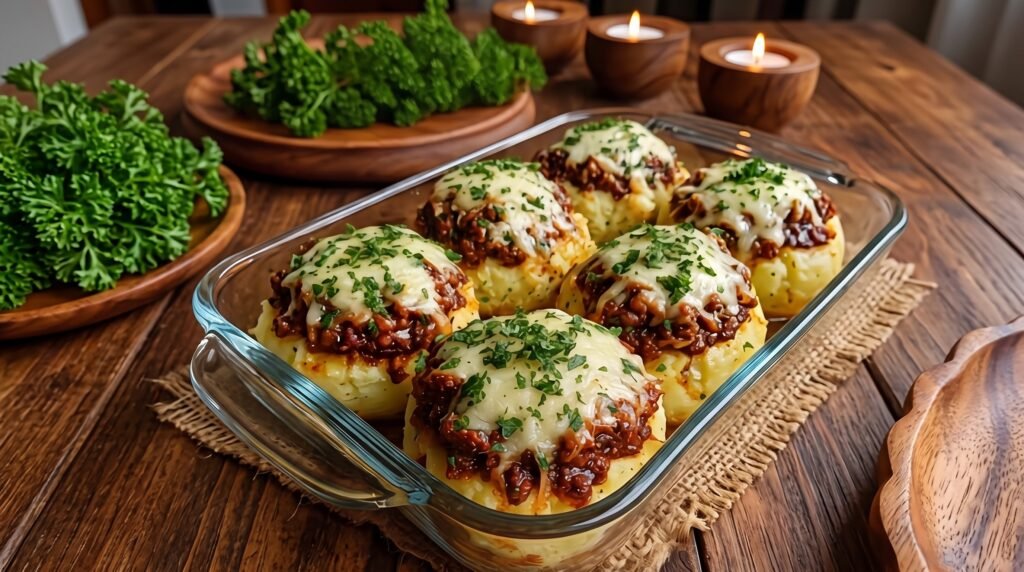

There is a specific kind of magic that happens in a kitchen on a cold, rainy Sunday afternoon when you have absolutely nowhere to be. A few years ago, on one of those gloomy winter days, I found myself standing in front of my open refrigerator, shivering slightly, staring at a half-empty container of leftover bolognese sauce from Friday night and a bag of dusty Russet potatoes sitting in the bottom bin.
Normally, leftover meat sauce gets reheated and dumped over whatever pasta shape is currently hiding in the back of my pantry. But that afternoon, I wanted something different. I wanted something deeply comforting, incredibly warm, and satisfyingly heavy. I did not want pasta. I wanted the earthy, buttery solace of a perfectly baked potato.
So, I decided to run a little kitchen experiment. I scrubbed a couple of those massive Russet potatoes, rubbed them down with olive oil and coarse salt, and baked them until the skins were shatteringly crisp. Then, I sliced them open, fluffed up their steaming, snowy interiors with a generous slab of salted butter, spooned a mountain of hot bolognese right into the center, and smothered the whole thing in freshly grated mozzarella. After a quick trip under the broiler, I took my first bite.
That was the exact moment my Sunday meal prep routine changed forever. The contrast between the crispy potato skin, the fluffy, buttery potato flesh, the rich, deeply savory meat sauce, and the gooey stretch of melted cheese was nothing short of a revelation. It was better than lasagna. It was better than shepherds pie. Since that rainy afternoon, these Cheesy Bolognese Loaded Potatoes have become a staple in my household, requested by friends and family alike whenever the temperature drops.
Today, I want to take you on a deep dive into how to recreate this masterpiece in your own kitchen. I will share everything I have learned through trial, error, and dozens of burnt potato skins so you can get it perfect on your very first try.
Why Potatoes and Bolognese Are a Match Made in Heaven
To truly appreciate this dish, we have to understand why this combination works so incredibly well from a texture and flavor standpoint. Pasta is a classic vessel for bolognese, of course, but pasta is relatively neutral. It serves as a vehicle for the sauce, nothing more.
A baked potato, however, brings its own distinct personality to the table. When you bake a starch-rich potato like a Russet, the water inside evaporates, leaving behind a light, floury texture. This texture acts like a sponge. When you layer hot, rich, slightly acidic tomato-and-meat sauce on top, the potato absorbs those intense savory juices without becoming mushy or waterlogged.
Additionally, the natural earthiness of the potato balances the sweet, rich notes of the carrots, onions, and beef in the bolognese. And let us not forget the skin. A properly baked potato skin provides a salty, rustic, chewy contrast that you simply cannot get from a plate of spaghetti. It elevates a simple comfort food dish into a textured, multi-layered culinary experience.
The Humble Potato: Selecting Your Ultimate Vessel
Before you even turn on your oven, you have to make a crucial decision at the grocery store: which potatoes are you going to buy?
I learned this lesson the hard way. During one of my early attempts, I ran out of Russet potatoes and decided to use some leftover Yukon Gold and red boiling potatoes I had in my pantry. The result was a gluey, heavy mess. Waxy potatoes, like red or fingerling varieties, have too much moisture and too little starch. When you mash or fluff them, they turn gummy, and they cannot absorb the rich bolognese sauce.
For this recipe, you want high-starch potatoes. Large Russet potatoes, sometimes sold as Idaho potatoes, are the absolute gold standard here. Their skins are thick enough to hold their shape when stuffed, and their interior flesh bakes up beautifully dry and fluffy.
When choosing your potatoes, look for ones that are relatively uniform in size. This ensures they all cook at the same rate, preventing a situation where half your potatoes are perfectly tender while the others are still rock-hard in the center. Choose potatoes that feel heavy for their size, with no green spots, sprouts, or soft patches.
The Sauce: Slow-Cooked Bolognese is Worth the Wait
While you can certainly make this dish using leftover meat sauce or even a high-quality store-bought marinara doctored up with ground beef, taking the time to make a proper, slow-simmered bolognese will take this dish to another dimension.
A traditional Italian bolognese is not just a quick tomato sauce with meat thrown in. It is a meat sauce with a touch of tomato, deeply complexified by a slow simmer with milk, wine, and aromatics.
The secret lies in the sofrito, the finely minced mixture of onion, celery, and carrots. Sweating these vegetables slowly in olive oil and butter releases their natural sugars, which caramelize and cut through the acidity of the tomatoes.
Then comes the meat. I prefer a fifty-fifty blend of ground beef and ground pork. The beef brings deep, savory flavor, while the pork adds richness and moisture. If you can find ground veal, adding that into the mix makes it even better.
Another secret step is the addition of whole milk. Pouring a splash of milk into the browned meat and simmering it until it evaporates tenderizes the meat fibers, ensuring your sauce is melt-in-your-mouth tender rather than grainy or chunky.
Finally, do not rush the simmer. A great bolognese needs at least two hours on the back of the stove over very low heat. This long cook time allows the collagen in the meat to break down, thickening the sauce naturally into a rich, velvety masterpiece that clings beautifully to the potato.
The Ingredients Table
Here is everything you will need to create this comforting masterpiece. I have broken it down into what you need for the potato bases and what you need for the homemade bolognese sauce.
| Component | Ingredient | Amount | Notes |
|---|---|---|---|
| The Potatoes | Large Russet Potatoes | 6 medium-large | Uniform in size, washed and dried |
| The Potatoes | Olive Oil | 2 tablespoons | For coating the potato skins |
| The Potatoes | Coarse Kosher Salt | 1 tablespoon | For seasoning the exterior skins |
| The Potatoes | Unsalted Butter | 4 tablespoons | Softened, to mix into the potato flesh |
| The Potatoes | Heavy Cream or Milk | 3 tablespoons | For extra creaminess |
| The Potatoes | Garlic Powder | 1 teaspoon | To season the potato mixture |
| The Sauce | Ground Beef (80/20) | 1/2 pound | Rich flavor and good fat content |
| The Sauce | Ground Pork | 1/2 pound | Adds moisture and sweetness |
| The Sauce | Yellow Onion | 1 medium | Finely minced |
| The Sauce | Celery Stalk | 1 medium | Finely minced |
| The Sauce | Carrot | 1 medium | Finely minced |
| The Sauce | Garlic Cloves | 3 cloves | Minced or pressed |
| The Sauce | Tomato Paste | 2 tablespoons | For deep, concentrated umami |
| The Sauce | Dry Red Wine | 1/2 cup | Such as Chianti or Cabernet Sauvignon |
| The Sauce | Whole Milk | 1/2 cup | To tenderize the ground meats |
| The Sauce | Crushed Tomatoes | 1 can (14 ounces) | Italian San Marzano preferred |
| The Sauce | Dried Oregano | 1 teaspoon | Classic Italian herb note |
| The Sauce | Salt and Black Pepper | To taste | Season at every stage |
| The Toppings | Low-Moisture Mozzarella | 1.5 cups | Freshly shredded for the best melt |
| The Toppings | Parmigiano-Reggiano | 1/4 cup | Finely grated for a salty kick |
| The Toppings | Fresh Italian Parsley | 2 tablespoons | Finely chopped for a bright finish |
Step-by-Step Guide to Baked Potato Perfection
Do not just poke your potatoes with a fork and throw them in the oven. To get that perfect restaurant-style skin and ultra-fluffy interior, you need to treat the potato preparation with respect.
First, preheat your oven to 400 degrees Fahrenheit. While it heats up, thoroughly scrub your potatoes under running water to remove any dirt. Pat them completely dry with a clean kitchen towel. If there is moisture left on the skin, they will steam instead of baking, resulting in a leathery, sad skin.
Next, take a sharp fork and poke each potato about six to eight times all over. This allows steam to escape during the baking process, preventing the potato from violently exploding in your oven. Yes, that actually happens, and cleaning exploded potato off oven walls is a chore I wish upon no one.
Now, place your potatoes on a baking sheet. Pour a little olive oil into your hands and rub it all over the skins of the potatoes until they are shiny but not dripping. Sprinkle a generous amount of coarse kosher salt all over the oiled skins. This salt draws out any remaining surface moisture and seasons the skin beautifully, making it taste like a gourmet potato chip.
Bake the potatoes directly on the center oven rack for about 50 to 60 minutes. You will know they are done when you can easily slide a paring knife or a metal skewer into the center with absolutely zero resistance. The skins should look slightly wrinkled and feel crispy to the touch.
The Mash Step: Elevating the Internal Filling
Once your potatoes are baked, do not just split them open and throw the sauce on top. We want to take these to the next level by creating a decadent, savory potato base. This is the secret step that makes this recipe feel incredibly luxurious.
While the potatoes are still hot, hold one with an oven mitt or a clean kitchen towel. Using a sharp knife, cut a lengthwise slit along the top of the potato, stopping about half an inch from the ends.
Carefully pinch the two ends of the potato toward the center. This will cause the top slit to pop open, exposing the steaming, white interior.
Using a spoon, gently scoop out about three-quarters of the hot potato flesh, transferring it into a medium mixing bowl. Be very careful not to rip the outer skin or scoop too close to the bottom. You want to leave a sturdy, quarter-inch shell of potato skin and flesh to act as a solid cup for your fillings. Place the hollowed-out potato shells back onto your baking sheet.
Now, take the mixing bowl containing the hot scooped-out potato flesh. Add the softened unsalted butter, the heavy cream or milk, the garlic powder, a pinch of salt, and a grind of fresh black pepper. Use a potato masher or a sturdy fork to mash everything together until it is smooth, creamy, and fragrant.
Carefully spoon this seasoned, buttery potato mash back into the hollowed-out potato shells, dividing it evenly among them. Push it down slightly to create a well or indentation in the center of each potato. This little nest is where our rich bolognese sauce will sit.
The Assembly and The Cheese Strategy
Now comes the most satisfying part of the entire process: putting everything together.
Spoon a generous portion of your hot, slow-simmered bolognese sauce directly into the well of each mashed-potato-stuffed shell. You want the sauce to pile high, overflowing slightly over the edges of the potato but still contained enough that it does not spill completely onto the baking sheet.
Next, let us talk about cheese. Please, for the love of all things delicious, skip the pre-shredded cheese in a plastic bag. Those bags are packed with potato starch and anti-caking agents designed to keep the cheese from sticking together in the package. Unfortunately, those exact agents also prevent the cheese from melting into that beautiful, gooey, unified blanket we are looking for.
Buy a block of low-moisture mozzarella cheese and grate it yourself using the large holes of a box grater. It takes less than two minutes, and the difference in meltability and flavor is astronomical.
Pile a generous mound of your freshly shredded mozzarella on top of the bolognese on each potato. Dust the tops with a sprinkle of finely grated Parmigiano-Reggiano for a sharp, salty contrast that cuts through the rich mozzarella.
Turn your oven to the broil setting (or keep it at 400 degrees Fahrenheit if you prefer a slower melt). Slide the loaded potatoes back into the oven, keeping a very close eye on them. You want the cheese to melt, bubble, and develop beautiful, golden-brown spots. This usually takes about 3 to 5 minutes under a hot broiler.
Remove the potatoes from the oven and let them rest for about 5 minutes. If you try to eat them immediately, you will burn your tongue, and the molten cheese and sauce will slide right off.
Just before serving, scatter a generous handful of finely chopped fresh flat-leaf Italian parsley over the top. The bright, herbal freshness of the parsley cuts through the heavy fats of the cheese and meat, balancing the entire dish perfectly.
Crucial Mistakes I Made So You Do Not Have To
I have made these potatoes dozens of times, and along the way, I have committed almost every culinary sin imaginable. Here are the most common mistakes you should avoid to ensure your loaded potatoes turn out absolutely flawless.
First, do not wrap your potatoes in aluminum foil when baking them. This is a common practice in many households and restaurants, but it is a massive mistake if you want crispy skins. Foil traps the moisture escaping from the potato, effectively steaming it inside its skin. The result is a wet, soggy, papery skin that will tear easily when you try to scoop out the flesh. Bake them naked on the rack or on a baking sheet for the ultimate crispy exterior.
Second, do not try to scoop out the potatoes after they have cooled down. Cold starch behaves very differently than hot starch. When a potato cools, the starch molecules crystallize, making the flesh gummy and difficult to mash smoothly. You want to scoop and mash them while they are still steaming hot. Just protect your hands with a clean kitchen towel or silicone oven mitts.
Third, make sure your bolognese sauce is thick. If your meat sauce is watery or runnier than usual, it will seep through the mashed potato base and turn the bottom of your potato skin soggy and wet. Let your bolognese simmer uncovered for the last 15 to 20 minutes of cooking to reduce any excess liquid. It should be thick, rich, and scoopable.
Finally, do not over-fill the potatoes to the point of structural collapse. It is tempting to pile a mountain of meat and cheese on top, but if your potato shells are not supported properly, they can split down the sides, letting all that delicious filling run out onto the baking pan. If you are worried about stability, you can snuggle the potatoes close together in a glass baking dish, as shown in my reference photo. This keeps them standing upright and looking beautiful.
Smart Variations and Ingredient Substitutions
While the classic beef and pork bolognese is my absolute favorite, this recipe is incredibly versatile and can be adapted to suit whatever ingredients you have on hand or any dietary restrictions in your household.
If you want a lighter version of this dish, you can easily swap out the ground beef and pork for ground turkey or ground chicken. Just be sure to add a little extra olive oil to the pan when browning the meat, as poultry is much leaner and can dry out quickly. To boost the flavor of a turkey bolognese, add a splash of Worcestershire sauce or a pinch of fennel seeds during the cooking process.
For a vegetarian version that is just as hearty and satisfying, you can make a rich lentil and mushroom bolognese. Finely chop brown cremini mushrooms in a food processor until they resemble the texture of ground meat. Sauté them with your onions, carrots, and celery, then add cooked brown lentils, tomato paste, red wine, and crushed tomatoes. Simmer it slowly until thick. The earthy mushrooms and tender lentils mimic the texture and savory depth of meat beautifully.
If you want a different cheese profile, feel free to experiment. A sharp white cheddar melts beautifully and brings a lovely tang to the dish. Provolone offers a great stretch and a slightly smoky flavor. If you want a spicy kick, use pepper jack cheese or sprinkle some crushed red pepper flakes into your bolognese sauce.
For those looking to cut down on dairy, you can skip the milk in the bolognese, substitute the butter in the potato mash with a high-quality olive oil, and use a dairy-free mozzarella alternative on top.
Prep-Ahead and Freezing Guidelines
One of the reasons I love this recipe so much is that it is incredibly meal-prep friendly. If you have a busy week ahead, you can easily prepare almost every component of this dish in advance.
You can make the bolognese sauce up to three days ahead of time and store it in an airtight container in the refrigerator. In fact, like most stews and sauces, bolognese actually tastes better the second day, as the flavors have more time to marry and develop.
You can also bake, scoop, mash, and re-stuff the potato shells a day in advance. Store the stuffed potato shells on a baking sheet tightly covered with plastic wrap in the fridge.
When you are ready to serve, simply reheat the bolognese sauce on the stove, spoon it into the cold stuffed potatoes, top with cheese, and bake at 375 degrees Fahrenheit for about 20 to 25 minutes, or until the potatoes are heated completely through and the cheese is melted and bubbly.
Can you freeze these loaded potatoes? Absolutely! They freeze surprisingly well.
To freeze them, assemble the potatoes completely up to the point of the final bake (stuff the potatoes with mash, top with meat sauce, and sprinkle with cheese). Place the assembled potatoes on a baking sheet and freeze them uncovered for about two hours until they are rock-solid.
Once frozen, wrap each potato tightly in plastic wrap, then wrap them in a layer of aluminum foil, and place them all in a large freezer-safe zip-top bag. They will keep beautifully in the freezer for up to three months.
To bake from frozen, remove the plastic wrap, place them in a baking dish, cover with foil, and bake at 375 degrees Fahrenheit for about 45 minutes. Remove the foil for the last 10 minutes of baking to let the cheese brown and bubble. It is the ultimate homemade convenience food for busy weeknights.
Perfect Sides to Complete the Feast
Because these Cheesy Bolognese Loaded Potatoes are quite rich and hearty, you do not need much else to make a complete, balanced meal. I like to serve them with simple, bright sides that cleanse the palate between bites of rich meat and cheese.
A crisp garden salad is the perfect companion. Toss mixed baby greens, thinly sliced cucumbers, radishes, and cherry tomatoes with a zesty lemon-herb vinaigrette. The bright acidity of the lemon cuts through the richness of the potato beautifully.
Another great option is a classic Caesar salad. The crisp romaine lettuce, salty parmesan, and garlicky dressing pair wonderfully with the Italian-inspired flavors of the bolognese.
If you want a cooked vegetable, simple roasted asparagus spears or steamed broccoli florets tossed with garlic, lemon juice, and a pinch of red pepper flakes provide a beautiful pop of green on the plate and add some great nutritional balance to the meal.
For beverage pairings, a medium-bodied red wine with good acidity is your best friend. A classic Chianti Classico, a Barbera d Asti, or a bright Pinot Noir will complement the rich beef and tomato flavors in the bolognese without overwhelming the dish. If you prefer beer, a crisp, clean lager or a slightly bitter pale ale works beautifully to cut through the richness.
Common Questions Answered (FAQ)
Can I use sweet potatoes instead of Russet potatoes for this recipe?
You can, but keep in mind that sweet potatoes have a very different texture and flavor profile. They are much wetter and sweeter than Russets. If you use sweet potatoes, I recommend skipping the milk or cream in the mash step so they do not become too runny, and maybe adding a pinch of chili powder or cayenne pepper to the mash to balance out the natural sweetness of the potato with the savory meat sauce.
How do I prevent my potato skins from getting soggy when reheating leftovers?
The best way to reheat these potatoes is in the oven or an air fryer. Avoid using the microwave if you want to keep the skin crispy. Reheat them in a 350-degree oven for about 15 minutes, or in an air fryer at 320 degrees for about 8 to 10 minutes. This will crisp the skin right back up while heating the filling thoroughly.
My potatoes are taking forever to bake. How can I speed up the process?
If you are short on time, you can microwave your potatoes on high for about 5 to 6 minutes to jumpstart the cooking process, then rub them with oil and salt and finish them in a 425-degree oven for about 20 minutes to get the skin crispy. It is not quite as perfect as a slow oven bake, but it works wonderfully in a pinch.
What can I do with leftover potato flesh if I have too much for the stuffing?
If you find you have extra mashed potato flesh that does not fit back into the skins, do not throw it away! Save it in a container in the fridge. You can mix it with an egg, some flour, and herbs, shape them into small patties, and fry them in a skillet with a little butter to make delicious, crispy potato cakes for breakfast the next morning.
Can I make this recipe completely gluten-free?
Yes, this recipe is naturally gluten-free! Potatoes are a great alternative to wheat pasta for those with gluten sensitivities. Just double-check your tomato paste and any pre-made broth you might use in your bolognese to ensure they are certified gluten-free, but otherwise, you are good to go.
Why do we put milk in the bolognese sauce?
Adding milk is a traditional Italian technique. The lactic acid in the milk helps to tenderize the muscle fibers of the ground meats, making the sauce incredibly tender. It also adds a subtle creaminess and cuts down on the sharp acidity of the tomatoes, resulting in a much more balanced, velvety sauce.
How long does the homemade bolognese last in the fridge?
Stored in an airtight container, homemade bolognese sauce will keep beautifully in the refrigerator for up to four days. In fact, it often tastes better on days two and three as the flavors settle and deepen.
Can I use a slow cooker for the bolognese sauce?
Yes! After browning the meats and sweating your vegetables in a skillet, transfer everything to your slow cooker. Add the tomatoes, paste, wine, milk, and seasonings, and cook on low for 6 to 8 hours. This is a great set-it-and-forget-it option for busy days.
A Few Final Kitchen Thoughts
At the end of the day, cooking is not about strict rules or fancy techniques. It is about creating something that makes you and the people you love feel warm, nourished, and happy. These Cheesy Bolognese Loaded Potatoes are the ultimate expression of that philosophy.
They take simple, humble ingredients like potatoes, carrots, onions, and ground meat, and through a little bit of time, patience, and love, transform them into a dish that feels incredibly special.
So the next time you find yourself with a gray, rainy afternoon ahead of you, do not rush out to the store for a fancy meal. Grab a few potatoes, put a pot of sauce on the stove to simmer, and let your kitchen fill with the rich, comforting aromas of slow-cooked love. You will be so glad you did. Happy cooking, my friends!