
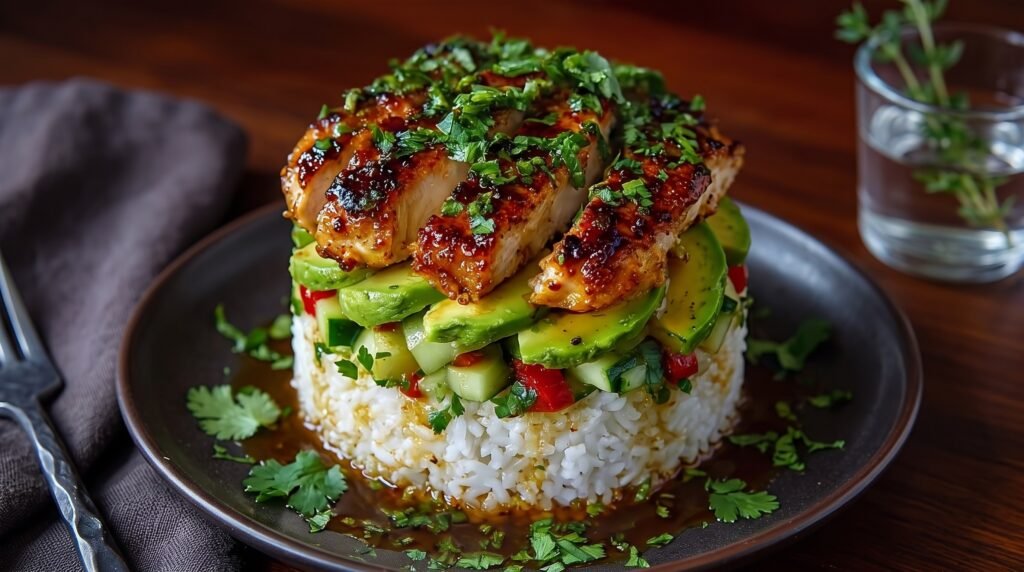

We have all been there. You invite friends over for dinner, and you want to serve something that looks like it came out of a high-end restaurant kitchen, but you do not want to spend six hours sweating over a stove or wash fifty different pans. You want that wow factor without the mental breakdown.
I remember the first time I tried to make a stacked dish. I was watching one of those intense culinary competition shows where a chef built a towering monument of food that looked absolutely architectural. I thought to myself, I can do that. I have rice, I have chicken, and I have avocado. How hard could it be?
My first attempt was an absolute disaster. I used dry, loose basmati rice, warm mushy avocado, and thick chunks of chicken that I tried to balance on top like a game of culinary Jenga. The second I pulled the mold away, the whole thing slid sideways. It looked less like a Michelin-starred masterpiece and more like a culinary landslide.
But I was determined to master the stack. Over the years, through countless trial-and-error sessions in my own kitchen, I figured out the secret science of food physics. It turns out, building a beautiful food stack is incredibly easy once you understand a few basic principles about texture, moisture, and starch.
Today, I am sharing my go-to recipe for the ultimate crispy seared chicken and avocado rice stack. It is fresh, bright, incredibly satisfying, and looks like a work of art on the plate. Best of all, it uses simple, everyday ingredients that you probably already have in your kitchen. Let us dive into how to make this showstopper.
Why This Stack Works So Well
Before we get our hands dirty, let us talk about why this dish is such a triumph. A great meal is all about contrast. If everything on your plate is soft, your brain gets bored. If everything is crunchy, your jaw gets tired.
This stack is a masterclass in textural contrast. At the bottom, you have a warm, slightly sticky, seasoned jasmine rice base. It is comforting and solid.
On top of that sits a cold, crisp cucumber and red pepper relish. This layer brings a refreshing crunch and a pop of bright acidity that cuts through the richness of the rest of the dish.
Next comes the creamy, buttery layer of sliced avocado. It acts as a natural cushion and rich binder.
Finally, the crown jewel: warm, spice-rubbed, crispy-skinned chicken breast. It is savory, caramelized, and packed with deep, smoky flavor.
When you take your fork and slice vertically straight down through all four layers, you get every single one of these textures and temperatures in a single bite. It is an absolute party in your mouth.
The Secret to a Stable Stack
The biggest fear when making a molded dish is the dreaded collapse. Nobody wants their beautiful creation to turn into a messy pile of rice the second it hits the table. Here is what I learned the hard way.
First, your rice must be slightly sticky. If you use a very dry, long-grain rice like standard white rice or wild rice, the grains will not bind to each other. They will just crumble apart. Jasmine rice or short-grain sushi rice is your best friend here. The starch acts like a natural, delicious glue.
Second, you have to manage moisture. Cucumbers are full of water. If you just chop them up and throw them into the stack, they will release their juices directly into your rice base. Within five minutes, your sturdy rice foundation will turn into a soggy, wet puddle, and the stack will slide. I will show you a simple salting trick that completely prevents this.
Third, letting your chicken rest is non-negotiable. If you slice hot chicken straight out of the pan and put it on top of the stack, the heat will steam the avocado underneath, turning it into mush. Even worse, all those delicious chicken juices will run out, liquefying your beautiful layers. Let the chicken rest for five minutes so the juices lock into the meat.
The Ingredients You Will Need
To make this recipe a success, we want to focus on fresh, high-quality ingredients. Because this dish is relatively simple, each component needs to shine.
| Component | Ingredient | Quantity | Notes |
|---|---|---|---|
| The Base | Jasmine rice | 1.5 cups | Uncooked, rinsed thoroughly |
| The Base | Water | 1.75 cups | For cooking the rice |
| The Base | Rice vinegar | 1 tablespoon | Adds subtle tang and stickiness |
| The Base | Lime juice | 1 teaspoon | Freshly squeezed |
| The Base | Salt | 0.5 teaspoon | Fine sea salt |
| The Relish | English cucumber | 1 cup | Finely diced, seeds removed |
| The Relish | Red bell pepper | 0.5 cup | Finely diced |
| The Relish | Fresh cilantro | 0.25 cup | Finely chopped |
| The Relish | Red onion | 2 tablespoons | Minced very fine |
| The Relish | Lime juice | 1 tablespoon | Freshly squeezed |
| The Relish | Salt | 0.25 teaspoon | To draw out excess moisture |
| The Cream | Ripe avocados | 2 medium | Sliced thinly |
| The Protein | Chicken breasts | 2 large | Halved horizontally into cutlets |
| The Protein | Smoked paprika | 1 teaspoon | For color and smoky flavor |
| The Protein | Garlic powder | 1 teaspoon | Essential savory base |
| The Protein | Ground cumin | 0.5 teaspoon | Adds warmth |
| The Protein | Salt and pepper | 1 teaspoon each | Adjust to taste |
| The Protein | Avocado oil | 2 tablespoons | For high-heat searing |
| The Drizzle | Honey | 2 tablespoons | Raw or clover honey |
| The Drizzle | Soy sauce | 1.5 tablespoons | Tamari works great too |
| The Drizzle | Lime juice | 1 tablespoon | Freshly squeezed |
| The Drizzle | Sesame oil | 0.5 teaspoon | Toasted sesame oil |
| The Drizzle | Chili flakes | 0.5 teaspoon | Adjust for heat level |
| Garnish | Fresh cilantro | 0.25 cup | Roughly chopped for topping |
Step-by-Step Instructions
Now that we have our ingredients gathered, let us walk through the process step-by-step. Do not worry, we will take it slow. It is much easier than it looks.
Step 1: Cook and Season the Rice
We start with the rice because it needs time to cook and cool slightly. Rinsing your jasmine rice is incredibly important. Put your rice in a fine-mesh strainer and run cold water over it, swishing it around with your fingers, until the water runs completely clear. This removes excess surface starch that can make your rice gummy rather than perfectly sticky.
Add the rinsed rice and water to a medium saucepan. Bring it to a boil over medium-high heat. Once it is boiling, turn the heat down to the lowest setting, cover the pot with a tight-fitting lid, and let it simmer undisturbed for fifteen minutes. Do not peek! Opening the lid lets the steam escape and ruins the texture.
After fifteen minutes, remove the pan from the heat, keeping the lid on, and let it steam for another five minutes. Finally, remove the lid and gently fluff the rice with a fork.
While the rice is still warm, drizzle in the rice vinegar, lime juice, and salt. Gently fold these ingredients into the rice with a spatula. The warm rice will absorb the vinegar and lime juice beautifully, creating a fragrant, seasoned base. Set it aside to cool slightly. It should be warm, not piping hot, when you build your stack.
Step 2: Make the Zesty Cucumber Relish
While the rice is cooking, let us prep the cucumber relish. For this, I highly recommend using an English cucumber. They have thinner skin and fewer seeds than standard cucumbers, which means they are less watery and have a cleaner, crisper bite.
Cut the cucumber in half lengthwise. Take a small spoon and scrape it down the center of each half to scoop out the watery seed channel. This is the secret to keeping your relish crunchy and preventing a watery mess. Once the seeds are gone, dice the cucumber into very small, uniform pieces, about the size of peas.
Place the diced cucumber in a colander set over a bowl. Sprinkle it with a quarter teaspoon of salt and toss it to combine. Let it sit for ten minutes. You will be amazed at how much water drains out of the cucumbers. This simple trick keeps your relish incredibly crisp and dry enough to sit beautifully in the stack.
After ten minutes, shake the colander to remove any remaining water. Transfer the cucumbers to a medium bowl. Add the finely diced red bell pepper, minced red onion, chopped cilantro, and lime juice. Stir everything together. Taste it and adjust the salt if needed. This relish should taste incredibly bright, fresh, and crunchy.
Step 3: Prep and Sear the Chicken
Chicken breast is notorious for drying out, but we are going to use a simple technique to ensure it stays incredibly juicy while developing a deep, dark, caramelized crust.
If you try to cook a thick, whole chicken breast in a skillet, the outside will burn before the inside is cooked through. To avoid this, we slice our chicken breasts in half horizontally to create thin cutlets. Place your hand flat on top of the chicken breast, and using a sharp knife, slice through the middle parallel to your cutting board. This gives you two even, thin cutlets that cook in a fraction of the time.
In a small bowl, mix together the smoked paprika, garlic powder, ground cumin, salt, and black pepper. Generously rub this spice blend all over both sides of your chicken cutlets. Do not be shy with the spices; this is what creates that gorgeous, dark crust you see in the photo.
Heat your avocado oil in a heavy-skillet, preferably cast iron, over medium-high heat. You want the pan to be very hot. When you add the chicken, it should make a loud, angry sizzle. If it just quiet whispers, your pan is not hot enough.
Sear the chicken cutlets for about four to five minutes on the first side without moving them. This allows that beautiful crust to form. Flip them over and cook for another three to four minutes on the second side, or until the internal temperature reaches 165 degrees Fahrenheit.
Remove the chicken from the skillet and place it on a clean cutting board. Let it rest for a full five minutes. This is critical! If you slice it immediately, all the delicious juices will run out, leaving you with dry chicken and a soggy stack. Once rested, slice the chicken into neat, thin strips.
Step 4: Slice the Avocado and Mix the Drizzle
While the chicken is resting, slice your avocados. Cut them in half, remove the pits, and slice the flesh thinly inside the skin. Use a spoon to gently scoop out the slices. Squeeze a little lime juice over them to keep them from browning.
Next, whisk together your honey, soy sauce, lime juice, toasted sesame oil, and chili flakes in a small bowl. This quick drizzle is sweet, tangy, and savory, with just enough heat to cut through the richness of the avocado.
Step 5: How to Build the Stack
Now comes the fun part: assembly. To get that perfect, restaurant-quality cylinder shape, you will need a mold.
Do not run out to a specialty kitchen store to buy expensive metal food rings. You can easily make your own. Find a clean, empty tin can, cut off both the top and bottom lids, wash it thoroughly, and you have a perfect DIY food mold.
Alternatively, you can use a small, straight-sided ramekin or bowl. If you use a ramekin, line the inside with plastic wrap, leaving plenty of overhang. You will build the stack in reverse order, pack it down, and then invert it onto your plate, pulling the plastic wrap away.
For today, let us assume you are using a hollow ring mold (like our tin can hack).
Place your mold directly in the center of your serving plate.
Spoon about half a cup of your seasoned jasmine rice into the bottom of the mold. Use the back of a spoon, or a small flat-bottomed glass, to press the rice down firmly. You want to pack it tight so the grains stick together and form a solid base.
Next, spoon a generous layer of the cucumber relish on top of the rice. Again, press it down gently with your spoon to pack it in.
Carefully lay your sliced avocado over the relish. I like to fan the slices out slightly so they cover the entire surface, creating a beautiful green layer. Press down gently.
Now, carefully lift the mold straight up. Go slowly and steadily. If you packed your layers correctly, you will be left with a gorgeous, perfectly defined cylinder.
Lay your sliced, warm, crispy chicken breast pieces across the top of the avocado layer, letting them overlap slightly.
Drizzle your honey-soy-lime sauce generously over the top of the chicken and let some of it run down the sides of the stack and onto the plate.
Finish with a heavy handful of freshly chopped cilantro over the top and around the plate.
My Ultimate Kitchen Disasters and Lessons Learned
I did not perfect this recipe overnight. I have had my fair share of absolute kitchen disasters, and I want to share them so you can avoid making the same mistakes.
My biggest fail happened when I tried to make this for a dinner party of six people. I was running behind schedule, so I rushed the rice. I did not rinse it, and I did not let it steam after cooking. The rice was incredibly gluey and mushy.
To make matters worse, I did not salt and drain my cucumbers. I just tossed them in.
When I plated the stacks, they looked okay for about thirty seconds. But by the time I carried the plates from the kitchen to the dining room table, the excess moisture from the cucumbers had completely disintegrated the mushy rice base. Three of the stacks literally collapsed on the way to the table. They looked like sad, deconstructed salads. My friends were very polite about it, but we ended up eating them out of bowls with spoons.
Another major mistake I made in the past was using underripe avocados. I thought a firmer avocado would hold its shape better in the stack.
Technically, it did hold its shape. But when my guests tried to eat it, the avocado was so hard and rubbery that they could not cut through it with a fork. Every time they pressed down, the hard avocado would slip, completely demolishing the rest of the stack.
You need that avocado to be perfectly ripe and soft enough to give way under the gentle pressure of a fork. It should act like butter, slicing effortlessly so that every forkful contains a perfect bit of every layer.
Easy Variations to Try
One of the things I love most about this recipe is how incredibly versatile it is. Once you master the basic stacking technique, you can let your culinary imagination run wild. Here are a few variations that I make on regular rotation in my house.
The Seared Salmon Stack
If you are a seafood lover, swap out the chicken for a piece of fresh salmon.
Season a salmon fillet with salt, pepper, and a little garlic powder. Sear it in a hot pan with a touch of oil until the skin is crispy and the flesh is flaky.
Flake the warm salmon over the top of your avocado layer. The rich, fatty salmon pairs beautifully with the crisp cucumber relish and the tangy honey-soy drizzle.
The Crispy Tofu Vegetarian Stack
For a fantastic vegetarian or vegan option, use extra-firm tofu.
Press your tofu with a heavy skillet for about fifteen minutes to remove excess water. Cut it into thick slabs, coat them in cornstarch seasoned with salt, smoked paprika, and garlic powder, and fry them in a little oil until they are golden brown and incredibly crispy.
Slab the crispy tofu on top of your stack. It provides an amazing crunch that contrasts beautifully with the soft rice and creamy avocado.
The Low-Carb Cauliflower Rice Stack
If you are watching your carbs, you can easily substitute the jasmine rice for cauliflower rice.
To make sure it holds its shape, sauté the cauliflower rice in a pan with a little garlic and coconut oil until it is tender. Mix in a tablespoon of cream cheese or a splash of coconut cream while it is warm. This acts as the binder, helping the cauliflower rice stick together so your stack does not collapse.
Meal Prep and Storage Guide
I often get asked if this dish can be made ahead of time for meal prep. The short answer is: yes and no.
You absolutely cannot assemble the stacks ahead of time and store them in the fridge. If you do, the rice will get hard, the cucumber relish will release its juices and make everything soggy, and the avocado will turn a sad, unappealing brown.
However, you can prep all of the individual components ahead of time and assemble them fresh in just five minutes when you are ready to eat.
Store your cooked jasmine rice in an airtight container in the fridge for up to four days. When you are ready to assemble, reheat just the portion of rice you need in the microwave with a damp paper towel over the top. This re-steams the rice, making it soft and sticky again.
Keep your cucumber relish in a separate container. It will actually develop more flavor as it sits. Just make sure to drain any excess liquid that has accumulated in the bottom of the container before you build your stack.
Cook your chicken ahead of time and store it in the fridge. You can eat the chicken cold in the stack, or gently reheat it in a skillet or toaster oven before slicing and placing it on top.
The only thing you should not prep ahead of time is the avocado. Always slice your avocado fresh right before assembly to ensure it is bright green and perfectly creamy.
Final Thoughts
Cooking should be fun, creative, and rewarding. This crispy seared chicken and avocado rice stack is the perfect example of how simple, humble ingredients can be transformed into something truly extraordinary with just a little bit of care and presentation.
The next time you want to treat yourself to a special lunch, or impress your friends and family at a dinner party, skip the expensive restaurant reservations. Head to your kitchen, grab a tin can, and build your own towering masterpiece.
Once you take that first perfect bite, with the warm rice, the cold crunchy relish, the creamy avocado, and the savory crispy chicken all working in perfect harmony, you will realize that you do not need a professional kitchen to eat like a king. Happy cooking!


