
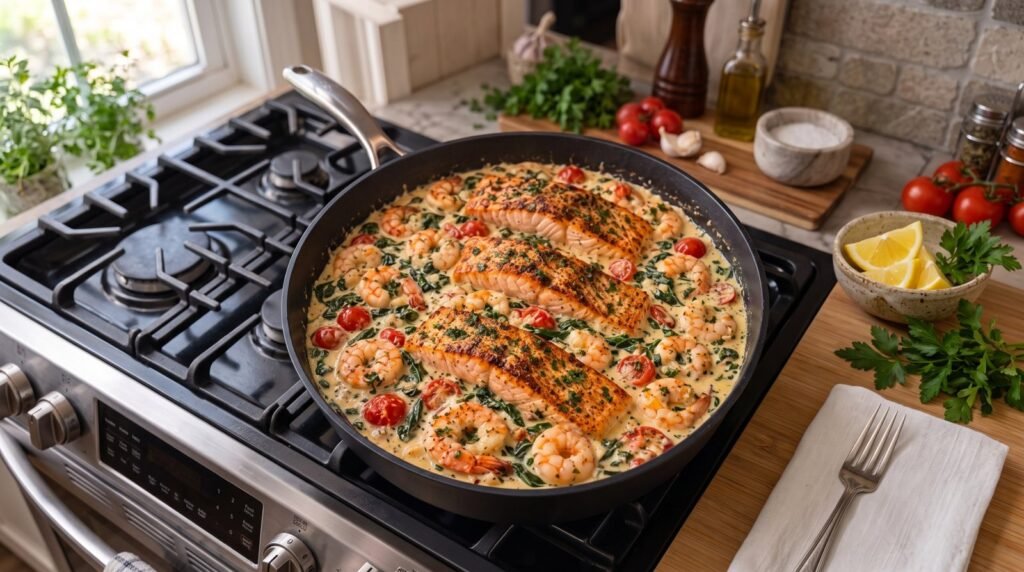

It was our third anniversary, and I was determined to prove that I could cook a restaurant-quality meal at home without spending a fortune. I wanted something elegant, rich, and visually stunning. After scrolling through endless food blogs, I settled on a seafood dish that looked like a dream: pan-seared salmon and plump shrimp nestled in a garlic cream sauce with wilted spinach and cherry tomatoes.
My first attempt was a complete disaster. I bought beautiful, expensive wild-caught salmon, but because I did not dry the fish properly and panicked about the heat of the pan, the salmon stuck, tore apart, and ended up looking like a scrambled mess. To make matters worse, I cooked the shrimp for way too long, turning them into tough, rubbery little rings. The sauce split into a greasy puddle because I tried to cut calories by using low-fat milk instead of heavy cream. It was a sad, watery, expensive mistake.
But I am stubborn. I spent the next few years perfecting this exact recipe, learning the science of pan-searing, the delicate timing of seafood, and the secrets of a stable, luxurious cream sauce. Today, I am sharing everything I learned the hard way so you can get this dish perfect on your very first try. Whether you are cooking for a special date night or just want to treat yourself on a Wednesday evening, this one-pan masterpiece is about to become your new favorite recipe.
Why This Recipe is a Game-Changer
What makes this creamy Tuscan salmon and shrimp dish so special is the balance of textures and flavors. You have the rich, buttery texture of the salmon with its crisp, seasoned crust. Then you have the sweet, tender bite of the shrimp. The sauce brings everything together with its savory garlic base, the salty kick of parmesan, and the bright, acidic burst of warm cherry tomatoes that cuts through the richness of the cream.
Cooking seafood can feel intimidating because it happens fast. A minute too long in the pan can make the difference between silky perfection and dry, chewy disappointment. This recipe breaks down the timing so you never have to guess. By cooking the salmon and shrimp separately and bringing them together in the sauce at the very end, we ensure every element is cooked perfectly.
Best of all, this is a true one-pan meal. Aside from a cutting board and a knife, everything happens in a single large skillet. This means you get maximum flavor with minimal cleanup, which is exactly what you want when you are trying to relax and enjoy a home-cooked dinner.
The Right Tools Make All the Difference
Before you grab your ingredients, let us talk about the pan. The skillet you choose will make or break this recipe.
I highly recommend using a large, heavy-bottomed skillet. My personal favorites are cast iron or a high-quality stainless steel pan. These materials hold heat exceptionally well and distribute it evenly across the cooking surface. This is crucial for getting that gorgeous, golden-brown crust on your salmon fillets. If you use a thin, cheap pan, you will get hot spots that burn the seasoning before the fish has a chance to cook through.
If you are worried about the fish sticking, a heavy, deep non-stick skillet works too. However, you will not get quite the same level of deep, caramelized crust as you would with cast iron or stainless steel. Whichever pan you choose, make sure it is wide enough to fit your salmon fillets and shrimp without crowding them. If the seafood is packed too tightly, it will steam in its own juices instead of searing, and you will miss out on all that incredible caramelized flavor.
The Ingredients You Need
Here is a simple breakdown of what you will need to gather before you start cooking. Having everything measured and prepped beforehand, a practice chefs call mise en place, is the secret to stress-free cooking, especially with fast-moving seafood dishes.
| Ingredient | Quantity | Notes |
|---|---|---|
| Salmon fillets | 3 large fillets | Skin-on or skin-less, about 6 ounces each |
| Raw shrimp | 1/2 pound | Large, peeled, deveined, and tails removed |
| Olive oil | 2 tablespoons | High-quality oil for searing the seafood |
| Butter | 2 tablespoons | Unsalted, divided for searing and sauce building |
| Fresh garlic | 4 to 5 cloves | Finely minced, do not use the jarred stuff |
| Cherry tomatoes | 1 cup | Whole or halved, depending on your preference |
| Baby spinach | 3 cups | Fresh, packed, washed and dried |
| Heavy cream | 1 cup | Do not substitute with milk or half-and-half |
| Chicken or vegetable broth | 1/3 cup | Use low-sodium to control the salt level |
| Parmesan cheese | 1/2 cup | Freshly grated from a block, not the green can |
| Fresh lemon juice | 1 tablespoon | Squeezed from half a fresh lemon |
| Italian seasoning | 1 teaspoon | A blend of oregano, basil, thyme, and rosemary |
| Garlic powder | 1/2 teaspoon | For seasoning the salmon and shrimp |
| Paprika | 1/2 teaspoon | Sweet or smoked, for a beautiful red color |
| Salt and black pepper | To taste | Freshly cracked pepper is best |
| Fresh parsley | 2 tablespoons | Chopped, for a bright garnish at the end |
Ingredient Deep Dive: What to Buy and Why
Let us look closely at a few of these ingredients, because the choices you make at the grocery store will have a huge impact on the final dish.
First, let us talk about the salmon. I prefer thick-cut, center-cut fillets. They cook much more evenly than thin, tail-end pieces. If possible, buy salmon with the skin still on one side. Even if you do not plan on eating the skin, cooking the salmon skin-side down first helps protect the delicate flesh from the intense heat of the pan and keeps the fish moist. If you can only find skinless fillets, do not worry; they work beautifully too, you just need to be a bit gentler when flipping them.
For the shrimp, look for raw, peeled, and deveined shrimp. I like to buy large shrimp, typically labeled as 21/25 count, which means there are 21 to 25 shrimp per pound. They are large enough to stay juicy during a quick sear but small enough to fit nicely alongside the salmon in the pan. If you buy frozen shrimp, make sure to thaw them completely before cooking. You can do this by placing them in a bowl of cold water for about fifteen minutes, then draining them and patting them completely dry.
Now, let us discuss the dairy. You must use heavy cream or heavy whipping cream for this sauce. I know it is tempting to try and lighten up the recipe with half-and-half or whole milk, but please trust me on this. Half-and-half and milk contain a high amount of water and very little fat. When you add them to a hot pan with acidic ingredients like tomatoes and lemon juice, the proteins will clump together, causing your sauce to curdle and break. Heavy cream has a high enough fat content to resist curdling, giving you a smooth, velvety, restaurant-style sauce every single time.
Finally, buy a block of real Parmesan cheese and grate it yourself. The pre-shredded cheese in bags or plastic tubs is coated with cellulose powder, an anti-caking agent that prevents the cheese from sticking together. Unfortunately, this powder also prevents the cheese from melting smoothly, resulting in a gritty, clumpy sauce. A quick run over a microplane or box grater with a block of Parmesan will give you a cheese that melts like absolute butter into your hot cream.
Step-by-Step Directions: Let us Cook Together
Now that your ingredients are prepped and your skillet is ready, let us walk through the cooking process step by step. Keep your eyes on the pan and enjoy the wonderful aromas filling your kitchen.
Step 1: Prep and Season the Seafood
Take your salmon fillets and shrimp out of the refrigerator about fifteen minutes before you plan to cook. If you put ice-cold fish into a hot pan, the temperature of the pan will drop instantly, and the seafood will cook unevenly.
Grab a few sheets of paper towels and thoroughly pat the salmon fillets and shrimp dry. This is one of the most important steps in the entire process. If there is moisture on the surface of the seafood, it will create steam when it hits the hot oil. Steam is the enemy of a golden, crispy crust.
Once they are dry, place the salmon and shrimp on a large plate or cutting board. In a small bowl, mix together the Italian seasoning, garlic powder, paprika, half a teaspoon of salt, and half a teaspoon of black pepper. Sprinkle this seasoning blend evenly over both sides of the salmon and all over the shrimp. Press the spices gently into the flesh so they stick.
Step 2: Sear the Salmon
Place your large skillet over medium-high heat. Add one tablespoon of olive oil and one tablespoon of butter. Let the butter melt and foam. Once the foam subsides and the oil is shimmering but not smoking, it is time to add the salmon.
Carefully lay the salmon fillets in the pan. If your salmon has skin, place it skin-side down first. You should hear a loud, satisfying sizzle as soon as the fish touches the pan. If you do not hear that sizzle, your pan is not hot enough; take the fish out immediately and let the pan heat up for another minute.
Let the salmon sear undisturbed for four to five minutes. Do not poke, prod, or slide the fillets around. The fish needs time to develop a crust. If you try to flip it too early, the flesh will stick to the pan and tear. When the salmon is ready to flip, it will naturally release from the bottom of the pan.
Using a thin metal spatula, carefully flip the fillets over. Sear the other side for another three to four minutes, depending on the thickness of your fillets. The salmon should be beautifully golden on the outside but still slightly pink and translucent in the very center. Remove the salmon from the pan and transfer it to a warm plate. Cover it loosely with a piece of aluminum foil to keep it warm while you cook the rest of the meal.
Step 3: Quick Sear the Shrimp
If your pan is looking a bit dry, add another tablespoon of olive oil. Keep the heat on medium-high. Add the seasoned shrimp to the hot skillet in a single, even layer.
Shrimp cook incredibly fast, so do not walk away. Let them sear for about one and a half to two minutes on the first side until they start to turn pink around the edges. Flip them over and cook for another minute.
As soon as the shrimp turn opaque and form a loose C-shape, they are done. If they curl up tightly into a tight O-shape, they are overcooked and will be tough. Immediately remove the shrimp from the pan and place them on the plate with the salmon.
Step 4: Build the Aromatic Base
Turn the heat down to medium. Add the remaining tablespoon of butter to the skillet. Once melted, add the minced garlic and the cherry tomatoes.
Sauté the garlic and tomatoes for about two minutes. Stir constantly so the garlic does not burn. Burned garlic turns bitter and will ruin the flavor of your entire sauce. As you stir, the cherry tomatoes will begin to soften, blister, and release their sweet juices into the butter. Use your wooden spoon to gently press down on some of the tomatoes to help them burst.
Step 5: Deglaze the Pan and Add the Cream
Pour the chicken broth into the hot skillet. As the liquid bubbles, use your wooden spoon to scrape up all the delicious, caramelized brown bits stuck to the bottom of the pan. These bits, called fond, are packed with intense savory flavor from the seared salmon and shrimp.
Let the broth simmer and reduce by about half, which should take around two minutes. This concentrates the flavor and cooks off any raw broth taste.
Now, pour in the heavy cream. Stir well to combine it with the garlic, tomatoes, and broth. Bring the mixture to a gentle simmer. Do not let it come to a rolling boil, as high heat can cause the cream to separate. Let the sauce simmer gently for three to four minutes until it begins to thicken slightly.
Step 6: Melt the Cheese and Wilt the Spinach
Turn the heat down to low. Stir in the freshly grated Parmesan cheese. Keep stirring until the cheese is completely melted and incorporated into the cream, creating a smooth, velvety sauce.
Add the fresh baby spinach to the pan. It will look like a massive mountain of green that will never fit, but do not worry. As you gently toss the spinach in the warm cream sauce, it will wilt down to a fraction of its original size in about two minutes.
Stir in the fresh lemon juice. This tiny splash of acid is a crucial step; it cuts through the heavy fat of the cream and cheese, bringing the entire sauce to life with a bright, fresh finish. Taste the sauce at this point and add a little more salt and pepper if you think it needs it.
Step 7: Bring it All Together
Gently slide the seared salmon fillets, the shrimp, and any juices that collected on their plate back into the skillet. Spoon some of the warm, creamy garlic sauce over the top of the salmon and shrimp.
Let everything simmer together on low heat for about two minutes, just long enough to warm the seafood back through. Remove the pan from the heat. Garnish the dish with a generous sprinkle of freshly chopped parsley. Serve immediately, straight from the skillet, while it is hot, bubbly, and fragrant.
Five Mistakes That Will Ruin Your Seafood Sauce
Even with the best instructions, things can go wrong in the kitchen. Here are the five most common mistakes home cooks make with this dish and exactly how to avoid them.
First, crowding the pan. If you try to cook all your salmon, shrimp, and vegetables at the same time in a small skillet, you will end up with soggy, gray seafood. Cook in stages exactly as described. Searing the salmon first, then the shrimp, and then building the sauce ensures every ingredient gets the direct heat it needs to develop great flavor and texture.
Second, using pre-minced jarred garlic. I know those jars are incredibly convenient, but the garlic is preserved in citric acid, which alters its natural flavor. It tastes metallic and sour, and it completely lacks the sweet, pungent aroma of fresh garlic. Take the extra two minutes to peel and mince fresh cloves. Your taste buds will thank you.
Third, using cold dairy. If you pour ice-cold heavy cream straight from the refrigerator into a hot pan, it can shock the sauce and cause it to break or curdle. Measure out your cream when you prep your other ingredients and let it sit on the counter for a bit to take the chill off before adding it to the skillet.
Fourth, overcooking the spinach. You want the spinach to be soft and wilted, but still bright green. If you let it cook in the simmering sauce for too long, it will turn a drab, muddy brown and release too much water, which will thin out your beautiful sauce. Add it at the very end, stir just until wilted, and then get that seafood back in the pan.
Fifth, walking away from the stove. Seafood waits for no one. Because fish and shrimp cook in mere minutes, a quick distraction like checking your phone or setting the table can result in overcooked, dry seafood. Stay with the pan, watch the changes in color and texture, and enjoy the process of active cooking.
Easy Variations for Every Dietary Need
One of the things I love about this recipe is how adaptable it is. Here are a few ways you can customize this dish to fit different diets or use up ingredients you already have in your pantry.
If you are dairy-free or paleo, you can still enjoy this dish. Swap the butter for ghee or coconut oil. Replace the heavy cream with a can of full-fat unsweetened coconut milk. The sauce will have a subtle coconut undertone, but it pairs beautifully with the garlic, spinach, and seafood. Skip the Parmesan cheese and add a tablespoon of nutritional yeast for that savory, cheesy depth of flavor.
If you want to add more vegetables, this sauce is incredibly forgiving. I often toss in chopped sun-dried tomatoes alongside the cherry tomatoes for an extra layer of sweet, umami flavor. Artichoke hearts, sliced mushrooms, or even blanched asparagus spears make wonderful additions to the cream sauce. Just sauté them with the garlic and tomatoes before adding your liquids.
If you want a bit of a kick, add a generous pinch of red pepper flakes when you are sautéing the garlic. The gentle heat cuts through the rich cream beautifully and gives the dish a lovely, subtle warmth.
If you do not have salmon, you can easily substitute other proteins. Halibut, cod, or sea bass work wonderfully in this cream sauce. You can even make this with boneless, skinless chicken breasts or thighs. Just make sure to sear the chicken until it is fully cooked through before removing it from the pan and building your sauce.
The Best Sides to Serve with Tuscan Seafood
Because this dish is incredibly rich and saucy, you will want to serve it with sides that can soak up every last drop of that garlic cream.
If you love pasta, serve this over a bed of al dente fettuccine, linguine, or angel hair pasta. Toss the hot pasta directly into the sauce before placing the salmon and shrimp on top so every strand of pasta is coated in creamy goodness.
For a comforting, rustic option, serve this over a mountain of creamy mashed potatoes or a bowl of warm, buttery polenta. The contrast between the soft potatoes and the rich seafood is pure comfort food heaven.
If you want to keep things light, serve this alongside a loaf of warm, crusty rustic bread. Use the bread to swipe up the extra sauce from your plate. A simple green salad tossed with a bright lemon-herb vinaigrette is also a fantastic side, as the acidity of the dressing cleanses your palate between rich, creamy bites.
For a low-carb or keto-friendly meal, serve this over a bed of zucchini noodles, spaghetti squash, or riced cauliflower. The steam from the warm sauce will soften the zucchini noodles perfectly without making them soggy.
How to Store and Reheat Seafood (Without Making it Rubber)
If you have leftovers, you are in luck. This dish tastes even better the next day as the flavors have had time to meld together in the refrigerator. However, reheating seafood can be tricky. If you put this in the microwave, you will overcook the shrimp and salmon, and the high heat will cause the cream sauce to split into a greasy mess.
To store leftovers, let the dish cool completely to room temperature. Transfer the seafood and sauce into an airtight container and store it in the refrigerator for up to two days. Do not keep it any longer than that, as cooked seafood degrades quickly.
When you are ready to reheat, the stovetop is your best friend. Place your leftovers in a small skillet over low heat. Add a splash of chicken broth, water, or a tablespoon of heavy cream to help loosen up the sauce, which will have thickened significantly in the fridge.
Cover the pan with a lid and let it warm through gently for about five to eight minutes, stirring the sauce occasionally. This gentle, slow heat warms the salmon and shrimp back to their perfect, juicy state without drying them out or breaking the emulsion of your beautiful cream sauce. Once it is warm and bubbly, plate it up, add a fresh squeeze of lemon juice to wake up the flavors, and enjoy your gourmet lunch.