
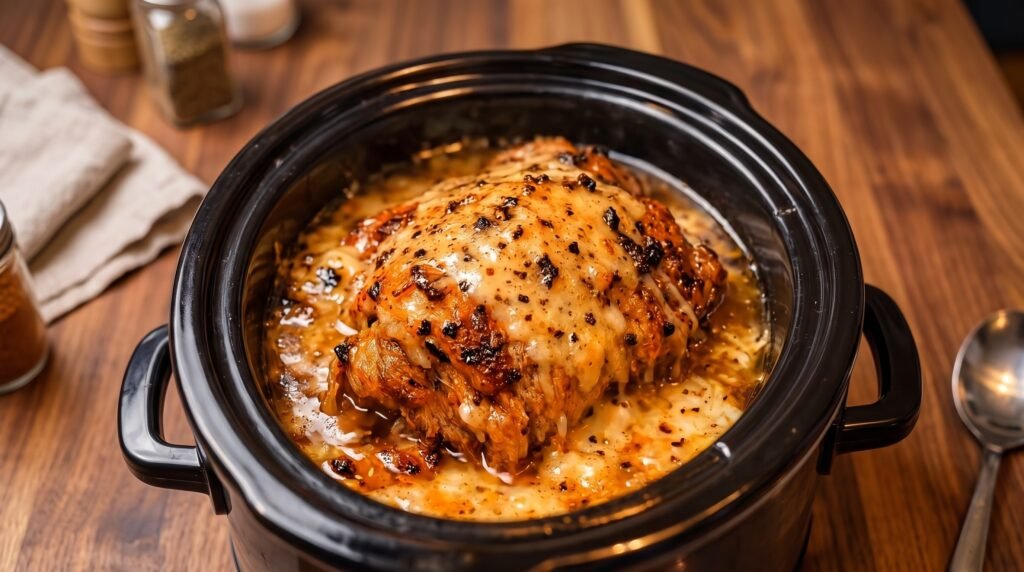

It was a miserable, gray Sunday afternoon in November when I finally figured out how to save my pot roasts from being boring. For years, I had a love-hate relationship with my slow cooker. I loved the idea of throwing things into a pot, going about my day, and returning to a house that smelled like heaven. But more often than not, the reality was disappointing. I would lift the lid only to find dry, stringy beef swimming in a bland, watery puddle. The meat was technically tender enough to shred, but it lacked that deep, savory soul that makes you want to lick the plate clean.
That all changed when I decided to combine my favorite cold-weather soup with a classic chuck roast. French onion soup is a masterpiece of patience, relying on deeply caramelized onions, rich beef stock, a splash of wine, and a thick blanket of melted, bubbly cheese. I wondered if I could apply those exact same flavor principles to a big, tough cut of beef in the slow cooker.
My first attempt was a partial disaster because I tried to cut corners. I threw raw onions into the pot with the beef, dumped in some canned broth, and hoped for the best. The result? The onions tasted boiled and sulfurous, the gravy was thin, and the beef was underwhelming. But I knew the concept was solid. I spent the next several weeks tweaking the process, testing different cuts of meat, playing with cooking times, and discovering the absolute non-negotiables for making a slow-cooked masterpiece.
Today, I want to share the exact method I developed. This is not a dump-and-go recipe where you throw raw ingredients into a cold pot and hope for a miracle. It requires about twenty minutes of active stove-top prep work at the beginning. But those twenty minutes are the difference between a mediocre dinner and a meal that will have your family begging for seconds and thirds.
Understanding the Cut of Beef
Before we even turn on the stove, we need to talk about the meat. If you walk into the grocery store and grab just any package labeled beef for pot roast, you are setting yourself up for a gamble.
The undisputed king of the slow cooker is the chuck roast. Chuck comes from the shoulder area of the cow. It is a heavily exercised muscle, which means it is packed with tough connective tissue, collagen, and intramuscular fat marbling. If you were to cook a chuck roast quickly on a grill, it would be as tough as a leather shoe. But when you subject it to low, slow heat over several hours, a magical transformation occurs. The tough collagen slowly breaks down and melts into gelatin. This gelatin coats the meat fibers, keeping them incredibly moist, succulent, and rich.
Do not buy a round roast (top round or eye of round) for this recipe. Round roasts are much leaner. While they are great for slicing thin for roast beef sandwiches, they will dry out and turn chalky in a slow cooker, no matter how much liquid you put in the pot. Look for a chuck roast that has a good amount of white flecks of fat running through the meat, rather than just a thick strip of fat on the edge. This marbling is what melts during the cook and gives the beef its incredible texture.
The Onion Science
The heart and soul of this dish lies in the onions. You cannot skip or rush the caramelization process. Many slow cooker recipes suggest throwing raw sliced onions into the bottom of the pot. Please do not do this. Raw onions cooked in a slow cooker release a large amount of water, which thins out your gravy. More importantly, they never reach a high enough temperature to caramelize. Instead of sweet, jammy, golden ribbons, you end up with pale, boiled onions that have a sharp, unpleasant bite.
Caramelization is a chemical reaction that occurs when the natural sugars in the onions are heated, breaking down into hundreds of new flavor compounds. This process takes time and direct heat. You want to cook the onions in a wide pan over medium-low heat until they turn a deep, mahogany brown.
For this recipe, I prefer using a mix of yellow onions and sweet onions (like Vidalias). Yellow onions provide a strong, classic savory base, while sweet onions add a beautiful sugar profile that balances the deep, salty beef broth. Avoid white onions, as they tend to be too sharp, and red onions, which can turn an unappealing gray color during a long slow cook.
Why Searing is Non-Negotiable
Another common mistake is skipping the sear on the beef. I get it; you want to save time and avoid washing an extra pan. But searing the meat is where we build the foundation of our flavor.
When you press a cold piece of beef into a ripping hot pan, you trigger the Maillard reaction. This is the reaction between amino acids and reducing sugars that gives browned food its desirable flavor. It creates a rich, dark crust on the outside of the meat.
More importantly, searing leaves behind fond. Fond is the fancy culinary term for those delicious, caramelized, browned bits stuck to the bottom of your pan after you sear meat. We are going to use our onions and a splash of liquid to scrape all of those bits up. If you skip this step, your gravy will lack depth and color.
| Ingredient | Amount | Notes |
|---|---|---|
| Beef Chuck Roast | 3 to 4 pounds | Well-marbled, thick cut |
| Yellow Onions | 3 large | Peeled and thinly sliced |
| Sweet Vidalia Onions | 2 large | Peeled and thinly sliced |
| Unsalted Butter | 3 tablespoons | For caramelizing the onions |
| Olive Oil | 2 tablespoons | High smoke point for searing the beef |
| Garlic | 4 cloves | Freshly minced, do not use jarred garlic |
| Dry Red Wine | 1/2 cup | Cabernet Sauvignon or Merlot works beautifully |
| Beef Bone Broth | 1.5 cups | Rich, low-sodium broth is best |
| Worcestershire Sauce | 2 tablespoons | Adds a deep, savory umami punch |
| Fresh Thyme | 4 sprigs | Tied together with kitchen twine |
| Bay Leaf | 1 whole | Dried or fresh |
| All-Purpose Flour | 2 tablespoons | For thickening the gravy at the end |
| Provolone Cheese | 6 slices | Mild and melts beautifully |
| Gruyere or Swiss Cheese | 1 cup | Freshly grated for that classic French onion taste |
| Salt and Black Pepper | To taste | Be generous when seasoning the raw beef |
Step-by-Step Instructions
Now that we have our ingredients ready, let us walk through the process step-by-step. Put on some music, pour yourself a glass of the wine you will be using for the recipe, and enjoy the process.
Step 1: Prep and Season the Meat
Take your chuck roast out of the refrigerator about thirty minutes before you plan to cook. Cooking cold meat makes it drop the pan temperature instantly, which prevents a good sear.
Use paper towels to pat the roast completely dry on all sides. Moisture is the enemy of a good sear; if the meat is wet, it will steam instead of browning.
Once dry, season the roast generously with kosher salt and freshly cracked black pepper. Do not be shy here. A three-pound piece of meat needs a lot of seasoning to penetrate to the center. Press the seasoning into the meat with your hands so it sticks.
Step 2: The Sear
Heat the olive oil in a large, heavy-bottomed skillet (cast iron is perfect for this) over medium-high heat. You want the oil to be shimmering and just starting to show a tiny wisp of smoke.
Carefully lower the seasoned roast into the hot pan. You should hear a loud, satisfying sizzle. If you do not, your pan is not hot enough. Leave the meat entirely alone for four to five minutes. Do not move it around, poke it, or peek underneath.
Use tongs to flip the meat. It should have a gorgeous, deep brown crust. Sear the second side for another four to five minutes. Do not forget the edges; hold the roast upright with your tongs to sear the sides for a minute or two each. Once browned all over, transfer the roast to your slow cooker insert.
Step 3: Caramelize the Onions
Turn the heat under your skillet down to medium-low. Add the butter to the pan, letting it melt into the leftover beef fat and oil.
Toss in all of your sliced onions. It will look like a mountain of onions, but do not worry; they will reduce dramatically in size as they cook. Use a wooden spoon to stir them, coating them thoroughly in the melted butter and fat.
Cook the onions slowly, stirring every few minutes. You want them to soften, release their moisture, and slowly turn a golden, amber color. This process should take at least fifteen to twenty minutes. If you notice the onions are starting to burn or char on the edges, turn the heat down. We want low, even heat.
In the last two minutes of cooking the onions, stir in the minced garlic. Cook just until you can smell the garlic, about sixty seconds.
Step 4: Deglaze the Pan
This is where we capture all that rich flavor stuck to the bottom of the pan. Pour the dry red wine into the skillet with the onions and garlic. It will bubble and steam instantly.
Use your wooden spoon to vigorously scrape up all the browned bits (the fond) from the bottom of the pan. Let the wine simmer and reduce by half, which takes about three to four minutes. This burns off the harsh alcohol taste, leaving behind a rich, concentrated grape essence.
If you prefer not to cook with alcohol, you can easily substitute the red wine with the same amount of beef broth mixed with a splash of apple cider vinegar for acidity.
Step 5: Build the Slow Cooker Base
Pour the onion and wine mixture directly over the chuck roast in your slow cooker.
In a small bowl, whisk together the beef bone broth, Worcestershire sauce, and flour until no lumps remain. Pour this liquid around the sides of the roast, not directly on top, so you do not wash away the beautiful crust you just seared onto the meat.
Tuck the sprigs of fresh thyme and the bay leaf into the liquid around the beef.
Step 6: The Long, Slow Cook
Place the lid on your slow cooker. Set it to cook on Low for 8 to 9 hours.
I strongly advise against cooking this on High for 4 hours. While it is tempting when you are short on time, high heat causes the protein fibers in the beef to seize up and squeeze out their moisture. The meat will be tough and chewy. The low-and-slow method is essential for allowing the fat and connective tissue to melt gradually, resulting in meat that easily falls apart with a fork.
Step 7: The Cheesy Finale
Once your timer goes off, carefully remove the lid. The smell in your kitchen at this point should be absolutely incredible. The onions will have dissolved into a thick, dark, glossy gravy, and the beef should be tender enough that you could cut it with a spoon.
Remove the thyme stems and the bay leaf and discard them.
Now, we are going to recreate that iconic French onion soup lid. Carefully arrange the slices of provolone cheese directly over the top of the hot beef, overlapping them slightly. Sprinkle the shredded Gruyere or Swiss cheese generously over the provolone.
Put the lid back on the slow cooker for 10 to 15 minutes on the warm setting, or until the cheese is completely melted and gooey.
If your slow cooker insert is oven-safe, you can take an alternative route that I highly recommend: remove the insert, drape the cheese over the beef, and place the entire insert under your oven broiler for 3 to 4 minutes. Keep a very close eye on it! The broiler will transform the cheese into a bubbling, golden-brown crust with charred edges, just like the top of a soup crock at a French bistro.
Mistakes to Avoid
Through my various kitchen trials, I have run into a few hurdles. Here are the most common mistakes people make with this recipe, and how you can avoid them.
Using too much liquid is a very common trap. When you look at the raw ingredients in the pot, it might seem like there is not enough liquid to cook a large roast. You might be tempted to add another cup or two of broth. Resist the urge! As the beef cooks, it will release a massive amount of its own natural juices. The onions will also shrink and release water. If you add too much broth at the beginning, you will end up with a thin, watery soup instead of a rich, velvety gravy.
Another mistake is rushing the cooling process before slicing or shredding. Once the meat is done, let it rest for a few minutes in its juices before you start pulling it apart. This allows the meat fibers to reabsorb the flavorful gravy, keeping it incredibly juicy.
Finally, do not buy pre-shredded cheese if you can avoid it. Bagged shredded cheese is coated with anti-caking agents like potato starch or cellulose. This prevents the cheese from clumping in the bag, but it also prevents it from melting into a smooth, cohesive sheet over your beef. Buying a block of Swiss or Gruyere and grating it yourself takes two minutes and yields a vastly superior melt.
Perfect Side Dish Pairings
Because this dish is incredibly rich, savory, and cheesy, you want to choose side dishes that can either stand up to those bold flavors or provide a refreshing contrast.
My absolute favorite pairing is a mountain of garlic mashed potatoes. I make a well in the center of the potatoes and ladle a generous amount of the rich onion gravy right into it. The potatoes soak up the gravy beautifully.
If you want to keep with the French onion soup theme, serve this roast with thick slices of toasted French baguette or sourdough bread. You can use the bread to scoop up the tender beef, caramelized onions, and melted cheese. It is messy, but it is pure comfort food.
To balance out the meal, I always serve a simple green salad on the side. A mix of crisp butter lettuce and arugula tossed in a bright, acidic lemon-herb vinaigrette cuts through the heavy richness of the beef and cheese, cleansing your palate between bites.
Roasted green beans or asparagus tossed with a squeeze of fresh lemon juice also make excellent green sides that do not compete with the main event.
Leftover Magic
If you have leftovers, consider yourself lucky. In many ways, this pot roast tastes even better the next day because the flavors have had time to meld and deepen in the refrigerator.
To reheat, place the beef and gravy in a skillet over low heat, cover it, and let it warm through gently. If you want to add fresh cheese, wait until the meat is hot, drape the cheese on top, and cover the pan with a lid for a minute until it melts.
You can also transform the leftovers into completely new meals. One of my favorite tricks is to make French Onion Beef Sliders. I buy a pack of sweet Hawaiian rolls, slice them in half, and stuff them with the shredded leftover beef and onions. I top them with a slice of Swiss cheese, brush the top buns with melted garlic butter, and bake them at 350 degrees Fahrenheit for 10 minutes until the rolls are toasted and the cheese is gooey.
Another great option is to toss the shredded beef and rich onion gravy with cooked egg noodles or rigatoni pasta, creating a rustic, deeply flavorful beef ragu.
Final Thoughts
Making a truly great pot roast does not require professional chef skills, but it does require an understanding of how flavors build upon one another. Taking the time to sear your beef, patiently caramelize your onions, and cook the roast low and slow transforms a simple, budget-friendly cut of meat into a spectacular dish.
The next time you are craving something warm, comforting, and deeply satisfying, skip the standard pot roast recipe and give this French onion version a try. It is a warm hug in a bowl, and it might just become your new favorite Sunday dinner tradition.